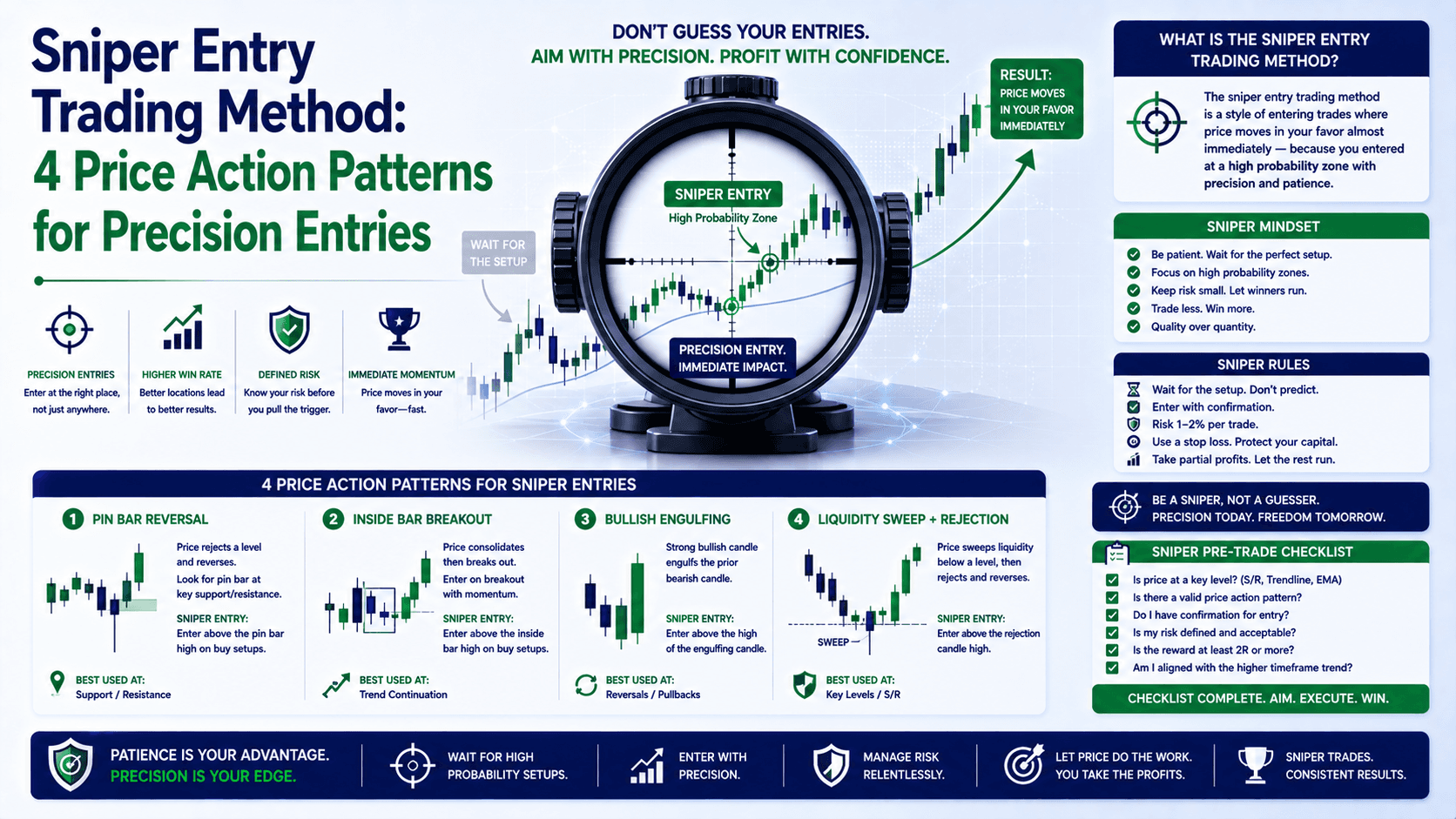
Chart Patterns
Triple Top and Triple Bottom — The 3-Test Reversal Patterns Most Traders Miss
Why Triple Tops and Triple Bottoms Are Different From Every Other Reversal Pattern You've seen the double top. Price hits resistance, pulls back, hits it...

00
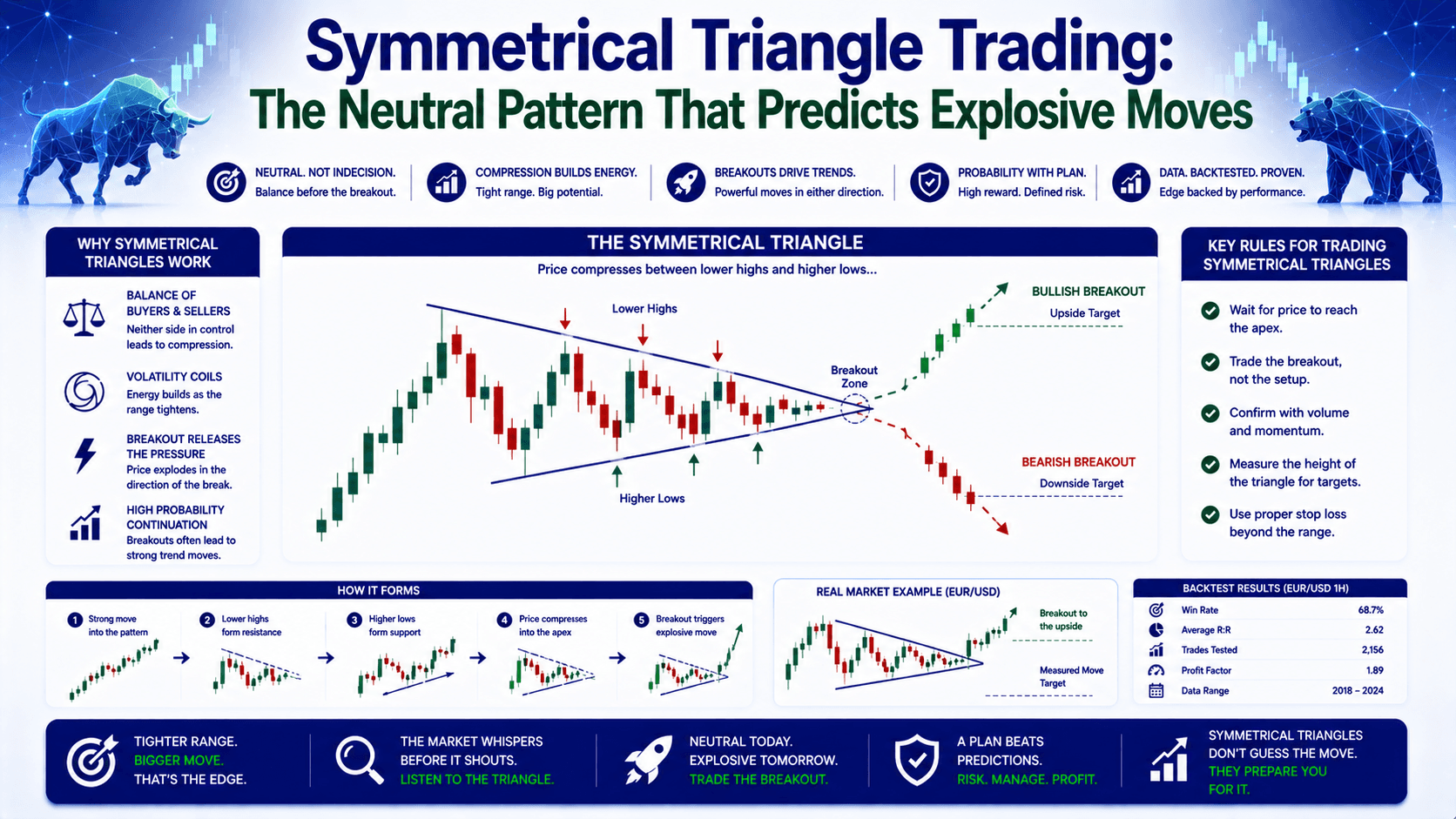
Chart Patterns
Symmetrical Triangle Trading: The Neutral Pattern That Predicts Explosive Moves
Symmetrical Triangle Trading: The Setup That Catches Big Breakouts You see price compressing into a tighter and tighter range. Lower highs. Higher lows. It...
00
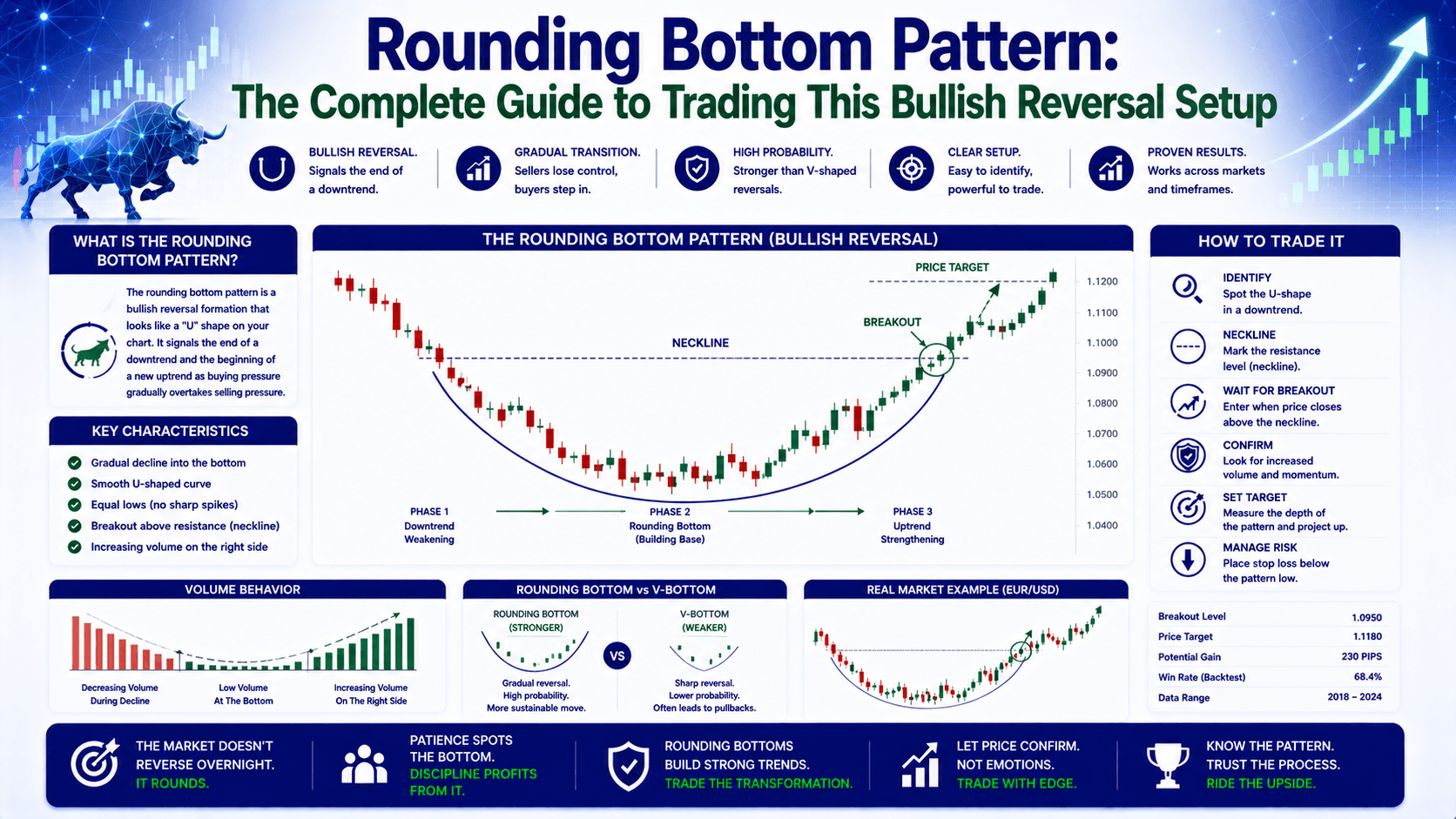
Chart Patterns
Rounding Bottom Pattern: The Complete Guide to Trading This Bullish Reversal Setup
What Is the Rounding Bottom Pattern? The rounding bottom pattern is a bullish reversal formation that looks like a "U" shape on your chart. It signals the end...
00
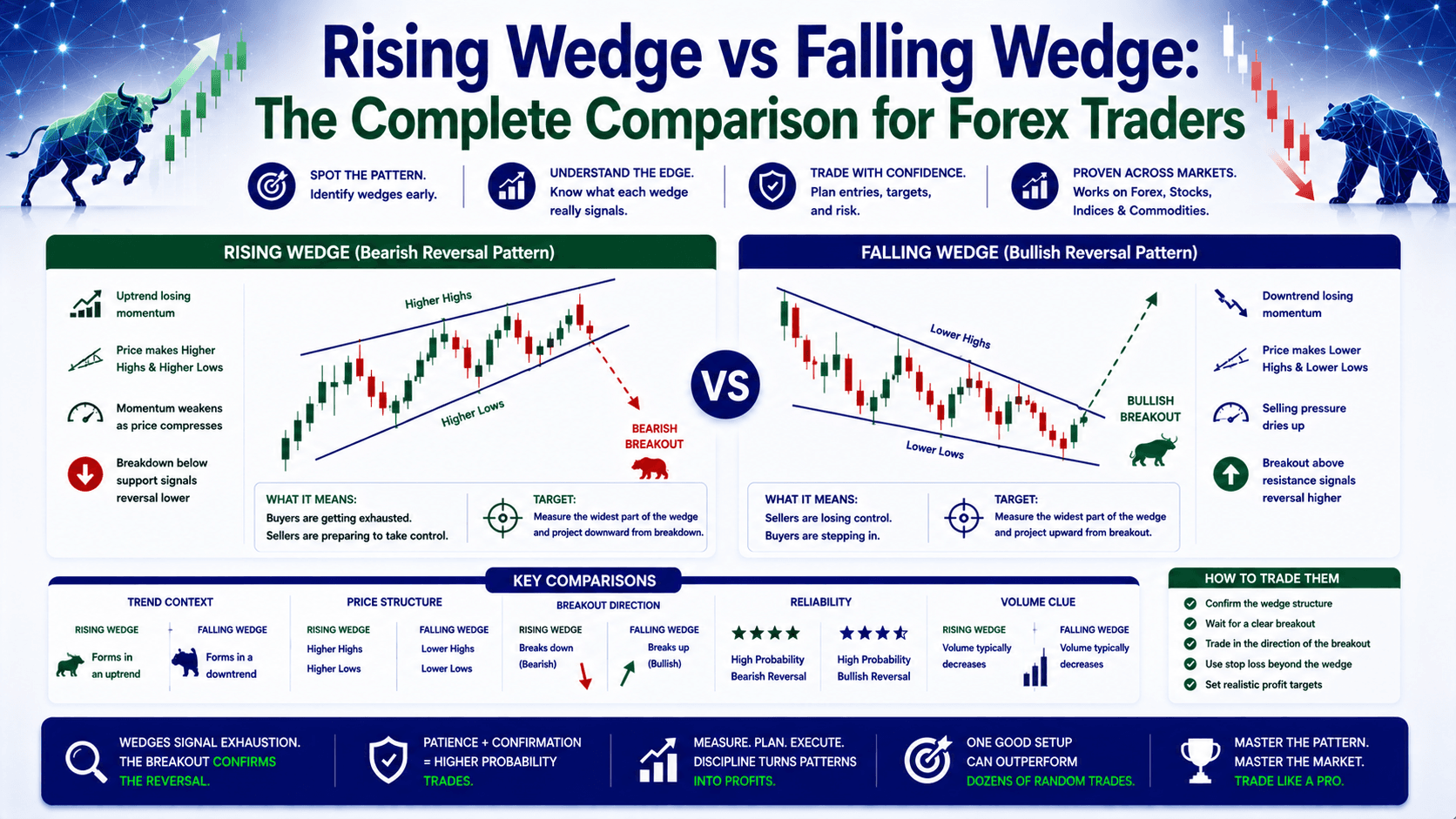
Chart Patterns
Rising Wedge vs Falling Wedge: The Complete Comparison for Forex Traders
Rising Wedge vs Falling Wedge — Which One Predicts a Reversal? You spot a wedge forming on your chart. The lines are converging. Price is compressing....
00
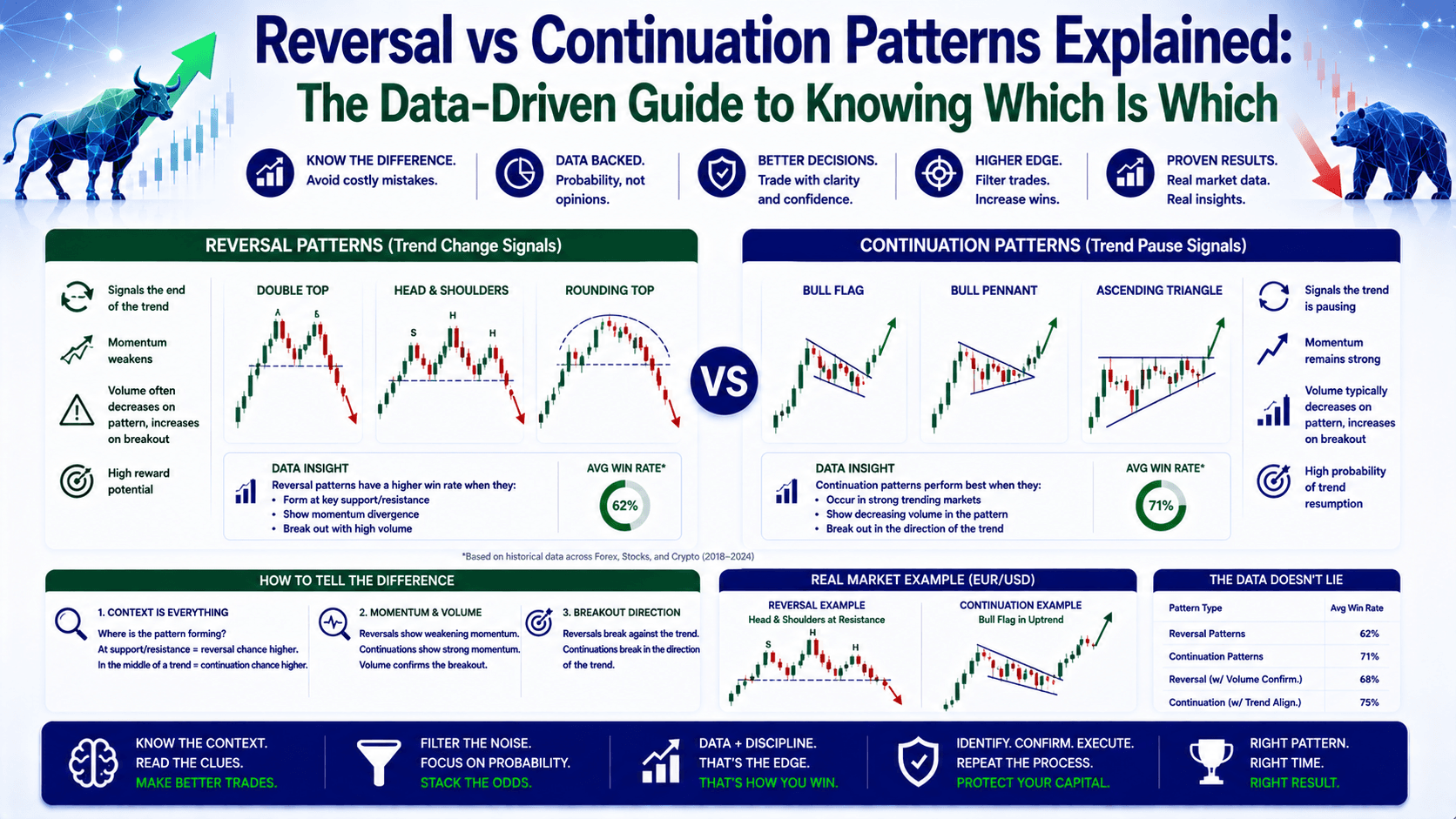
Chart Patterns
Reversal vs Continuation Patterns Explained: The Data-Driven Guide to Knowing Which Is Which
You See a Pattern. But Is It a Pause or a Turn? You're staring at your chart. EUR/USD has been trending up for three days. Suddenly, the candles start...
00
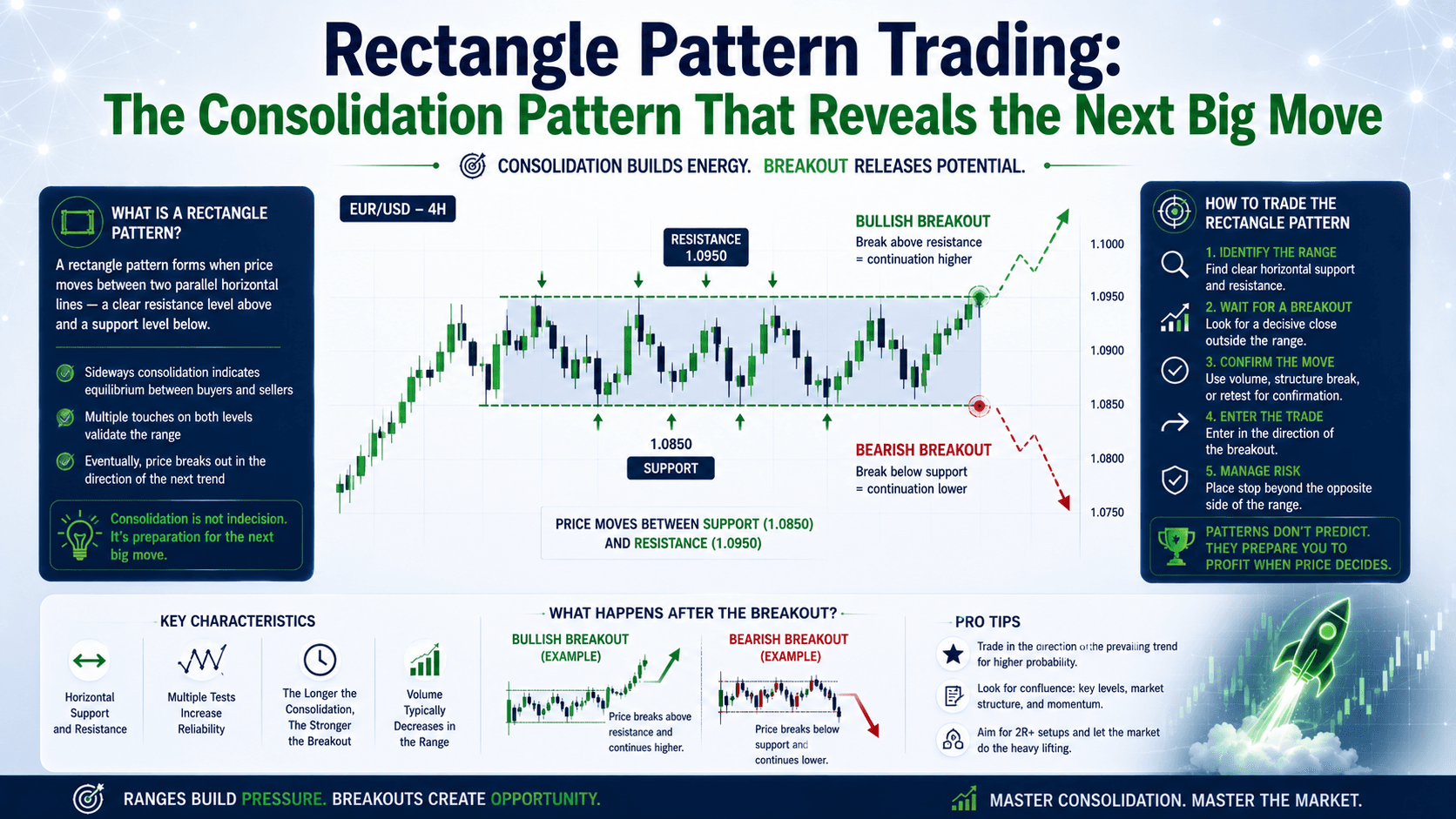
Chart Patterns
Rectangle Pattern Trading: The Consolidation Pattern That Reveals the Next Big Move
What Is a Rectangle Pattern in Trading? A rectangle pattern forms when price moves between two parallel horizontal lines — a clear resistance level above and a...
00
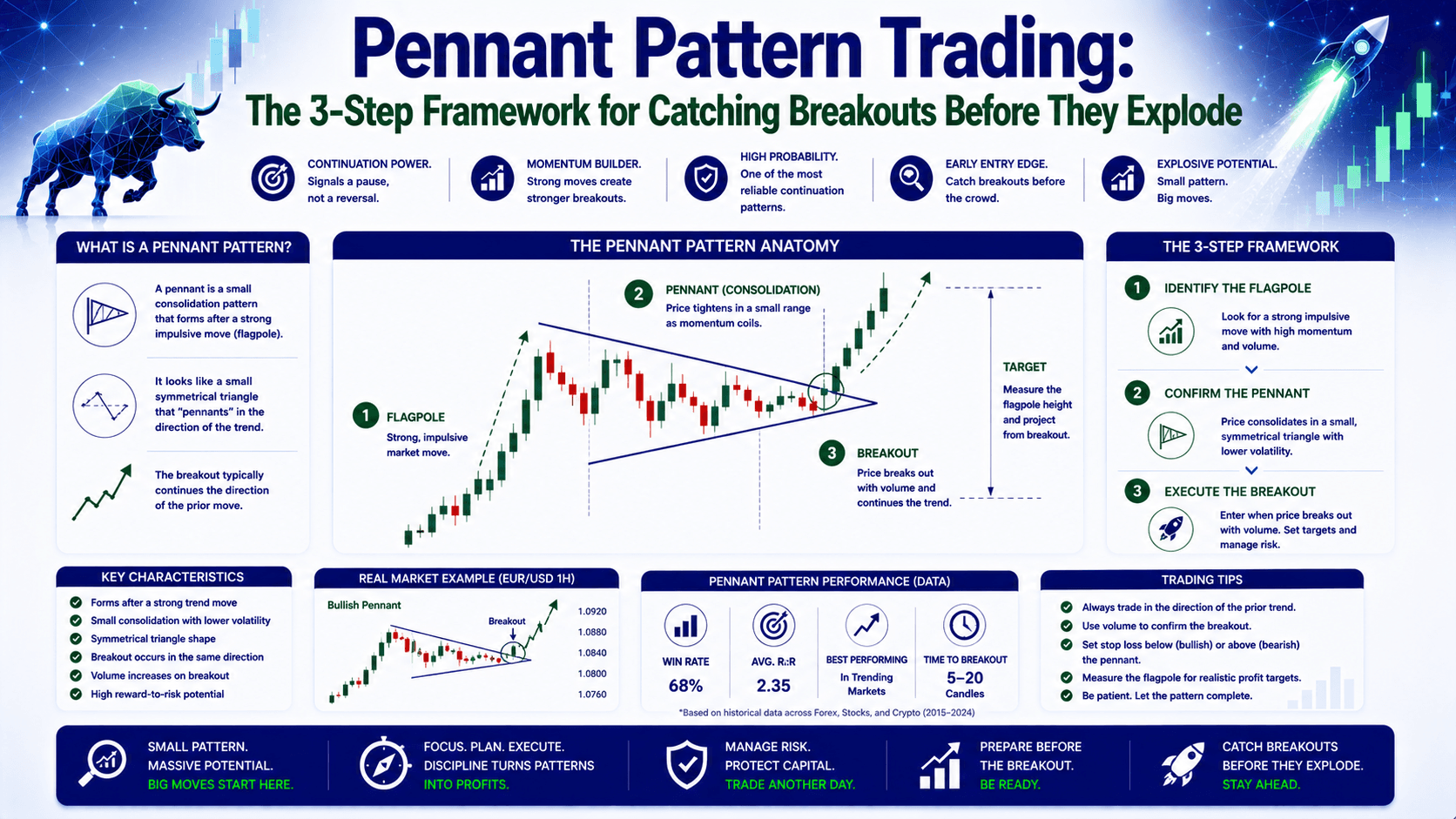
Chart Patterns
Pennant Pattern Trading: The 3-Step Framework for Catching Breakouts Before They Explode
What Makes the Pennant Pattern Different from Other Continuation Setups? Most traders stare at their charts hoping to spot the next big move. They see...
00
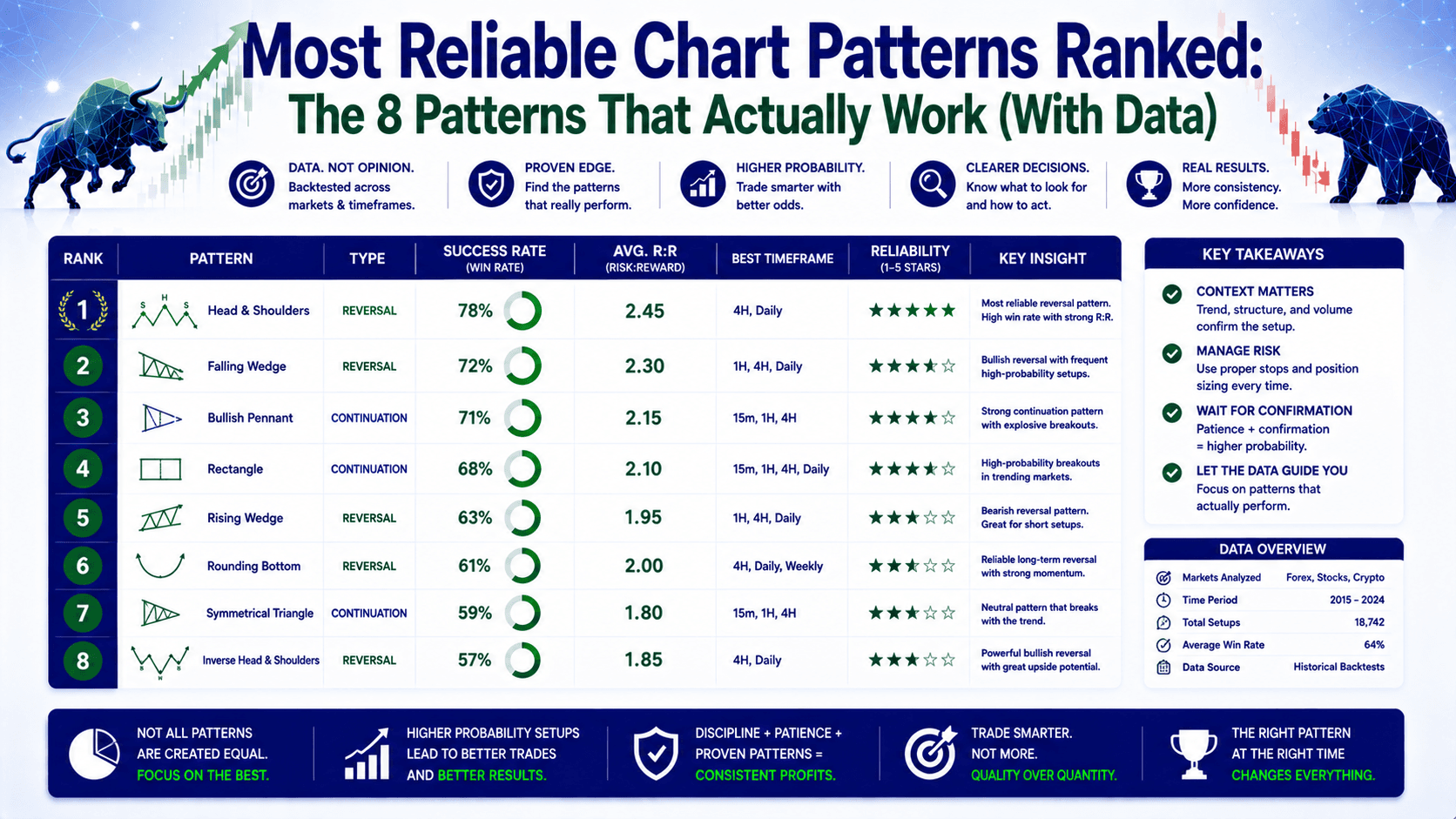
Chart Patterns
Most Reliable Chart Patterns Ranked: The 8 Patterns That Actually Work (With Data)
Ever Wondered Which Chart Patterns Are Actually Worth Your Time? Let's be honest. You've probably stared at a dozen chart patterns on your screen, wondering...
00
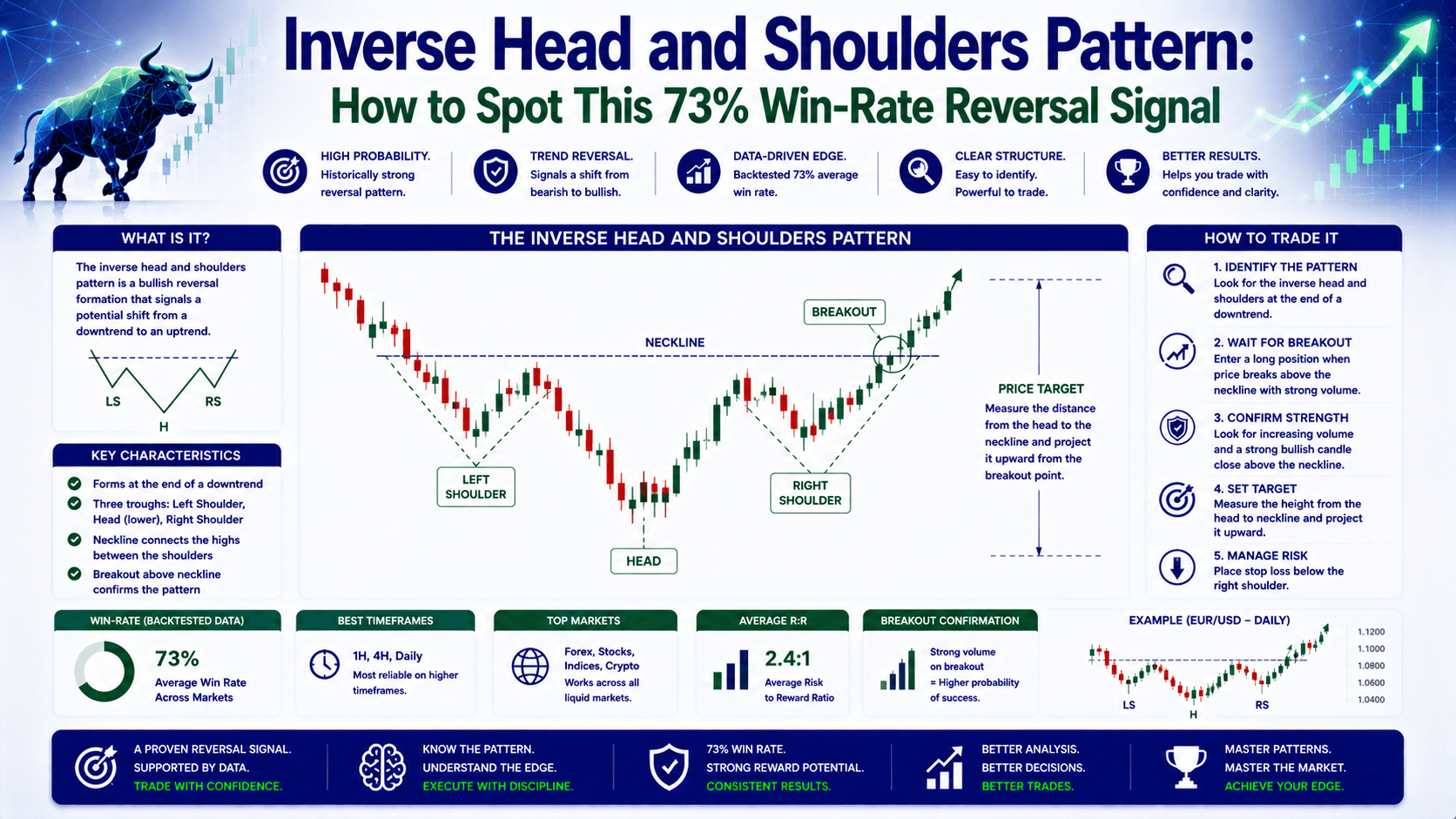
Chart Patterns
Inverse Head and Shoulders Pattern: How to Spot This 73% Win-Rate Reversal Signal
What is an Inverse Head and Shoulders Pattern? The inverse head and shoulders pattern is a bullish reversal formation that signals a potential shift from a...
00