
Ever heard "go long" or "go short" and felt like everyone else got the memo but you?
You're not alone. The first time I heard "I'm going short on EUR/USD," I thought it meant the trade would be quick. Like, short in time. Nope.
Here's the deal — long vs short in forex explained is actually simpler than most people make it. By the end of this lesson, you'll not only know what they mean, but you'll know exactly when to use each one.
What Does "Going Long" Actually Mean?
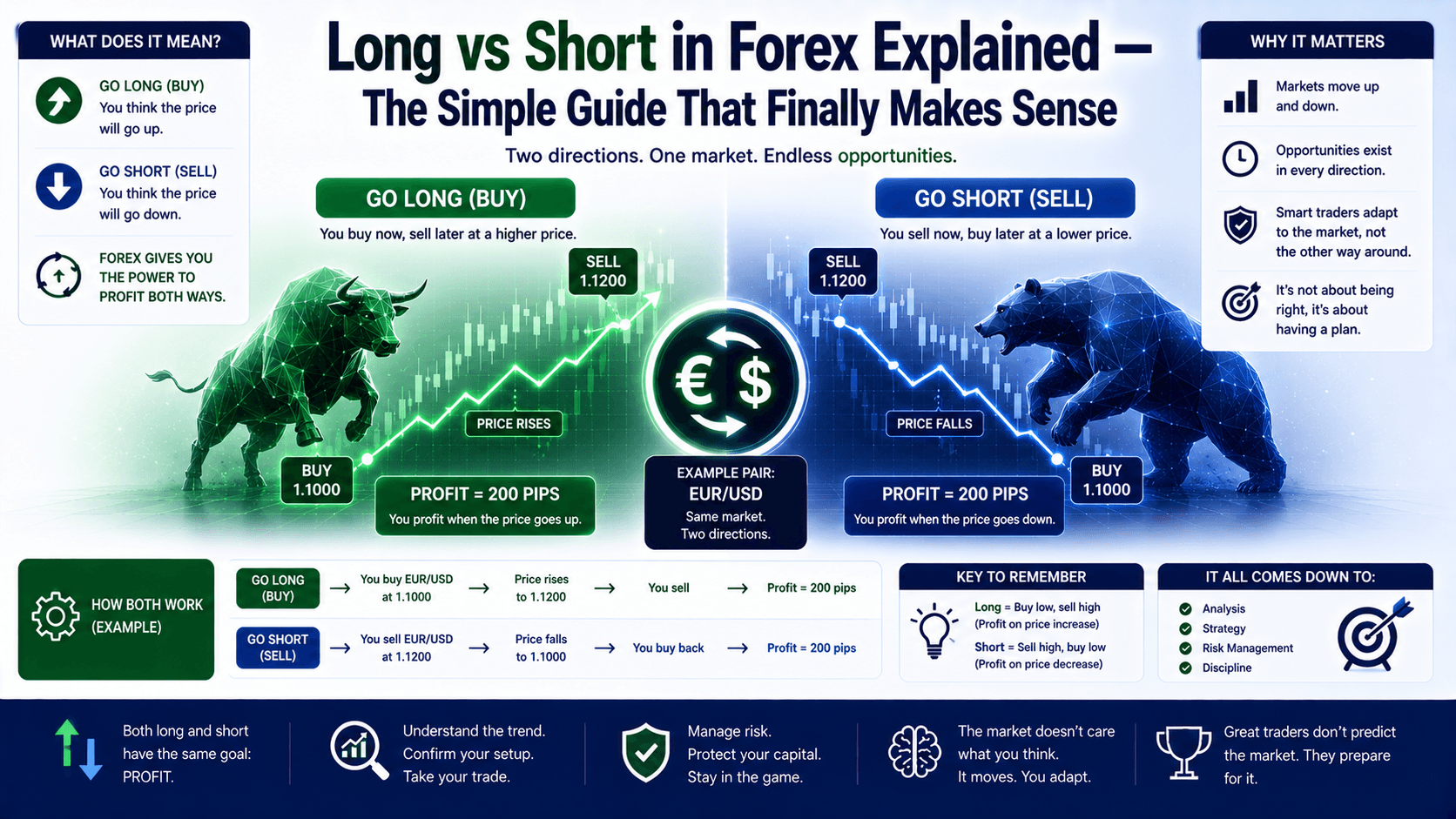
Going long just means you're buying. You expect the price to go up.
Think of it like buying a stock. You buy Apple at $150, hoping to sell at $170 later. Same idea in forex — but instead of a company, you're buying a currency pair.
Real example: EUR/USD is at 1.0850. You believe the Euro will strengthen against the US Dollar. You go long — you buy EUR/USD at 1.0850. Price moves to 1.0900. You just made 50 pips. On 0.1 lots, that's $50. Not bad for a few hours.
What Does "Going Short" Mean? (This One Confuses Everyone)
Going short means you're selling something you don't own, hoping to buy it back cheaper later.

I know — it sounds weird. "How can I sell something I don't have?"
Here's how it works in forex: Your broker lends you the currency. You sell it at the current price. If the price drops, you buy it back cheaper and keep the difference.
Real example: USD/JPY is at 150.00. You think the Yen will strengthen (meaning USD/JPY goes down). You go short — sell USD/JPY at 150.00. Price drops to 148.00. You just made 200 pips. On 0.1 lots, that's roughly $135.
| Position | What You Do | You Profit When | You Lose When |
|---|---|---|---|
| Long (Buy) | Buy now, sell later | Price goes UP | Price goes DOWN |
| Short (Sell) | Sell now, buy later | Price goes DOWN | Price goes UP |
The Wrong Way Most Beginners Trade Long vs Short
Here's the mistake I see all the time: A beginner hears "EUR/USD is bullish" and immediately goes long. No analysis. No context. Just FOMO.
Then price drops 50 pips. They panic. Close at a loss.
The right way: Before you go long or short, ask yourself three questions:
- What's the trend on the 1-hour chart?
- Is there a support or resistance level nearby?
- What's the risk-to-reward ratio?
Let's say EUR/USD is at 1.0850, trending up on the 1-hour chart. Support is at 1.0830. Resistance is at 1.0880. You go long at 1.0850 with a stop at 1.0825 (25 pip risk) and target at 1.0880 (30 pip reward). That's a 1:1.2 ratio — not great but workable if your win rate is high.
How to Choose Between Long and Short
This is where most long vs short in forex explained guides drop the ball. They tell you what each means but not how to decide.
Here's my rule: Trade with the trend.
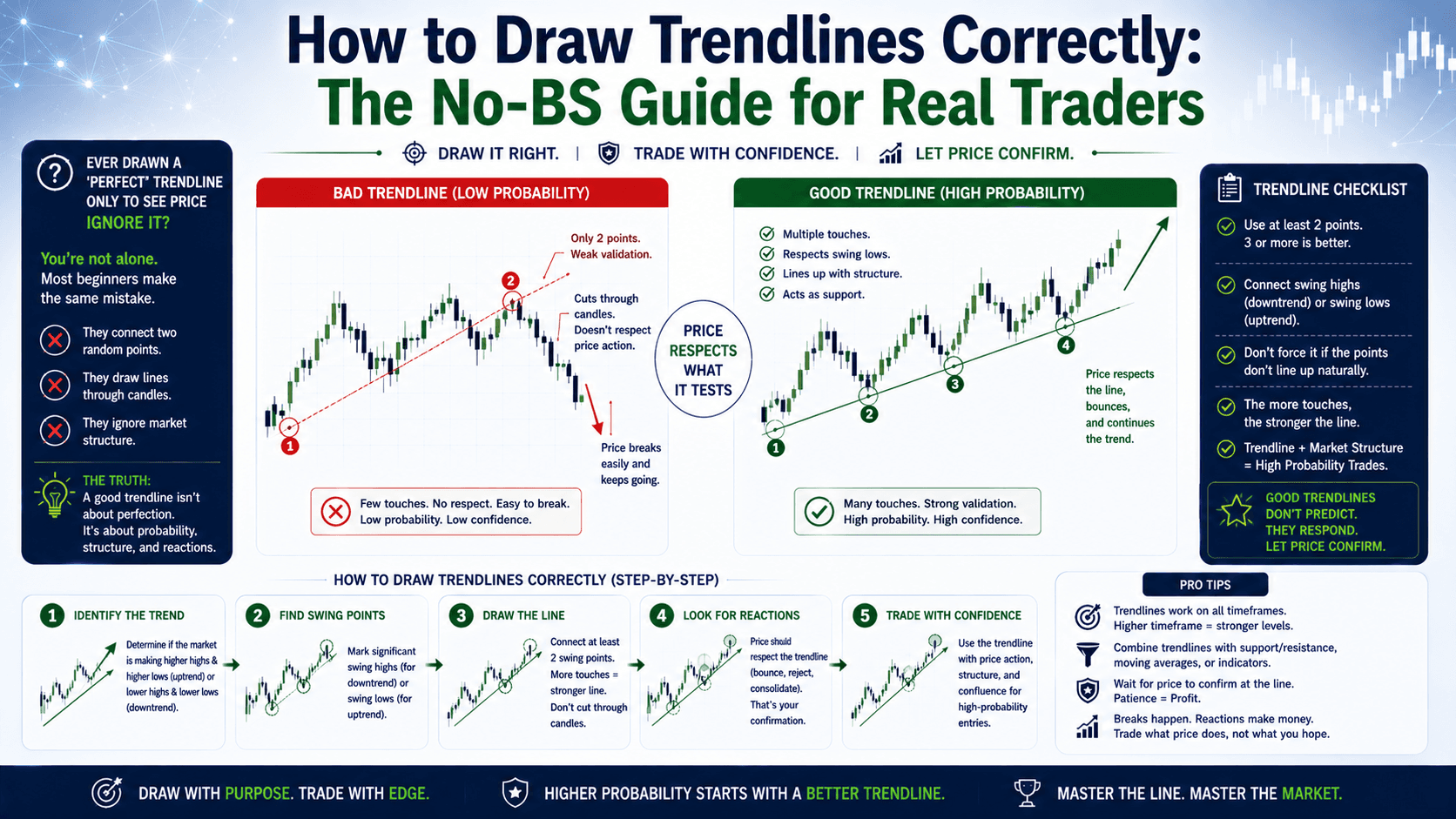
If the 1-hour chart shows higher highs and higher lows — look for long trades. If it shows lower highs and lower lows — look for short trades.
Example: GBP/USD has been making lower highs for 3 days. It's now at 1.2600. You see a rejection candle at 1.2620. That's a short signal. You go short at 1.2600, stop at 1.2635 (35 pip risk), target at 1.2540 (60 pip reward). That's nearly 1:2 risk-to-reward.
Common Trap: Going Against the Trend
Every beginner does this. Price has been dropping for hours. You think "it's due for a bounce" and go long. Price drops another 80 pips.
The fix: Don't try to catch falling knives. Wait for confirmation. Let price show you it's reversing before you enter.
FAQ
Is going long or short better for beginners?
Neither is inherently better. Start with the direction that matches the trend. If the trend is up, go long. If it's down, go short. Keep it simple.

Can I lose more than my account going short?
Yes — if you don't use a stop loss. Without one, a short trade can lose unlimited money if price keeps going up. Always use a stop loss.
Do I need to own the currency to go short?
No. Your broker handles the mechanics. You're trading a derivative (CFD or spot forex), not physically exchanging currency. Just focus on the price direction.
What's the minimum account size to trade long and short?
You can start with $100 on a micro account. Trade 0.01 lots. That way, a 50-pip move is only $5. You learn without risking much.
Quick Recap
- Long = Buy. Profit when price goes up.
- Short = Sell. Profit when price goes down.
- Always trade with the trend — don't fight it.
- Use a stop loss on every trade. Every. Single. One.
- Start small. 0.01 lots. Learn before you earn.
Your Quick Win Today
Open your trading platform. Pull up EUR/USD on the 1-hour chart. Look at the last 10 candles. Are they making higher highs and higher lows? That's an uptrend — look for long trades. Or lower highs and lower lows? That's a downtrend — look for short trades.
Don't trade. Just observe. Get comfortable seeing the trend before you place a single order. That's how you start thinking like a trader.