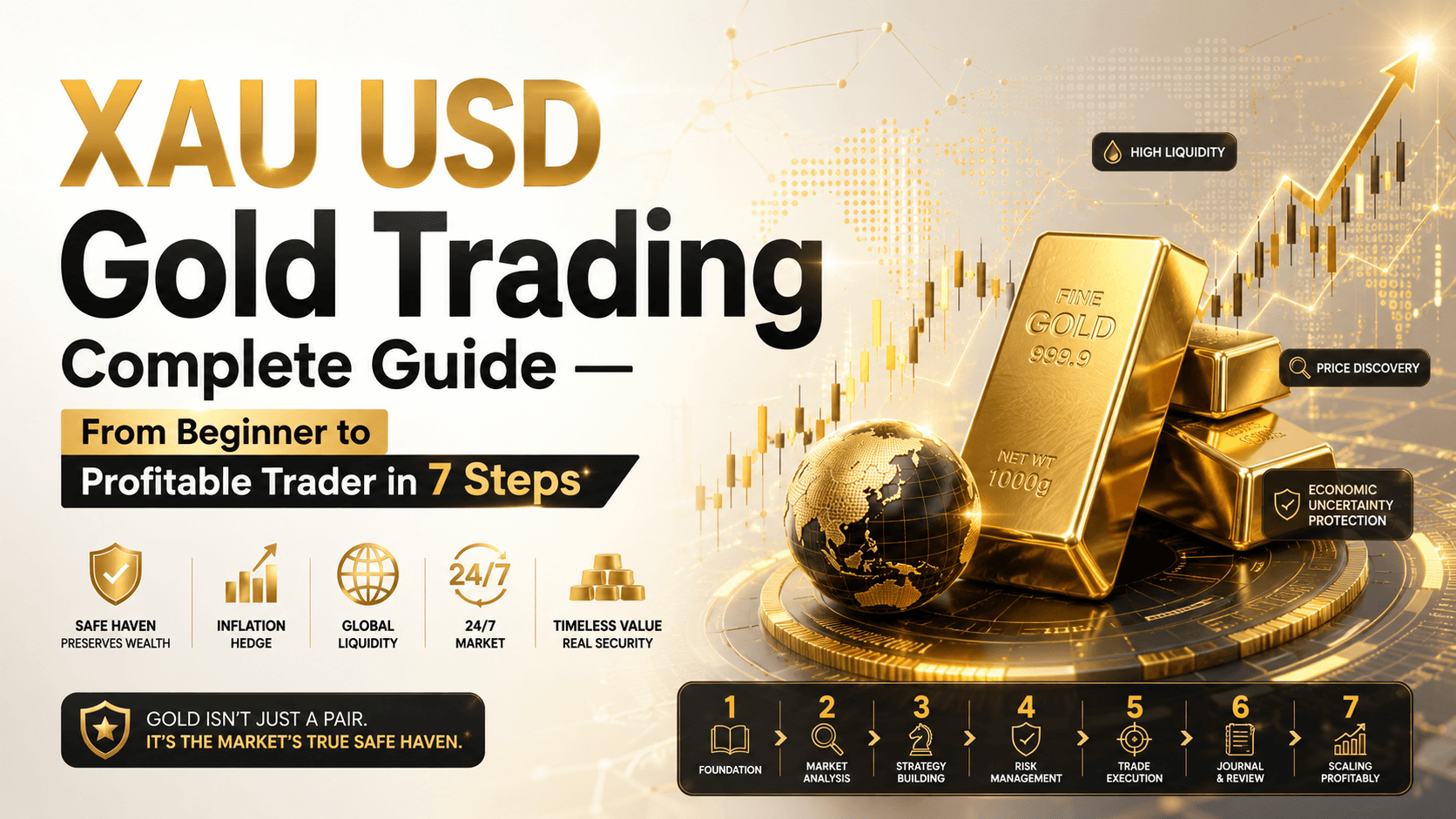

Why Gold? And Why You've Been Missing the Real Story
Let me tell you something most forex sites won't. Gold isn't just another currency pair. It's the market's panic button. The world's oldest store of value. And for the last two years, it's been one of the most profitable instruments to trade.
But here's the thing — most beginners lose money on XAU/USD. Not because gold is hard to trade. But because they treat it like EUR/USD. And that's a mistake that costs real money.
I've been trading gold for over a decade. I've blown accounts on it. I've also made some of my biggest wins on it. The difference? Understanding what actually moves gold — and having a system that works with its volatility, not against it.
This XAU USD gold trading complete guide will take you from zero to a confident gold trader. No fluff. No textbook definitions. Just what works.
What Is XAU/USD? (The Simple Version)
XAU is the chemical symbol for gold. USD is the US dollar. Put them together — XAU/USD — and you're looking at the price of one troy ounce of gold, priced in US dollars.
So when you see XAU/USD at $2,350, that means one ounce of gold costs $2,350.
Simple, right?
But here's where it gets interesting. Gold isn't like EUR/USD or GBP/USD. It's not a currency from a specific country. It's a commodity. A precious metal. And it behaves very differently from regular forex pairs.
How Gold Is Different From Regular Currency Pairs
| Feature | EUR/USD (Regular Pair) | XAU/USD (Gold) |
|---|---|---|
| Underlying Asset | Eurozone economy | Physical gold |
| Typical Daily Move | 50-80 pips | $15-$30 (1500-3000 pips) |
| Volatility | Moderate | High (can spike $50+ on news) |
| Safe Haven | No | Yes — the ultimate safe haven |
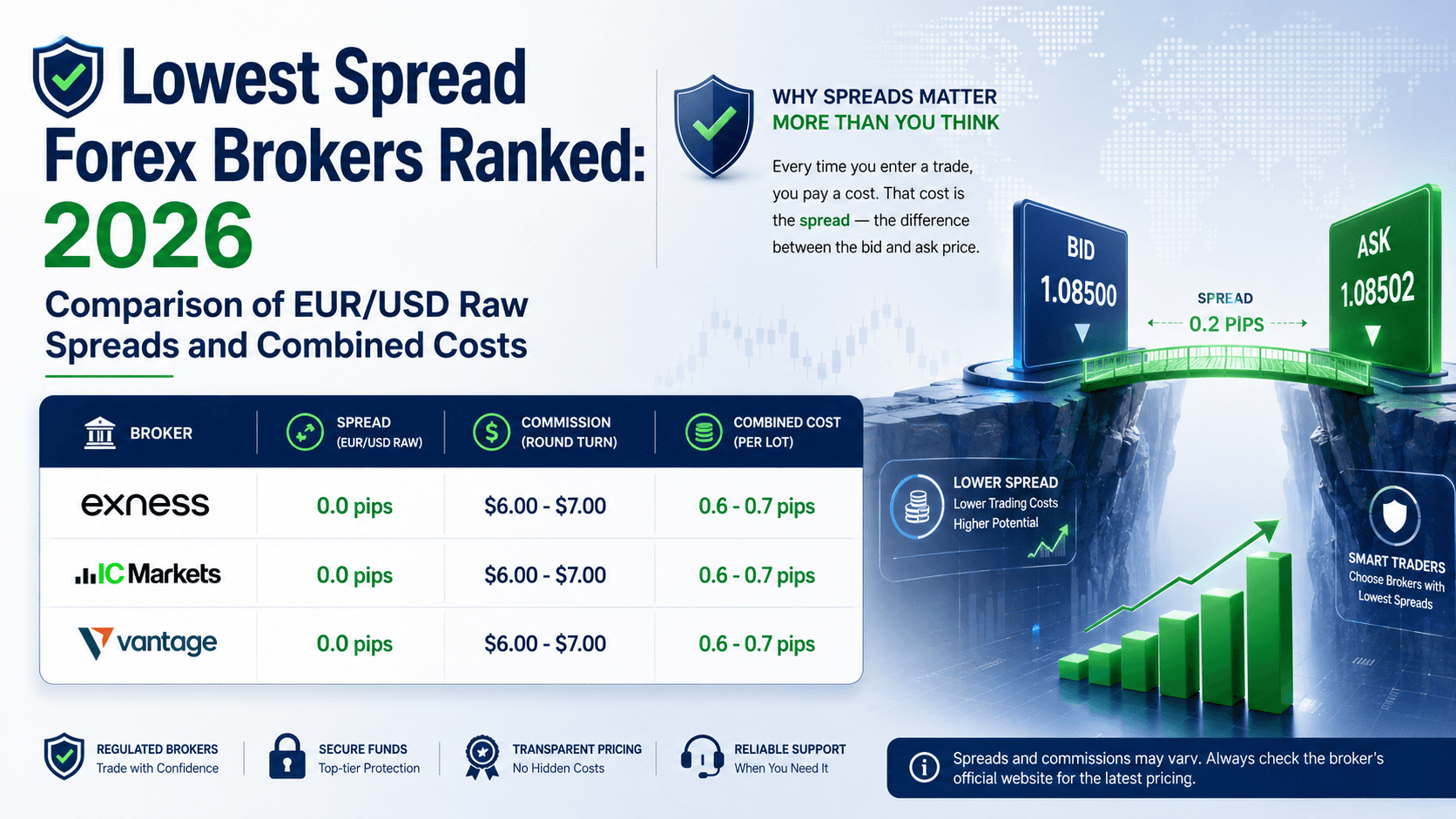
| Spread (on standard account) | 1-2 pips | 20-50 pips (varies by broker) |
See the difference? Gold moves BIG. And when it moves, it moves fast.
⚠️ Common mistake: Beginners use the same position size for gold as they do for EUR/USD. With gold's volatility, that's a recipe for a margin call. Always size down for gold.
Why Gold Moves — The 3 Forces You Need to Know
Gold has three distinct personalities. Understanding which one is active right now tells you what to expect.

1. The Safe Haven — When Fear Drives Price
This is gold's most famous role. When the world gets scary — wars, elections, bank failures, pandemics — traders rush into gold. It's the financial lifeboat.
Real example: In March 2020, when COVID hit, gold initially dropped to $1,470 as everyone sold everything for cash. Then central banks printed trillions. By August 2020, gold hit $2,075. That's a 41% move in 5 months.
Key driver to watch: Geopolitical news, VIX (fear index), and stock market crashes.
2. The Dollar Inverse — The USD Relationship
Gold and the US dollar usually move in opposite directions. When the dollar weakens, gold rises. When the dollar strengthens, gold falls.
This is because gold is priced in dollars. A weaker dollar means you need more dollars to buy the same ounce of gold.
Key driver to watch: The US Dollar Index (DXY). If DXY drops, gold typically rallies.
3. The Inflation Hedge — When Money Loses Value
When inflation is high, people buy gold to protect their purchasing power. This is especially powerful when real yields (bond yields minus inflation) go negative.
Real example: In 2022-2024, the Fed raised rates aggressively. Normally that would crush gold. But inflation was stubbornly high, so gold held up and eventually broke to new all-time highs above $2,400.
Key driver to watch: CPI data, Fed interest rate decisions, and 10-year Treasury yields.
The Wrong Way vs The Right Way to Trade Gold
Let me show you the most common mistake beginners make — and how to fix it.
The Wrong Way (What 90% of Beginners Do)
You see gold rallying. It's up $20 in a day. You think "I'm missing out!" So you buy at the top. Gold pulls back $10. You panic and sell at a loss. Then gold rallies another $30 without you.
Sound familiar?
This is called FOMO trading. And it's the fastest way to lose money on gold.
The Right Way (What Profitable Traders Do)
You wait for a pullback. Gold rallies from $2,340 to $2,360. You don't buy. You wait. It pulls back to $2,350 — a key support level. That's your entry. You set a stop loss at $2,340 (below support). Target: $2,370 (previous high).
Risk: $10 on 0.1 lots ($10). Reward: $20 on 0.1 lots ($20). Risk:Reward = 1:2.
See the difference? One is emotional. The other is structured.
The 7-Step Gold Trading System That Works
Here's a simple, repeatable system you can use on any timeframe.
Step 1: Check the Big Picture (Daily Chart)
Open the daily chart. Is gold in an uptrend (higher highs, higher lows) or a downtrend (lower highs, lower lows)?
If it's trending up — only look for buy setups. If trending down — only look for sell setups. If ranging — trade both directions at support and resistance.
Step 2: Mark Key Levels
Draw horizontal lines at:
- Previous day high and low
- Previous week high and low
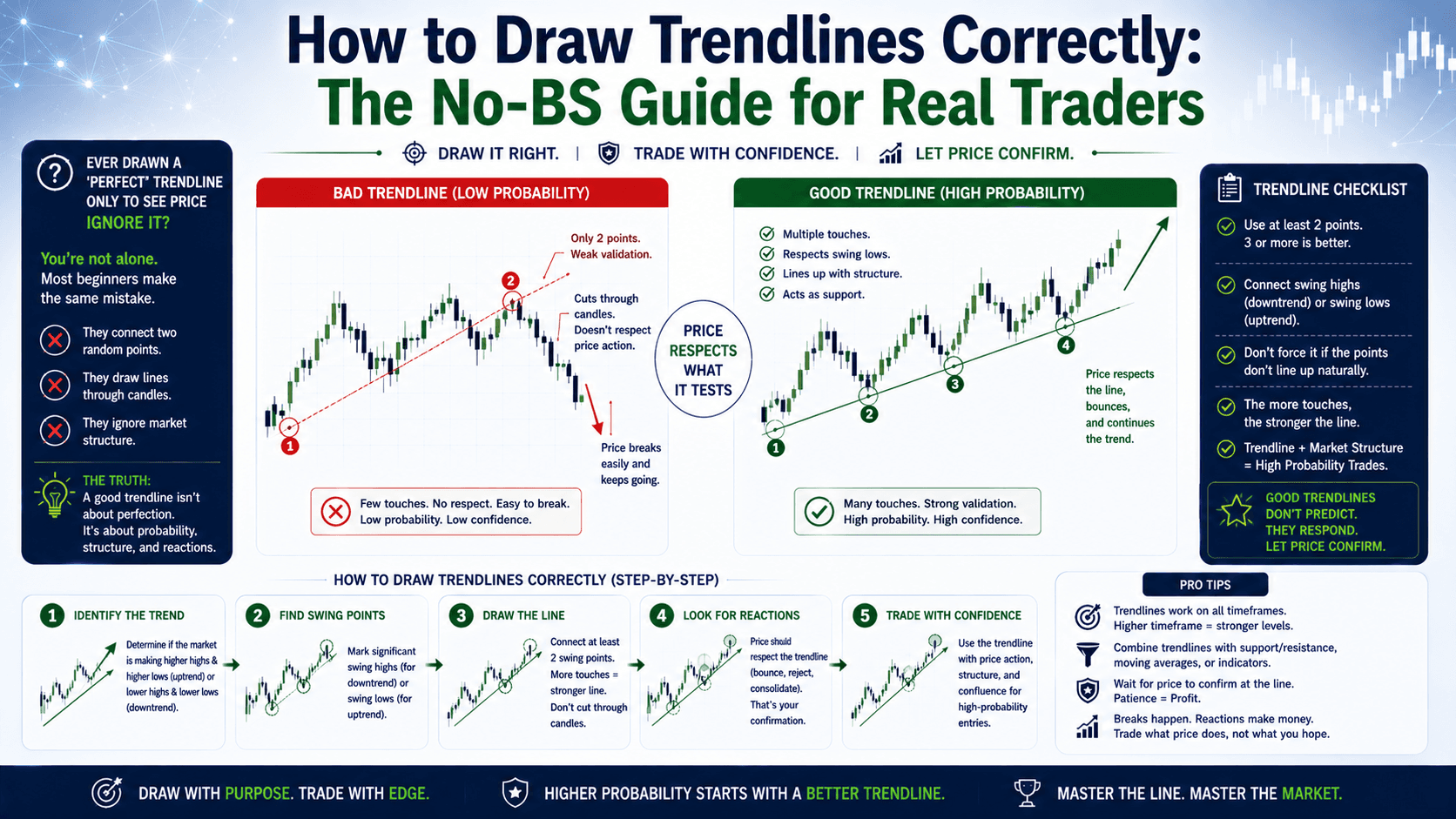
- Major support and resistance (where price reversed multiple times)
Step 3: Wait for a Pullback
Don't chase. Wait for price to come back to a key level. This is where institutions place their orders.
Step 4: Look for a Reversal Candle
On the 1-hour or 15-minute chart, wait for a pin bar (long wick) or engulfing candle at your key level. This shows rejection of that price.
Step 5: Enter With a Tight Stop
Enter on the close of the reversal candle. Place your stop loss 5-10 pips below the wick (for buys) or above the wick (for sells).
Step 6: Set a Realistic Target
Target the next key level. Or use a 1:2 risk-to-reward ratio minimum.
Step 7: Manage the Trade
Once price moves in your favor by 1x your risk, move your stop loss to breakeven. This guarantees no loss. Let the rest run to your target.
Real Trade Example — The Math
Let's say you have a $2,000 account. You risk 2% per trade = $40 max loss.
Gold is at $2,350. You see a bullish pin bar at $2,345 on the 1-hour chart. Your stop is at $2,335 (10 points below the wick).
Position sizing:
- Risk per trade: $40
- Stop distance: 10 points ($10 per 0.1 lot on gold)
- Position size: 0.04 lots (risk = 10 points x $4 = $40)
Target: $2,365 (20 points away). If hit: profit = 20 x $4 = $80. Risk:Reward = 1:2.
This is how professionals manage risk. Not by guessing — by doing the math.
FAQ
Is gold trading riskier than forex?
Yes, because gold is more volatile. A single day can see $30-$50 moves. But with proper position sizing and stop losses, you can manage this risk effectively.

What's the best time to trade XAU/USD?
The London session (8:00 AM - 5:00 PM GMT) and the New York session (1:00 PM - 10:00 PM GMT). These have the highest volume and tightest spreads. Avoid the Asian session — low volume and wide spreads.
How much money do I need to start trading gold?
You can start with as little as $100 on a micro account. But I recommend at least $500-$1,000 to give yourself enough room for proper risk management.
What's the difference between gold spot and gold futures?
Spot gold (XAU/USD) is for immediate delivery and is what most retail traders use. Futures are contracts for future delivery and are more complex. For beginners, stick with spot gold.
Quick Recap
- Gold is different — higher volatility, wider spreads, safe haven behavior
- 3 key drivers — fear, dollar strength, inflation
- Don't chase — always wait for pullbacks to key levels
- Size down — gold moves bigger than regular pairs
- Use the 7-step system — trend → levels → pullback → candle → entry → target → manage
Your Quick Win (Do This Today)
Open your MT4 or TradingView chart. Pull up XAU/USD on the daily timeframe. Draw horizontal lines at the last 3 daily highs and 3 daily lows. Now switch to the 1-hour chart. Can you see how price reacts at those levels? That's the foundation of gold trading. Do this for 5 minutes every day for a week. You'll start seeing the patterns.