
You're Making the Same Mistake. And You Don't Even Know It.
Here's the truth that nobody tells you when you start trading:
You're going to make the same mistake over and over again. And you won't realize it until your account is down 30%.
I've been there. I blew my first account doing exactly this — chasing losses, overtrading after a big win, taking setups that didn't fit my strategy. The worst part? I had no idea I was repeating the same patterns because I never wrote anything down.
That's where journaling for traders comes in. It's not about keeping a diary. It's about turning your trading into data you can actually learn from.
Why Journaling for Traders Is the Difference Between Winning and Losing
Your broker statement tells you what happened. Your journal tells you why.
Think about it. Your broker shows you: "You lost $340 on EUR/USD on Tuesday." That's just a number. It doesn't tell you:
- Were you tired when you took the trade?
- Did you chase price after it moved 20 pips without you?
- Was your stop loss too tight?
- Did you skip your pre-trade checklist?
That's the real story. And without a journal, you're flying blind.
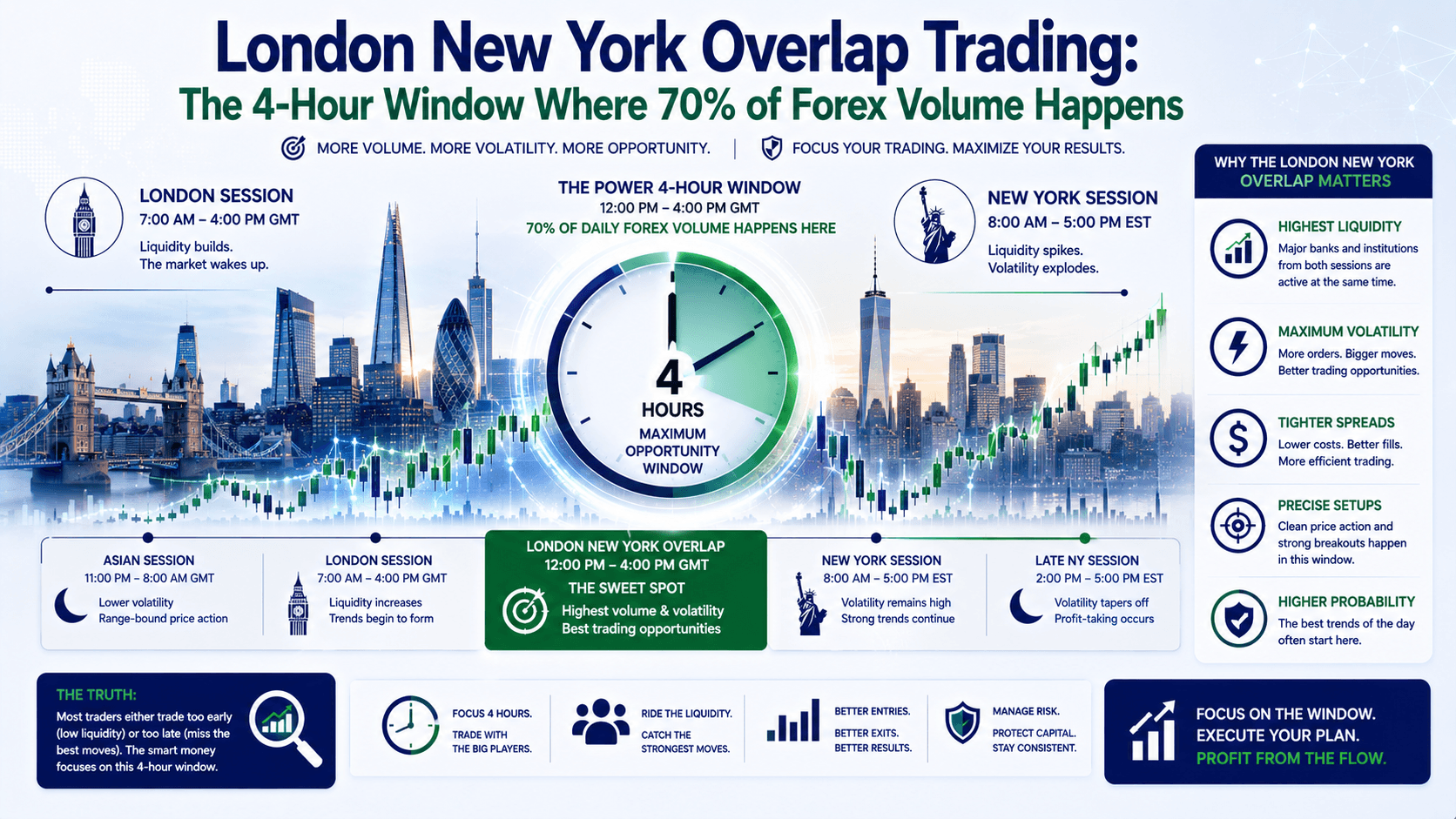
Here's a real example from one of my students. He kept losing on GBP/USD. Every time. He thought the pair was "cursed." Three weeks of journaling later, he saw the pattern: he was taking trades during the Tokyo session when GBP/USD was range-bound. His strategy worked during London. He switched, and his win rate went from 38% to 62%.
That's the power of journaling for traders — it turns blind spots into opportunities.
| Trading Without a Journal | Trading With a Journal |
|---|---|
| You repeat mistakes for months | You spot patterns in 2-3 weeks |
| You trade on emotion and "gut feeling" | You trade based on data and history |
| You can't tell which strategy works | You know exactly what works and what doesn't |
| Losses feel random and painful | Losses become learning opportunities |
| You have no confidence in your system | You have real proof your system works |
What to Record in Your Trading Journal (The Right Way)
Most traders start a journal, write down their entry price and exit price, and call it a day. That's like writing a grocery list but forgetting to buy the food.

Here's what you actually need to track:
The Basics (Non-Negotiable)
- Date & Time — Include the session (London, New York, Tokyo)
- Instrument — EUR/USD, GBP/USD, XAU/USD, etc.
- Direction — Long or short
- Entry Price — Exact number
- Exit Price — Exact number
- Stop Loss — Where you placed it and why
- Take Profit — Where you placed it and why
- Lot Size — 0.01, 0.1, 1.0, etc.
- P&L — Profit or loss in dollars
The Game-Changers (Most Traders Skip These)
- Strategy Used — Which specific setup were you following?
- Pre-Trade Checklist — Did you check all your conditions?
- Emotional State — Calm, anxious, bored, euphoric, tired?
- Lesson Learned — One sentence about what you'd do differently
- Trade Grade — A-F based on execution, not outcome
⚠️ Here's the trap: Don't grade a trade based on whether it won or lost. Grade it based on whether you followed your plan. A losing trade that followed the plan is an A. A winning trade that broke your rules is an F. This is the single most important mindset shift in journaling for traders.
How to Analyze Your Journal Data (The Math That Changes Everything)
After 20-30 trades, you have enough data to start seeing real patterns. Here's what to look for:
1. Your Win Rate by Session
Maybe you win 65% of trades during London but only 40% during Tokyo. That's not luck — that's a pattern. Stop trading Tokyo.
2. Your Average Win vs. Average Loss
If your average win is $50 and your average loss is $80, you're losing even when you're right. Fix your risk:reward ratio.
3. Your Best and Worst Instruments
Some traders crush it on EUR/USD but bleed on Gold. That's fine — trade what works.
4. Your Emotional Triggers
Do you revenge trade after a loss? Overtrade after a win? Your journal will show you the exact moment your discipline breaks.
Here's the math that changed my trading. After 50 journaled trades, I found that my win rate on setups I took "impulsively" (without checking my checklist) was 22%. My win rate on planned trades was 68%. That one insight saved my account.
How to Start Your Trading Journal Today (5 Minutes or Less)
Don't overthink this. You don't need fancy software or a complicated spreadsheet. Here's what to do right now:
- Open a Google Sheet or grab a notebook
- Create columns: Date, Pair, Direction, Entry, Exit, Result, Strategy, Emotion, Lesson
- After your next trade, fill it in before you do anything else
- After 10 trades, spend 15 minutes reviewing
- After 30 trades, run the numbers — find your patterns
That's it. That's the entire system. The hard part isn't the setup — it's the consistency.
💡 Quick win: Open your trading platform right now. Find your last trade. Write down: what was your emotional state when you entered? If you can't remember, that's the problem. Start journaling today.
FAQ
What is journaling for traders?
Journaling for traders means recording every trade you take — including entry, exit, strategy, emotions, and lessons learned. It helps you spot patterns, improve discipline, and make data-driven decisions instead of emotional ones.

Do I need expensive software to keep a trading journal?
No. A simple Google Sheet or notebook works perfectly. The tool doesn't matter — the habit does. Start with what you have and upgrade later if you want.
How long does it take to see results from journaling?
Most traders start seeing patterns after 20-30 trades, which is about 2-4 weeks for active traders. The key is consistency — one missed day can break the habit.
What's the most important thing to record in a trading journal?
Your emotional state and whether you followed your plan. These two things reveal more about your trading than entry and exit prices ever will.
Quick Recap
- Journaling turns blind spots into data you can actually use
- Record more than just prices — track emotions, strategy, and lessons
- Grade your execution, not your outcome (a losing trade that followed the plan is still an A)
- Review your data after 20-30 trades to find real patterns
- Start today with a simple notebook or spreadsheet
Your Quick Win
Open your trading platform. Find your last 3 trades. For each one, write down one sentence about what you were feeling when you entered. Were you calm? Anxious? Excited? Bored? That's the first step. Tomorrow, write it down before you enter the trade. Do this for one week. I promise you'll see something you didn't expect.