
Ever Wondered Where Your Money Goes When You Travel?
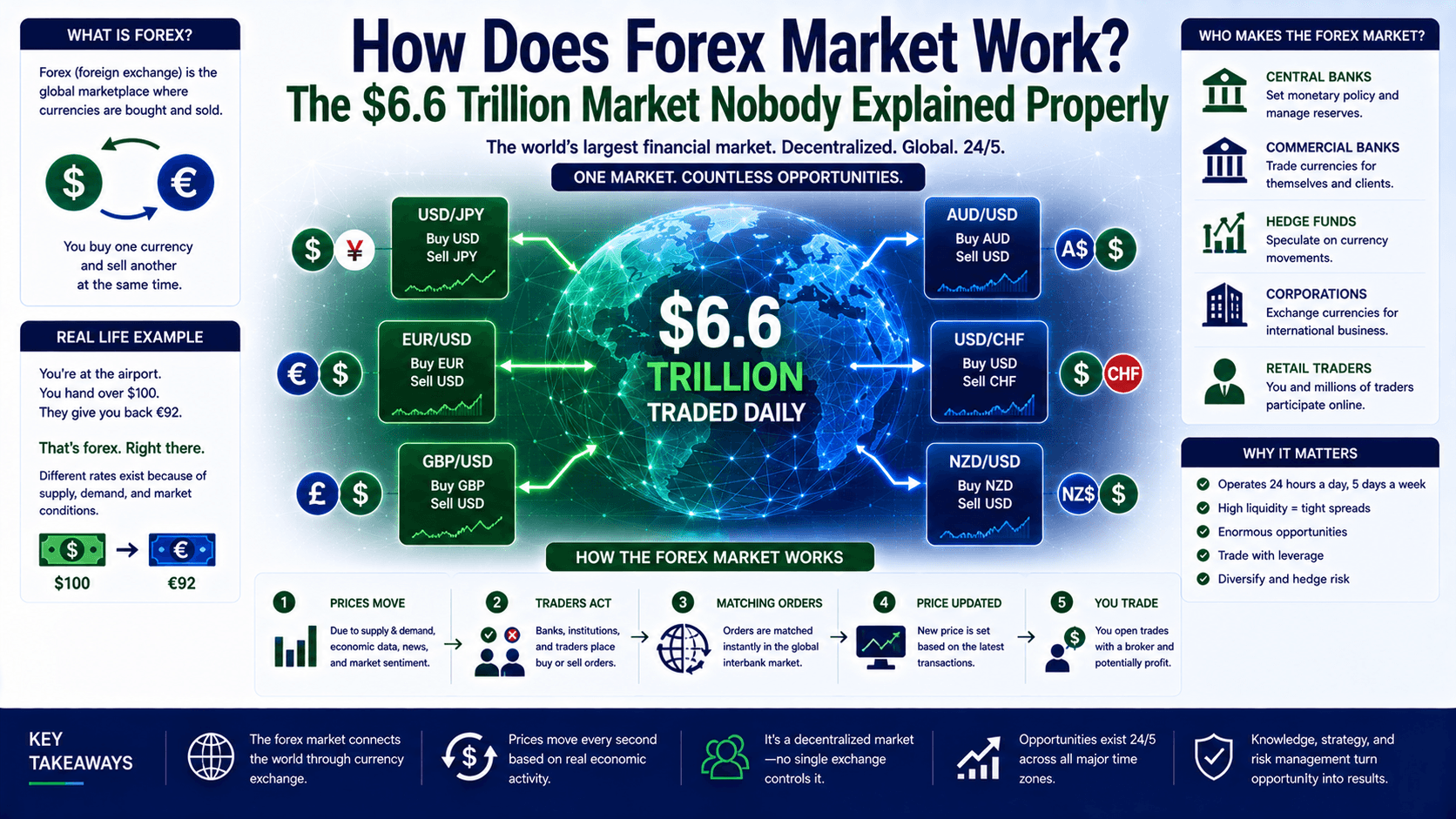
You're at the airport. You hand over $100. They give you back €92. That's forex. Right there.
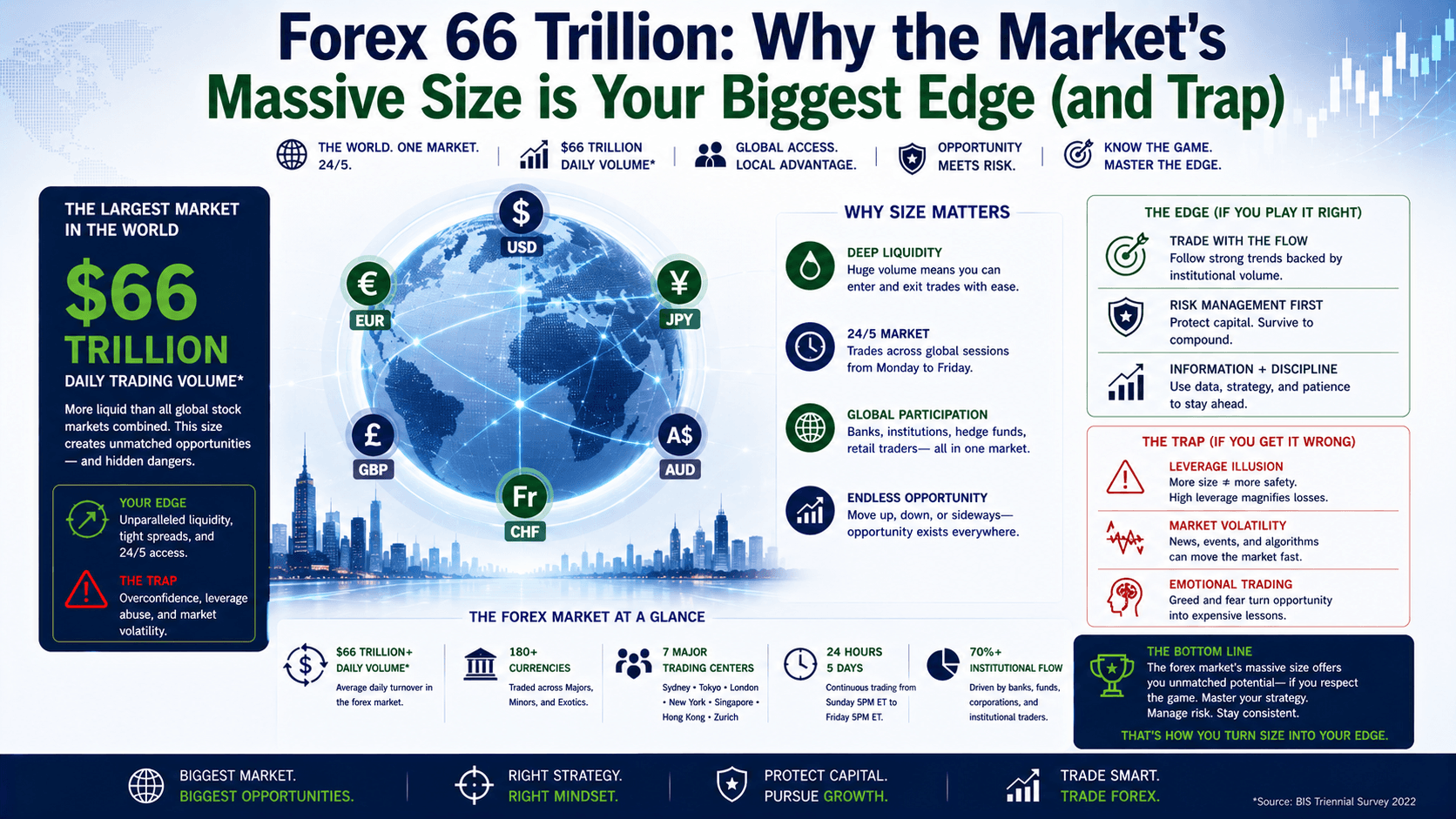
But here's where it gets interesting. That same transaction happens $6.6 trillion times every single day. Banks, hedge funds, and people like you and me — all exchanging currencies, trying to profit from the tiny movements in between.
So how does the forex market work? And more importantly — can you actually make money in it?
Let me show you. No textbook nonsense. Just real numbers and real trades.
How Does Forex Market Work? The Simple Version
Forex (foreign exchange) is the global marketplace where currencies are traded. Unlike the stock market, there's no central building. No closing bell. It's a network of banks, brokers, and traders all connected electronically.
Here's the key: you never buy a single currency. You always trade pairs.
When you trade EUR/USD, you're asking: "How many US dollars do I need to buy one euro?"
If EUR/USD is at 1.0850, that means €1 costs $1.0850. If you think the euro will get stronger, you buy. If you think it'll weaken, you sell. Simple, right?
| Currency Pair | What It Tells You | Example Price (2025) |
|---|---|---|
| EUR/USD | How many USD for 1 EUR | 1.0850 |
| GBP/USD | How many USD for 1 GBP | 1.2650 |
| USD/JPY | How many JPY for 1 USD | 150.50 |
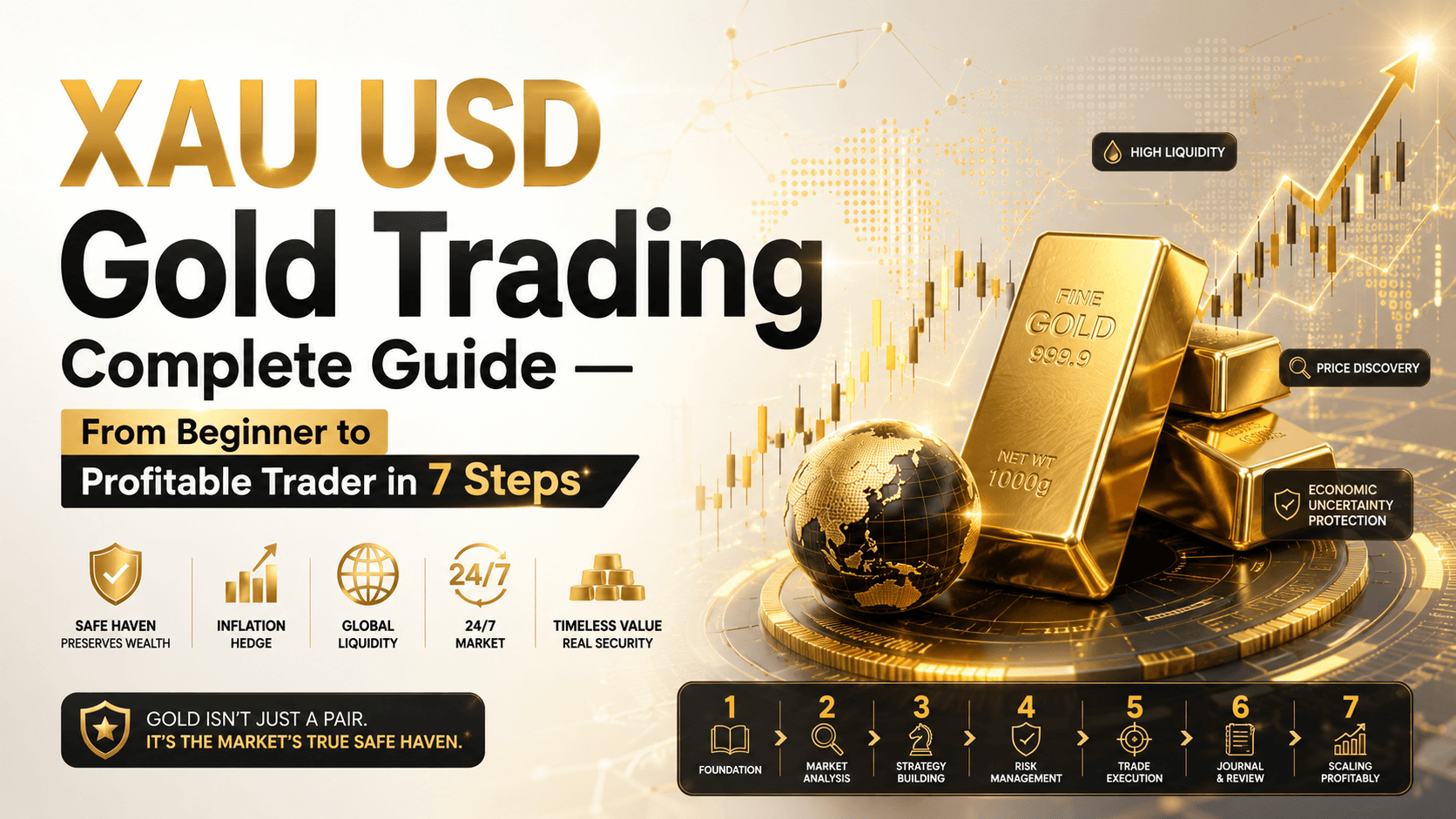
| XAU/USD (Gold) | How many USD for 1 oz of Gold | 2,350 |
The Wrong Way Most Beginners Trade
Most new traders jump in thinking: "I'll buy EUR/USD, it'll go up, and I'll make money."

But here's what happens next:
You open a trade. EUR/USD is at 1.0850. You buy 0.1 lots (10,000 units). Price moves to 1.0860 — that's 10 pips. You think: "Great, I made $10!"
Then it drops to 1.0840. You're down $10. Panic sets in. You close the trade at a loss.
Sound familiar?
Here's The Right Way
Professional traders don't guess. They have a plan. Let me show you a real example:
The Setup:
- You have a $1,000 account
- You risk 2% per trade = $20
- You see a clear support level on EUR/USD at 1.0830
- You enter at 1.0850, stop loss at 1.0820 (30 pips)
- Target at 1.0910 (60 pips)
The Math:
- 30 pip stop loss × $0.67/pip (on 0.067 lots) = $20 risk
- 60 pip target × $0.67/pip = $40 potential gain
- Risk:Reward = 1:2
That's a trade worth taking. Not because you'll win every time — but because when you do win, it covers your losses.
3 Things That Actually Move The Forex Market
People think forex is random. It's not. Three things drive every single move:
1. Central Banks
When the Federal Reserve raises interest rates, the US dollar gets stronger. Why? Because higher rates attract investors looking for better returns.
In 2023, when the Fed hiked rates from 0% to 5%, the dollar surged against almost every currency. Traders who understood this made money. Those who didn't? They lost.
2. Economic Data
Every month, governments release data on jobs, inflation, and growth. When US jobs data comes out stronger than expected, the dollar usually jumps.
Real example: In February 2025, US non-farm payrolls came in at 350,000 vs 200,000 expected. EUR/USD dropped 80 pips in 30 minutes. On 0.1 lots, that's $80. On 1.0 lots? $800.
3. Market Sentiment
Sometimes, traders just feel a certain way. If everyone thinks the euro will weaken, they sell. And their selling makes it happen. It's a self-fulfilling prophecy.
Forex vs Stocks — Which One Is Right For You?
| Feature | Forex | Stocks |
|---|---|---|
| Market Hours | 24 hours, 5 days a week | 6.5 hours, 5 days a week |
| Leverage | Up to 50:1 (retail) | 2:1 typically |
| Minimum Capital | $50-$100 | $500-$1,000 |
| Liquidity | $6.6 trillion daily | $200-500 billion daily |
| Can You Short? | Yes, easily | Yes, but more complex |
| Volatility | High (especially on news) | Moderate |
The Biggest Mistake Beginners Make (And How To Avoid It)
Here's the trap: overtrading.
You see a 10-pip move. You take it. Then another. And another. By the end of the day, you've made 10 trades, paid spreads on all of them, and your account is down 5%.
The fix: Trade less. Wait for setups with a clear risk:reward of at least 1:2. If you can't find one, don't trade. Simple.
FAQ
Is forex trading risky?
Yes, especially with leverage. 71% of retail traders lose money. But with proper risk management (1-2% per trade, stop losses, and a plan), you can control the risk.

How much money do I need to start forex trading?
You can start with as little as $50 on some brokers. But I recommend at least $500. With $500, you can trade 0.01 lots (micro lots) and risk $5-10 per trade without blowing up.
What's the best time to trade forex?
The best time is during the London-New York overlap (1 PM - 5 PM GMT). That's when the most volume flows through, spreads are tightest, and moves are cleanest.
Can I trade forex part-time?
Absolutely. Many successful traders only trade 1-2 hours a day. Focus on the London or New York sessions, pick 2-3 currency pairs, and master them.
📝 Quick Recap
- Forex is the exchange of one currency for another — always in pairs
- The market is open 24/5 and trades $6.6 trillion daily
- Central banks, economic data, and sentiment drive price moves
- Risk 1-2% per trade max. Use stop losses. Always.
- Trade less. Wait for good setups. Patience pays.
Your Quick Win Today
Open your chart right now. Pull up EUR/USD on the 1-hour timeframe. Find the last 3 big news events (check an economic calendar). See how price reacted around those releases. That's how the forex market works — in real time.
Now you know. Go practice.