What Makes GBP/USD Different From Other Forex Pairs?
Ever wondered why traders call GBP/USD "Cable"? Back in the 1800s, exchange rates between London and New York traveled through actual telegraph cables under the Atlantic Ocean. The name stuck — and so did the pair's reputation for being one of the most exciting currency pairs to trade.
GBP/USD isn't just another major pair. It's got personality. The British pound tends to make bigger moves than the euro, and it reacts hard to news. If you're looking for a pair that keeps you on your toes, this is it.
Let's break down the GBP USD characteristics and trading tips you actually need to know — not the textbook fluff.
The Real Numbers Behind Cable
Here's what makes GBP/USD stand out from the crowd:
- Daily turnover: Around $432 billion trades daily in GBP/USD. That's serious liquidity, which means tight spreads and fast execution during active hours.
- Average daily move: Cable moves 80-120 pips on a normal day. On big news days? You can see 200+ pips in hours.
- Spread: During London-New York overlap, you'll see spreads as tight as 0.8-1.2 pips. Outside those hours, expect 1.5-3 pips.
Why this matters to you: Tight spreads mean less slippage and lower costs per trade. But the volatility means you need to respect your stop losses.
What Drives GBP/USD Price Action?
Understanding the GBP USD characteristics and trading tips means knowing what makes this pair tick. Here are the four biggest price drivers:
1. Interest Rate Decisions (BoE vs Fed)
This is the big one. When the Bank of England raises rates and the Fed holds steady, GBP strengthens. When the Fed hikes and BoE stays put, USD strengthens.
Real example: In September 2022, the Bank of England raised rates to 2.25%. The Fed raised to 3.25% the same week. The dollar's higher rate advantage pushed GBP/USD from 1.1500 down to 1.0350 within two weeks. That's over 1,100 pips.
On 0.1 lots, that's $1,100 per pip move. On 1.0 lots? $11,000. See why rate decisions matter?
2. Economic Data Releases
GBP/USD is hypersensitive to economic numbers from both countries. The key releases to watch:
- UK CPI (inflation): Released monthly. Higher inflation usually means BoE will hike rates — bullish for GBP.
- US Non-Farm Payrolls (NFP): First Friday of every month. Strong NFP = strong USD = Cable drops.
- UK GDP: Quarterly. Strong growth = stronger pound.
- US Retail Sales: Monthly. Consumer spending drives the US economy.
⚠️ Common trap: Most beginners trade the news release itself. By the time you enter, the move is already priced in. Wait 15-30 minutes after the release for the real trend to establish.
3. Political Events and Sentiment
Brexit taught every trader a painful lesson: politics can wreck your position in minutes. In June 2016, GBP/USD dropped over 1,000 pips in a single day after the Leave vote won.
More recently, the September 2022 "mini-budget" crisis saw Cable hit an all-time low of $1.0350. The market didn't like the tax cut plans, and it showed.
Here's the deal: When uncertainty hits the UK, traders sell first and ask questions later. Always tighten your stops during major political events.
4. Risk Sentiment (Safe Haven Flows)
The US dollar is the world's safe haven currency. When global markets panic — think COVID-19, banking crises, wars — money flows into USD. GBP/USD drops.
When markets are optimistic, money flows into higher-yielding currencies like GBP. Cable rises.
GBP/USD vs Other Major Pairs — Quick Comparison
| Characteristic | GBP/USD | EUR/USD | USD/JPY |
|---|---|---|---|
| Average daily move | 80-120 pips | 60-90 pips | 50-80 pips |
| Volatility rating | High | Medium | Medium-Low |
| Best trading hours | London-NY overlap | London-NY overlap | Asian-London overlap |
| News sensitivity | Very high | High | Moderate |
| Spread (active hours) | 0.8-1.2 pips | 0.5-0.8 pips | 0.5-1.0 pips |
| Correlation with GBP/USD | — | +0.70 to +0.85 | -0.40 to -0.60 |
Key insight: GBP/USD moves more than EUR/USD on most days. That means bigger profit potential — but also bigger losses if you're wrong. Adjust your position size accordingly.

Best Times to Trade GBP/USD
Timing matters more with Cable than most pairs. Here's when the action happens:
The London-New York Overlap (The Sweet Spot)
This is prime time for GBP/USD. Both markets are open, liquidity is highest, and spreads are tightest.
- Winter (UTC): 1:00 PM to 5:00 PM
- Summer (UTC): 12:00 PM to 4:00 PM
During this window, you'll see the biggest moves and the fastest fills. It's also when most US economic data drops — NFP, CPI, retail sales — which adds fuel to the fire.
The London Open (7:00-8:00 AM UTC)
European traders wake up and start moving money. This is when the day's trend often establishes itself. If you're a trend trader, watch the first hour of London for direction.
What to Avoid
- Asian session (overnight): Low liquidity, wider spreads, fake moves. Cable can drift 20-30 pips but it's noise, not signal.
- Friday after 5:00 PM UTC: Traders close positions for the weekend. Liquidity dries up, spreads widen, and gaps can happen over the weekend.
3 GBP/USD Trading Strategies That Actually Work
Now for the practical GBP USD characteristics and trading tips — strategies that match the pair's behavior.
Strategy 1: Breakout Trading on the London Open
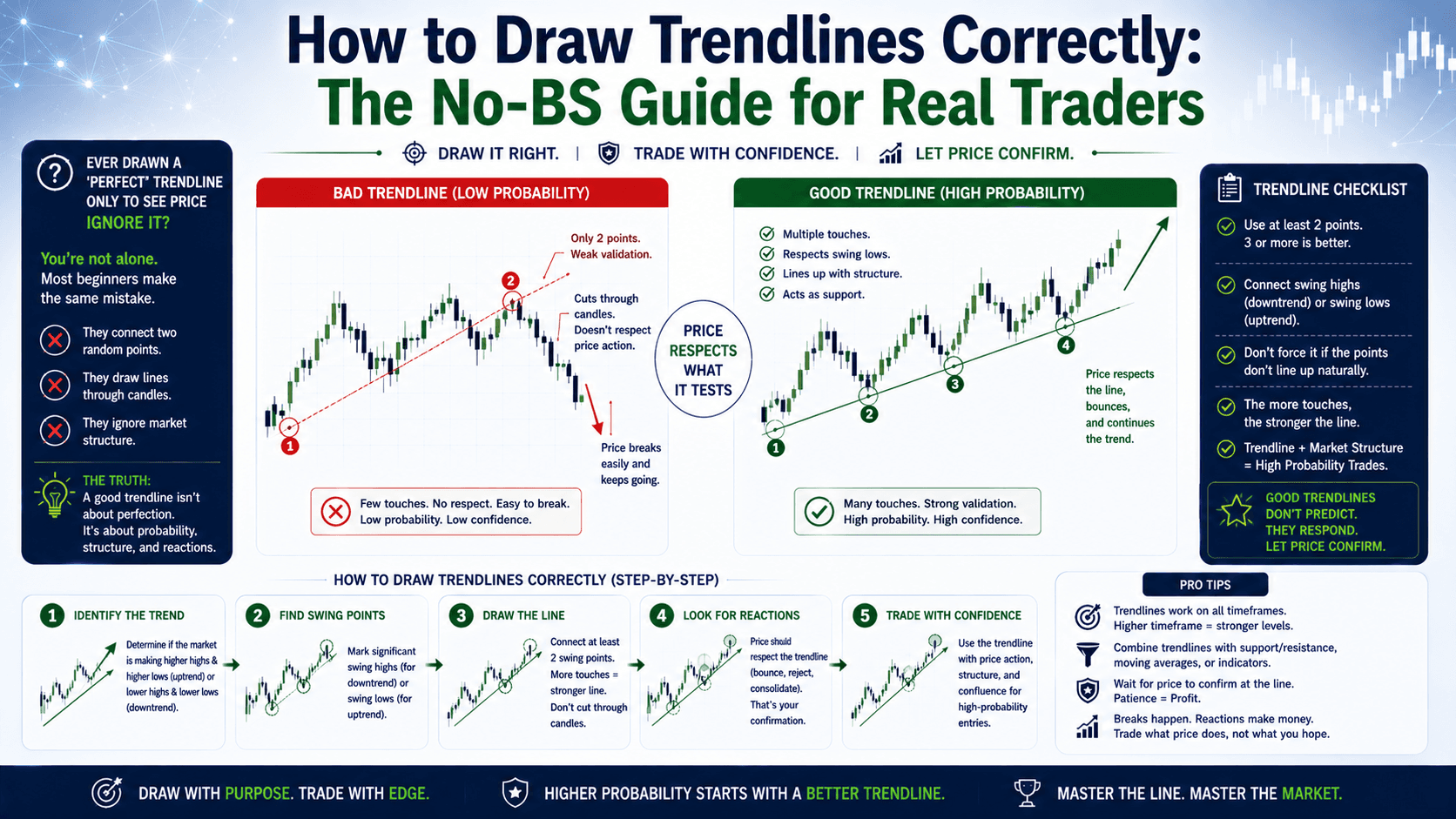
Why it works: GBP/USD loves to break out of overnight ranges when London opens. The accumulation of orders during the Asian session creates clear support and resistance levels.
How to trade it:
- Mark the high and low of the Asian session (midnight to 7:00 AM UTC).
- Place a buy stop 2 pips above the Asian high.
- Place a sell stop 2 pips below the Asian low.
- Set your stop loss at the opposite side of the range.
- Target: 1.5x to 2x the range width.
Real example: Asian range = 1.2650 to 1.2690 (40 pips). Buy stop at 1.2692, stop at 1.2650. Target at 1.2752 (60 pips). Risk = 42 pips, reward = 60 pips. On 0.1 lots, risk = $42, reward = $60.
Strategy 2: Trend Trading with 50 and 200 EMA
Why it works: Cable trends well during the London-NY overlap. The 50-period EMA on the 1-hour chart gives you the short-term trend direction.
How to trade it:
- On the 1-hour chart, add the 50 EMA and 200 EMA.
- When 50 EMA is above 200 EMA, look for long entries on pullbacks to the 50 EMA.
- When 50 EMA is below 200 EMA, look for short entries on bounces to the 50 EMA.
- Stop loss: 20 pips below the 50 EMA (for longs) or 20 pips above (for shorts).
- Target: Previous swing high/low or 1:2 risk/reward.
Strategy 3: News Reaction (Post-Release)
Why it works: The initial spike after news is noise. The real move comes 15-30 minutes later when the market decides what the data actually means.
How to trade it:
- Wait for the news release (NFP, CPI, BoE rate decision).
- Let the first spike settle — usually 5-10 minutes.
- Look for a pullback to the pre-release range.
- Enter in the direction of the initial move if the pullback holds.
- Stop loss: 20-30 pips. Target: 40-60 pips.
⚠️ Warning: Don't trade the news itself. The spread can widen to 5-10 pips during the release, and slippage is common. Wait for the dust to settle.
Risk Management: The $20 Rule for Cable
GBP/USD moves fast. Without proper risk management, one bad trade can wipe out a week of gains.
Here's the rule: Never risk more than 1-2% of your account on a single trade.
Let's math it out:
- Account size: $2,000
- Max risk per trade: 2% = $40
- Stop loss: 30 pips
- Position size = $40 ÷ (30 pips × $10 per pip on 1.0 lot) = 0.13 lots
- On 0.13 lots, each pip is worth $1.30. 30 pips × $1.30 = $39 risk.
See what happened there? We calculated the exact lot size to keep risk under control. That's how professionals do it.
FAQ
Is GBP/USD good for beginners?
It can be, but start with a demo account. Cable's volatility means bigger moves — both good and bad. Practice your strategies with virtual money first, then move to real funds once you're consistently profitable.

What is the best time of day to trade GBP/USD?
The London-New York overlap (1:00 PM to 5:00 PM UTC in winter, 12:00 PM to 4:00 PM in summer). That's when liquidity peaks, spreads are tightest, and you get the most reliable price action.
How does GBP/USD correlate with other currency pairs?
GBP/USD has a strong positive correlation with EUR/USD (around +0.70 to +0.85) and a negative correlation with USD/CHF. When EUR/USD moves, Cable often follows — but with bigger moves.
What is the average spread on GBP/USD?
During active trading hours, you'll see spreads of 0.8 to 1.2 pips. Outside those hours or during major news events, spreads can widen to 3-5 pips or more.
Quick Recap
- GBP/USD (Cable) is one of the most volatile major pairs — expect 80-120 pip daily moves
- Key drivers: interest rate decisions, economic data, political events, and risk sentiment
- Best trading hours: London-New York overlap (1:00-5:00 PM UTC winter)
- Use breakout, trend, and news reaction strategies that match Cable's behavior
- Never risk more than 2% per trade — calculate your position size before entering
Quick Win: Do This Today
Open your trading platform. Pull up GBP/USD on the 1-hour chart. Find the Asian session range for today (midnight to 7:00 AM UTC). Mark the high and low with horizontal lines. Now watch what happens when London opens — does price break out of that range? If yes, that's your setup for tomorrow. Practice identifying it. You'll be amazed how often it works.