
You Drew the Lines. Now What?
You've probably seen it. A chart with those horizontal lines — 0.0%, 23.6%, 38.2%, 50.0%, 61.8%, 100%. The Fibonacci retracement tool. It looks like magic. But here's the problem most traders face: they draw the lines and then... nothing happens. Price hits the 61.8% level and just blows through it like it's not even there. Sound familiar?
The issue isn't the tool. It's how you're using it. Most beginners slap a Fibonacci retracement on a random swing and hope for the best. That's not a strategy. That's gambling with a fancy drawing.
Let's fix that. Here's the actual fibonacci retracement how to use guide — with real numbers, real examples, and the mistakes most people never talk about.
What is a Fibonacci Retracement? (The 30-Second Version)
A Fibonacci retracement is a technical analysis tool that draws horizontal lines at key ratios — 23.6%, 38.2%, 50%, 61.8% — between a swing high and a swing low. The idea is that after a strong price move, the market will often retrace (pull back) to one of these levels before continuing in the original direction.
These ratios come from the Fibonacci sequence (0, 1, 1, 2, 3, 5, 8, 13, 21...). The 61.8% level is the famous "Golden Ratio" — divide any number in the sequence by the next one (e.g., 21/34 = 0.6176). The 38.2% comes from dividing a number by the one two places ahead (e.g., 13/34 = 0.3823).
But honestly? You don't need to be a mathematician. Your charting platform does the math. You just need to know where to draw the tool and what to look for when price gets there.
Let's compare the two most critical levels:
| Level | Significance | Typical Reaction |
|---|---|---|
| 38.2% | Shallow retracement — weak pullback | Often a quick bounce in strong trends |
| 61.8% | Deep retracement — Golden Ratio | Strongest reversal zone; most watched by institutions |
The #1 Mistake: Drawing It on the Wrong Swing
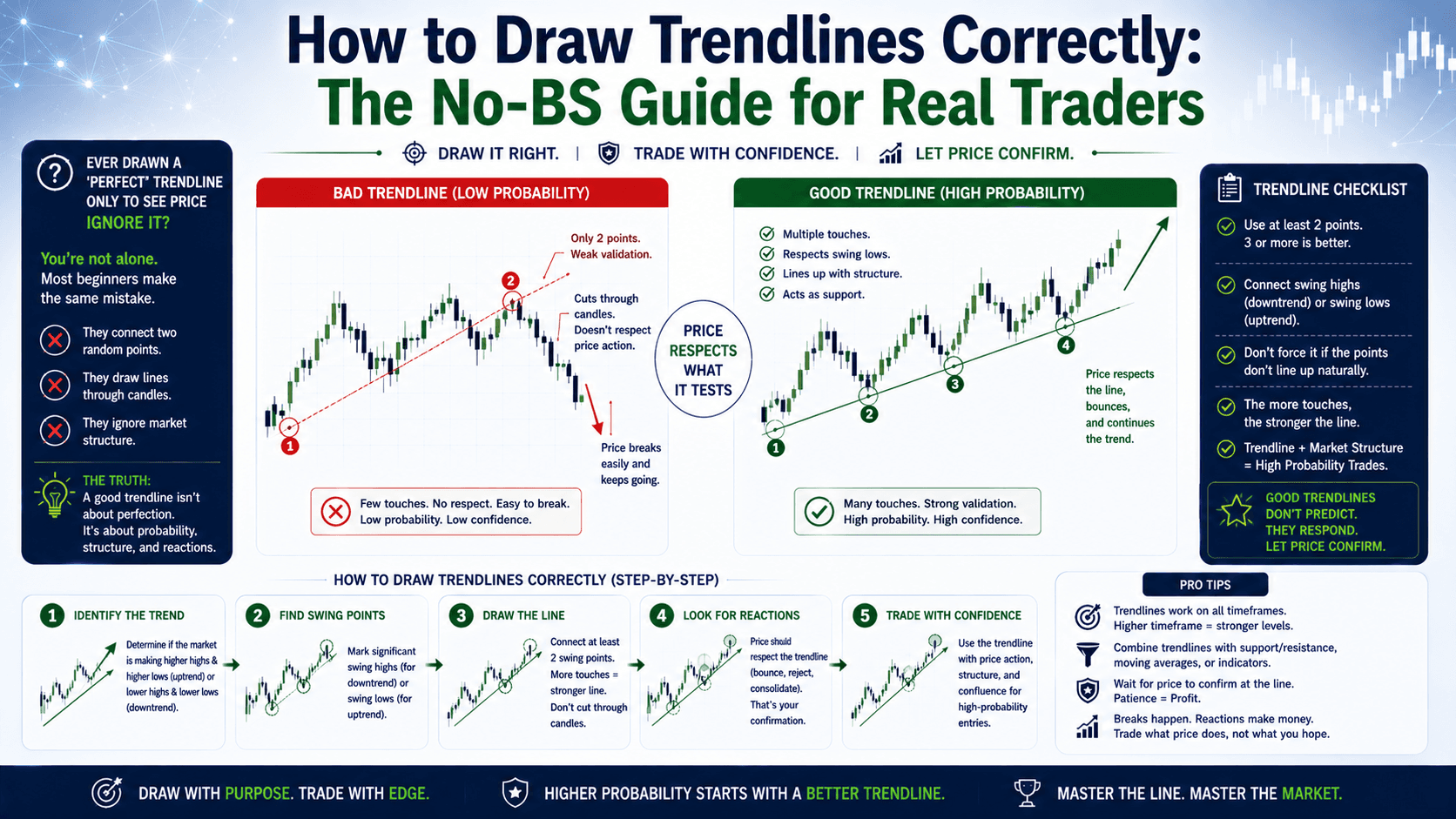
Here's the wrong way: You see a random high and low on your chart, draw the Fibonacci tool from the top to the bottom, and wait. Price hits the 61.8% level and does nothing. You get frustrated and ditch the tool forever.

The right way: You only draw Fibonacci retracements on clear, impulsive moves. A move where price went straight up or down with no significant pullback in between. That's the swing you want to measure.
Let's use a real example with EUR/USD.
Scenario: EUR/USD Impulsive Move
EUR/USD rallies from 1.0800 to 1.1000 in a clean, 200-pip move over two days. No major pullbacks. That's your swing.
- Swing Low: 1.0800
- Swing High: 1.1000
- Total Move: 200 pips
You draw your Fibonacci retracement from the low (1.0800) to the high (1.1000). The tool plots these levels:
- 23.6%: 1.0953
- 38.2%: 1.0924
- 50.0%: 1.0900
- 61.8%: 1.0876
Price pulls back and tests the 61.8% level at 1.0876. You're looking for a bounce to enter a long trade (buying the dip in an uptrend).
Entry: 1.0876 (at the 61.8% level)
Stop Loss: 1.0850 (26 pips below entry — gives room for a false break)
Target: 1.1000 (previous high — 124 pips away)
Risk:Reward = 1:4.8 — That's a solid setup.
Now let's do the math on a 0.1 lot position:
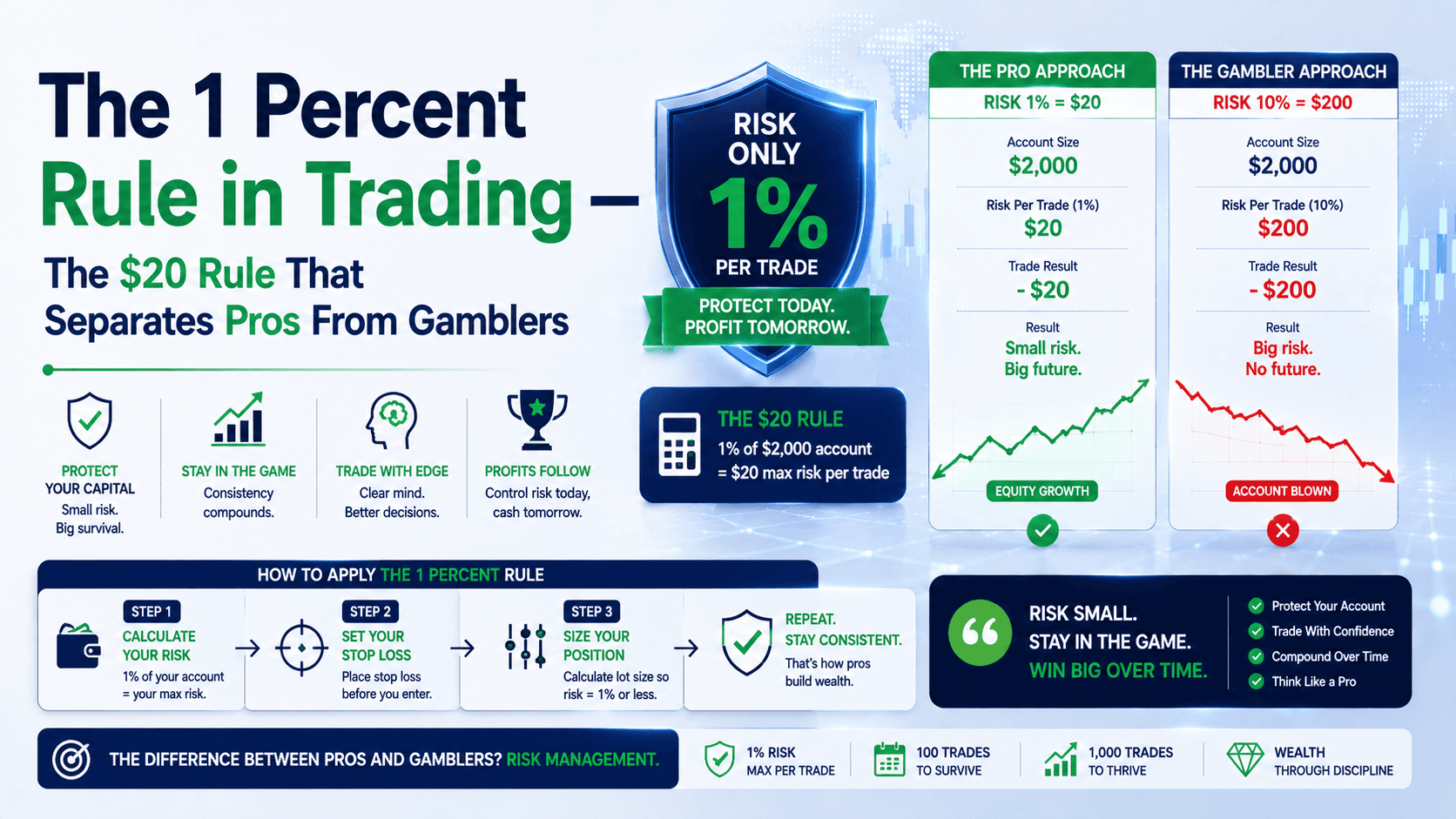
- Risk: 26 pips × $1/pip = $26
- Reward: 124 pips × $1/pip = $124
- On a $1,000 account, that's 2.6% risk for 12.4% reward potential.
Why the 61.8% Level is King
The data is clear. The 61.8% retracement level — the Golden Ratio — is the most respected level by institutional traders and algorithms. It's not random. When a massive number of market participants are watching the same level, that level becomes a self-fulfilling prophecy.
Here's what happens at the 61.8% level:
- In an uptrend: It acts as support. Price bounces, you buy.
- In a downtrend: It acts as resistance. Price rejects, you sell.
But here's the nuance most guides miss: the 61.8% level works best when it aligns with another technical factor. A trendline. A previous support/resistance zone. A moving average. When two or three tools point to the same price, the probability of a reversal increases significantly.
Fibonacci Retracement How to Use: The 3-Step Framework
Stop guessing. Follow this framework on every trade:
Step 1: Identify the Trend
Are you in an uptrend or a downtrend? Look at the daily chart. Higher highs and higher lows = uptrend. Lower highs and lower lows = downtrend. Only trade in the direction of the trend. Fibonacci retracements are for entries within a trend, not for catching reversals.
Step 2: Draw the Fibonacci on the Last Impulsive Move
Find the most recent clean swing. In an uptrend, draw from the swing low to the swing high. In a downtrend, draw from the swing high to the swing low. Use the daily or 4-hour chart for your primary levels — they have more weight than lower timeframes.
Step 3: Wait for Price to Reach a Key Level + Confirmation
Don't just buy at the 61.8% level blindly. Wait for confirmation. This could be:
- A bullish engulfing candle at the level (for a buy)
- A hammer candle with a long lower wick
- RSI showing oversold/overbought conditions at the level
- A confluence with a trendline or moving average
Wrong Way: "EUR/USD hit the 61.8% level. I'm buying."
Right Way: "EUR/USD hit the 61.8% level and formed a hammer candle with a 15-pip lower wick. RSI is at 35 (not yet oversold, but close). The 200 EMA is also at 1.0870. Three confluences. I'm buying with a stop at 1.0850."
See the difference? The second approach has evidence.
Comparing Fibonacci vs. Other Retracement Methods
| Method | Best For | Weakness |
|---|---|---|
| Fibonacci Retracement | Identifying precise reversal zones within a trend | Can whipsaw if drawn on the wrong swing |
| Horizontal Support/Resistance | All market conditions | Subjective — different traders draw different lines |
| Moving Averages (e.g., 50 EMA) | Dynamic support/resistance in trends | Lagging — price may have already reversed by the time you see it |
FAQ
What is the best Fibonacci retracement level to trade?
The 61.8% level is the most reliable. It's the Golden Ratio and is watched by the most traders and algorithms. The 38.2% level is also useful in strong trends, but the 61.8% offers the best risk-to-reward ratio.

How do I draw Fibonacci retracement correctly?
In an uptrend, draw from the swing low (bottom) to the swing high (top). In a downtrend, draw from the swing high to the swing low. Only use clean, impulsive moves — not choppy sideways price action.
Can I use Fibonacci retracement on any timeframe?
Yes, but the higher the timeframe, the stronger the level. A 61.8% retracement on the daily chart is more significant than one on the 5-minute chart. Use higher timeframes for your primary analysis.
Why does price sometimes blow through Fibonacci levels?
No tool is 100% accurate. Fibonacci levels are zones of interest, not guarantees. Price can break through a level if the trend is exceptionally strong or if a major news event overrides technical factors. Always use a stop loss.
Quick Recap
- Draw Fibonacci retracements only on impulsive moves within a trend.
- The 61.8% level is the most important — use it as your primary entry zone.
- Always wait for confirmation (candlestick pattern, RSI, confluence) before entering.
- Set your stop loss below the swing low (or above the swing high in a downtrend) — give it breathing room.
- Combine Fibonacci with other tools for higher probability setups.
Quick Win: Do This Right Now
Open your charting platform. Pull up EUR/USD on the 4-hour timeframe. Find the most recent clean uptrend. Draw a Fibonacci retracement from the swing low to the swing high. Look at where the 61.8% level sits. Is price anywhere near it? If not, just observe. If it is, wait for a bullish candlestick pattern to form at that level. That's your potential entry. No rush. Just practice the process.