Ever Wondered What Happens When You Trade Currencies Without the Dollar?
So you've been trading EUR/USD. Maybe a bit of GBP/USD. Feels safe, right? The dollar's in the middle of everything.
But here's the thing — the forex market is bigger than just the greenback. There's a whole world of currency pairs that don't touch the US dollar at all. They're called cross currency pairs. And once you understand them, your trading world gets a whole lot bigger.
Let's break down what cross currency pairs are, why they matter, and how you can actually trade them without getting burned.
What Are Cross Currency Pairs? (Plain English Version)
Cross currency pairs are any forex pair that doesn't include the US dollar. Simple as that.
Instead of EUR/USD or GBP/USD, you're looking at pairs like:
- EUR/GBP (Euro vs British Pound)
- GBP/JPY (Pound vs Japanese Yen)
- AUD/CAD (Australian Dollar vs Canadian Dollar)
- EUR/JPY (Euro vs Japanese Yen)
No dollar involved. Just two currencies going head-to-head.
Here's a quick comparison to make it crystal clear:
| Type | Example | Includes USD? |
|---|---|---|
| Major Pair | EUR/USD | Yes |
| Cross Pair | EUR/GBP | No |
| Major Pair | GBP/USD | Yes |
| Cross Pair | GBP/JPY | No |
See the pattern? If there's no USD, it's a cross.
Why Trade Cross Currency Pairs? The Real Reason
Here's the pain point most beginners don't see: when you trade EUR/USD, you're basically betting on the dollar's strength or weakness. Every move is filtered through the greenback.

But with cross currency pairs? You're trading the direct relationship between two economies. No middleman.
Let me show you what I mean with a real scenario:
Wrong Way (what most beginners do):
You see the Euro strengthening and the British Pound weakening. You think "EUR/USD is going up." But the dollar is also moving — so your trade gets confused. You enter at 1.0850, the dollar strengthens, and suddenly EUR/USD drops to 1.0800. You lose $50 on 0.1 lots. The euro IS stronger than the pound — but you couldn't see it because the dollar got in the way.
Right Way (what smart traders do):
You trade EUR/GBP directly. Euro at 0.8650, pound at 0.8700. You go long EUR/GBP at 0.8650 with a 20-pip stop and a 40-pip target. On 0.1 lots, each pip is worth about $1.30 (because GBP is the quote currency). Price moves to 0.8690. You just made $52. And the dollar? It didn't matter at all.
That's the power of cross currency pairs. You're cutting out the noise.
The 3 Types of Cross Currency Pairs You Need to Know
Not all crosses are created equal. Let me break them down:
1. Minor Currency Pairs (The Liquid Ones)
These are the most traded crosses. They involve major currencies like EUR, GBP, JPY, CHF, AUD, CAD, and NZD — just without the dollar.
Examples: EUR/GBP, EUR/JPY, GBP/JPY, AUD/CAD
These have decent liquidity. Spreads are wider than majors (think 2-5 pips instead of 1-2), but still manageable.
2. Exotic Currency Pairs (The Wild Ones)
One major currency + one emerging market currency. Think USD/TRY (Turkish Lira), USD/ZAR (South African Rand), or USD/MXN (Mexican Peso).
These are volatile. Spreads can be 20-50 pips. Liquidity is thin. Not for beginners.
3. The "In-Between" Crosses
Some pairs don't fit neatly into categories. EUR/CHF is technically a cross (no USD), but it's heavily influenced by the Swiss National Bank. AUD/JPY reacts to risk sentiment and commodity prices. Each cross has its own personality.
Here's a comparison table to keep it straight:
| Type | Examples | Liquidity | Spread (typical) | Best For |
|---|---|---|---|---|
| Minor Crosses | EUR/GBP, EUR/JPY | High | 2-5 pips | Intermediate traders |
| Exotic Crosses | USD/TRY, USD/ZAR | Low | 20-50 pips | Advanced traders only |
| Commodity Crosses | AUD/CAD, NZD/JPY | Medium | 3-8 pips | Traders who follow raw materials |
What Actually Moves Cross Currency Pairs?
This is where it gets interesting. Cross pairs dance to a different beat than majors.
Interest Rate Differentials
When one central bank hikes rates and another holds, money flows to the higher-yielding currency. Simple.
Example: The Bank of England raises rates to 5.25%. The European Central Bank keeps rates at 4.00%. Suddenly, GBP looks more attractive than EUR. EUR/GBP drops. If you're short EUR/GBP, you win.
Economic Data Releases
GDP, inflation, employment — these hit crosses hard because they show the relative health of two economies.
Real scenario: UK inflation comes in at 4.0% (higher than expected). Eurozone inflation is 2.5%. The pound strengthens against the euro. EUR/GBP drops 30 pips in an hour. On 0.1 lots, that's about $39. On 0.5 lots? $195.
Risk Sentiment
When markets get scared, money flows to safe havens (JPY, CHF, USD). When risk appetite is high, commodity currencies (AUD, NZD, CAD) rally.
This is why GBP/JPY can swing 100 pips in a single news event. It's a high-beta pair — both currencies are sensitive to risk.
How to Trade Cross Currency Pairs (Without Getting Wrecked)
Here's the mistake most beginners make: they trade crosses the same way they trade majors. That's a fast track to losing money.
Rule #1: Adjust your position size
GBP/JPY moves about 80-120 pips per day on average. EUR/USD moves about 60-80 pips. If you use the same lot size on both, you're taking more risk on GBP/JPY without realizing it.
Let's do the math:
- EUR/USD: 0.1 lots, 60-pip daily range = $60 potential movement
- GBP/JPY: 0.1 lots, 100-pip daily range = roughly $70-80 potential movement (because JPY pairs have different pip values)
Same lot size. Different risk. Adjust accordingly.
Rule #2: Watch the session
EUR crosses are most active during the European session (8 AM - 12 PM EST). JPY crosses come alive during the Asian session (7 PM - 4 AM EST). Trading a cross outside its active session means wider spreads and choppier price action.
Rule #3: Don't ignore the dollar completely
Even though crosses don't include USD, the dollar still influences them indirectly. If the dollar strengthens broadly, it can affect capital flows into other currencies. Keep one eye on the dollar index (DXY).
FAQ
What are cross currency pairs in forex?
Cross currency pairs are forex pairs that do not include the US dollar. They allow traders to trade the direct relationship between two non-dollar currencies, like EUR/GBP or AUD/JPY.

Are cross currency pairs riskier than major pairs?
Generally, yes. Cross pairs often have wider spreads and lower liquidity than major pairs. Some crosses like GBP/JPY are also more volatile. But with proper position sizing, they can be traded safely.
Which cross currency pair is best for beginners?
EUR/GBP is a good starting point. It has decent liquidity, lower volatility than GBP/JPY, and clear fundamental drivers (ECB vs Bank of England). Start with 0.01 lots and small stops.
How do I calculate pip value on cross pairs?
It depends on the quote currency. For pairs where USD is not the quote (like EUR/GBP), you need to convert the pip value to USD using the current exchange rate. Most trading platforms do this automatically.
📝 Quick Recap
- Cross currency pairs exclude the US dollar — they trade two non-dollar currencies directly
- They offer clearer signals when you want to trade the relationship between two economies without USD interference
- Minor crosses (EUR/GBP, EUR/JPY) are more liquid; exotic crosses (USD/TRY) are volatile and risky
- Adjust position size based on volatility — GBP/JPY moves more than EUR/USD
- Trade crosses during their active sessions for better spreads and cleaner price action
🚀 Your Quick Win
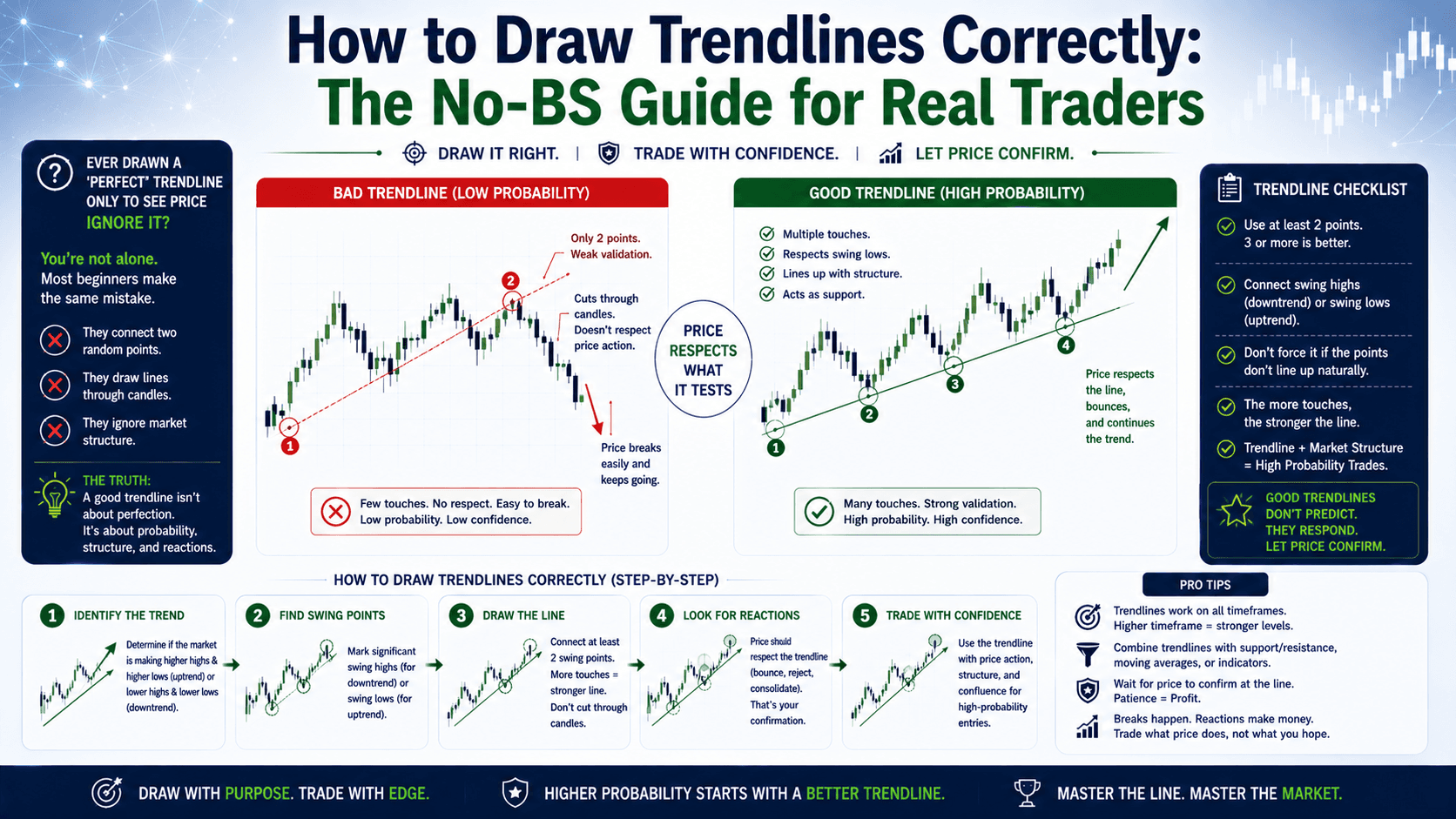
Open your trading platform right now. Pull up EUR/GBP on the 1-hour chart. Find the last 3 times price touched a support or resistance level. Notice how cleanly it reacted compared to EUR/USD? That's because there's no dollar noise. Start watching one cross pair for 5 minutes a day. You'll start seeing patterns you missed before.