
Ever Opened a Trade and It's Immediately in the Red?
You see a perfect setup on EUR/USD. Price is at 1.0850. You click "Buy."
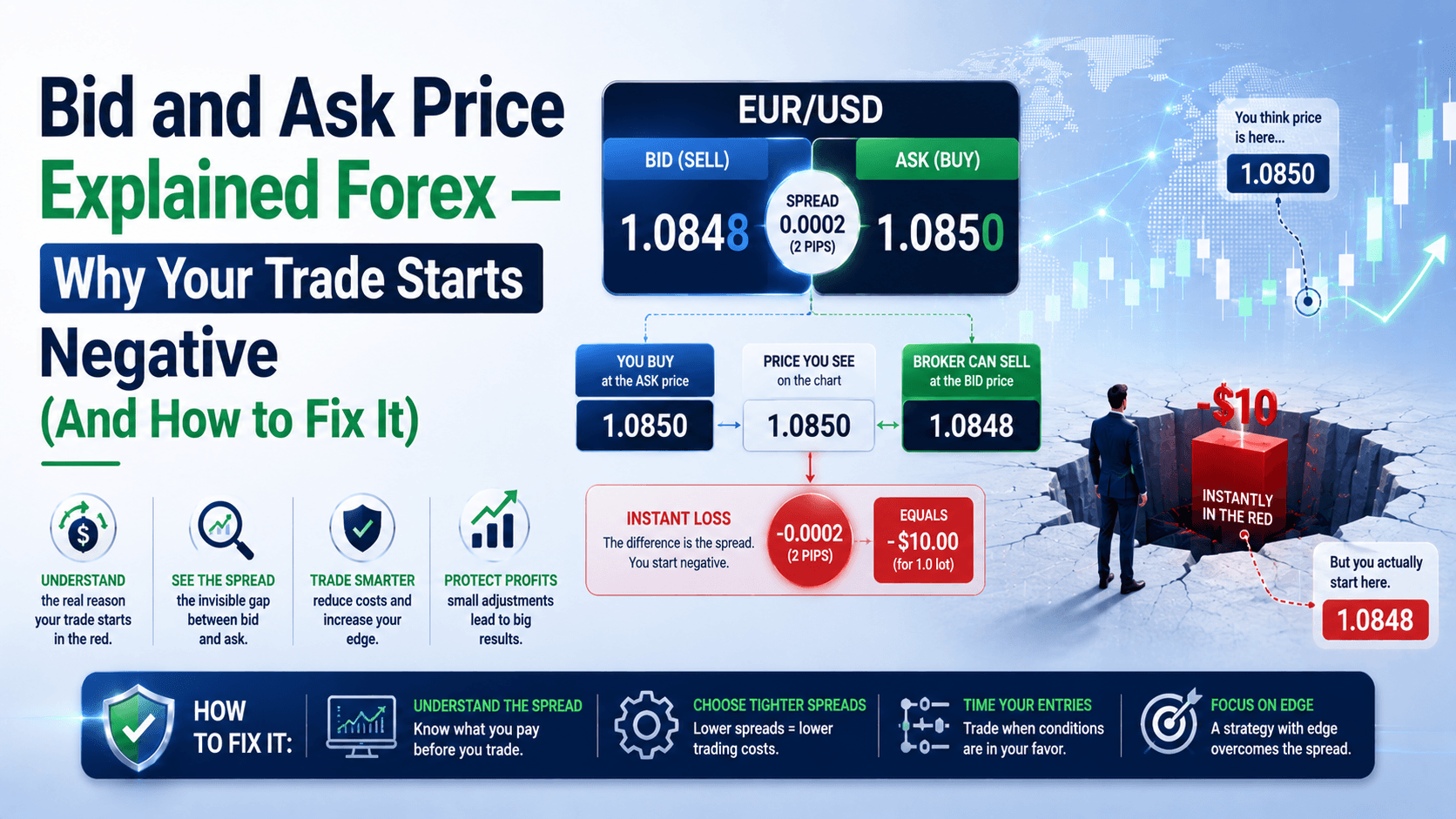
Suddenly, your trade shows -$10. Before price even moves.
What just happened?
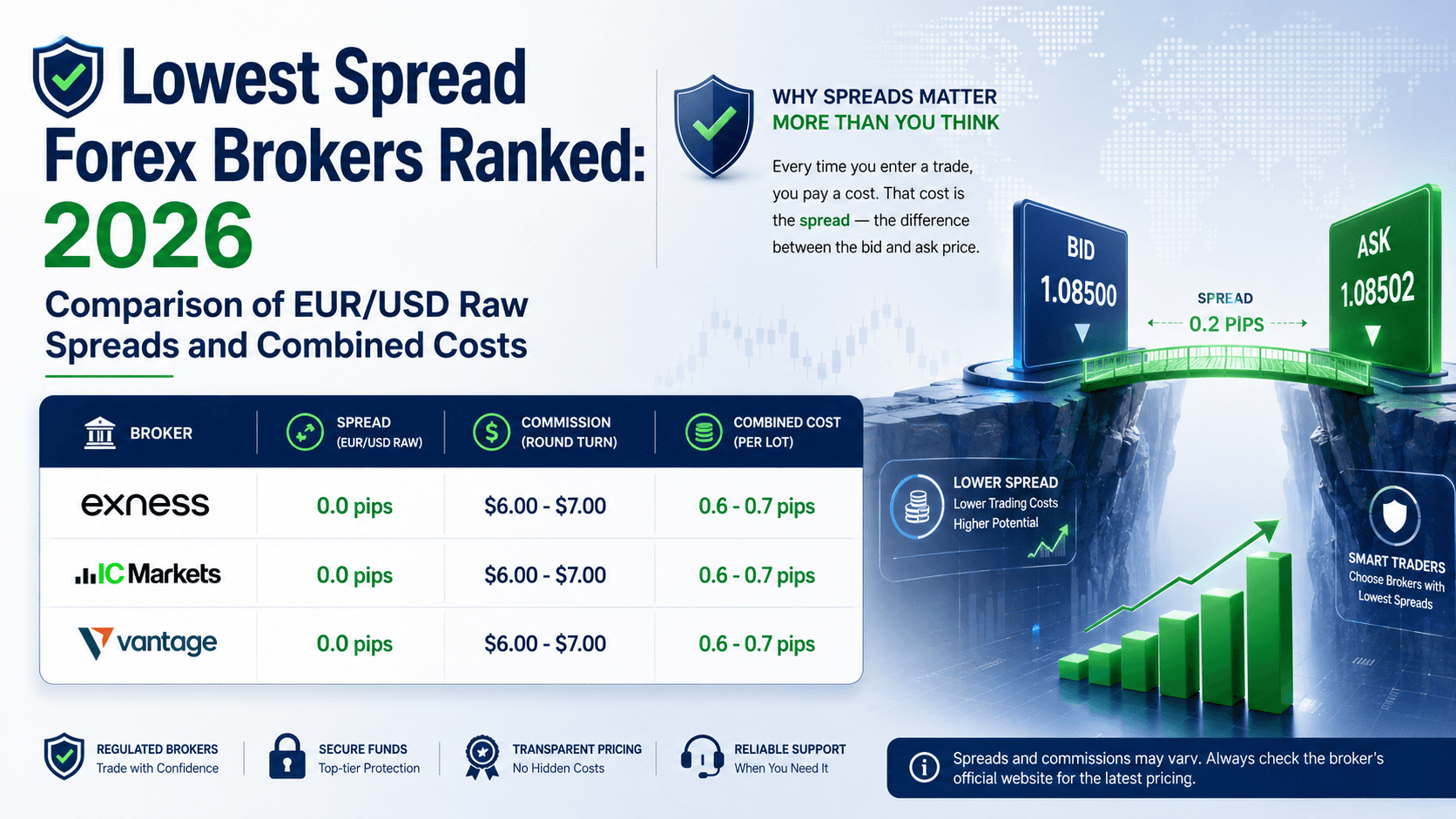
You didn't make a bad trade. You just met the bid and ask spread — the hidden cost every broker charges.
Let me explain how bid and ask prices work, why they cost you money, and how to stop overpaying.
What Is the Bid and Ask Price in Forex?
In forex, every currency pair has two prices at the same time:
- Bid — The price you SELL at
- Ask — The price you BUY at
They're always different. And that difference is called the spread.
Here's a real quote for EUR/USD:
EUR/USD: 1.0850 / 1.0852
- Bid (Sell): 1.0850
- Ask (Buy): 1.0852
- Spread: 0.0002 (2 pips)
When you buy EUR/USD at 1.0852, you're paying the ask price. If you immediately sold it back, you'd get the bid price — 1.0850. That's 2 pips lost instantly.
That's why your trade starts negative.
Why Does the Market Have Two Prices?
Think of a used car dealer. They buy cars at one price (bid) and sell them at a higher price (ask). The difference is their profit.

Your forex broker works the same way.
When you want to buy EUR/USD, the broker asks for a slightly higher price.
When you want to sell EUR/USD, the broker bids a slightly lower price.
The spread is how brokers make money — it's their transaction fee built into the price.
| Action | Price You Get | Example (EUR/USD) |
|---|---|---|
| Buy EUR/USD | Ask Price | 1.0852 |
| Sell EUR/USD | Bid Price | 1.0850 |
| Spread Cost | 0.0002 (2 pips) | $2 on 0.1 lot |
The Wrong Way vs. The Right Way
The Wrong Way: Most beginners ignore the spread. They see EUR/USD at 1.0850, click "Buy," and wonder why they're down $20 immediately.
The Right Way: Check the spread before every trade. Know your true entry and exit prices.
Let's do the math:
You have a $1,000 account. You trade 0.1 lots of EUR/USD (1 pip = $1).
- Spread: 2 pips = $2 cost
- Stop loss: 30 pips = $30 risk
- Target: 60 pips = $60 profit
That $2 spread means price needs to move 2 pips in your favor just to break even. On a 1:2 risk-reward trade, that's 3.3% of your potential profit gone to fees.
Now imagine trading exotic pairs like USD/TRY with a 50-pip spread. That's $50 cost on 0.1 lots before you even start.
What Affects the Spread Size?
Not all spreads are created equal. Here's what makes them wider or tighter:
| Factor | Tight Spread | Wide Spread |
|---|---|---|
| Currency Pair | EUR/USD, GBP/USD (majors) | USD/TRY, USD/ZAR (exotics) |
| Time of Day | London-New York overlap | Asian session, Sunday open |
| Volatility | Normal market conditions | News events, data releases |
| Broker Type | ECN/STP brokers | Market makers |
Major pairs like EUR/USD often have spreads under 1 pip with ECN brokers. Exotic pairs can have spreads of 20-50 pips or more.
That's why I always recommend beginners stick to the majors.
How to Reduce What You Pay in Spreads
You can't avoid spreads entirely. But you can minimize them:
- Trade major pairs — EUR/USD, GBP/USD, USD/JPY have the tightest spreads
- Trade during liquid hours — London and New York sessions (8 AM - 12 PM EST)
- Use limit orders — Instead of market orders, set a limit at the price you want
- Choose an ECN broker — They offer raw spreads + commission, often cheaper than market makers
- Check spreads before trading — Never assume. Look at the quote window first
FAQ
Do I buy at the bid or the ask?
You buy at the ask price and sell at the bid price. This is always the case with market orders.

What is a good spread in forex?
For major pairs like EUR/USD, anything under 1 pip is excellent with an ECN broker. For minor pairs, 2-5 pips is normal.
Why is the ask higher than the bid?
The ask is higher because the broker needs to make money. The difference (spread) is their fee for executing your trade.
Can the bid be higher than the ask?
No, not in normal market conditions. If you see this, you're looking at bad data or an extremely rare event.
How do I check the spread before trading?
Open your broker's quote window or order ticket. It will show the bid and ask prices side by side. The difference is your spread.
Quick Recap
- Bid = price you sell at. Ask = price you buy at.
- The spread is the difference — it's your trading cost.
- Your trade starts negative because you buy at the ask and could only sell at the bid.
- Trade major pairs during liquid hours to minimize spread costs.
- Always check the spread before entering a trade.
Quick Win
Open your trading platform right now. Find the EUR/USD quote. Write down the bid and ask prices.
Calculate the spread in pips. Multiply by your lot size to see what you're paying per trade.
Do this for 3 different currency pairs. Notice how the spread changes. That's your first step to controlling trading costs.