
You're Looking at 100+ Currency Pairs. Where Do You Even Start?
So you've decided to learn forex trading. You open your broker's platform, and bam — there are dozens of currency pairs staring back at you. EUR/USD, GBP/JPY, USD/TRY, AUD/NZD... it's overwhelming.
Here's the truth most trading courses won't tell you: you don't need to trade all of them. In fact, trying to trade everything at once is one of the fastest ways to blow your account.
The best currency pairs for beginners are the ones that make learning easier — not harder. And that comes down to three things: liquidity, predictability, and low cost.
Let me show you exactly which pairs to start with, and more importantly, why.
What Makes a Currency Pair "Good" for Beginners?
Before we list pairs, let's talk about what actually matters when you're starting out.
Most beginners make the same mistake: they pick a pair because it's "exciting" — like USD/TRY (Turkish Lira) which can move 500 pips in a day. Sounds fun, right? Until you lose 20% of your account in one trade.
Here's what you should actually look for:
- Tight spreads — lower cost per trade means you keep more of your profits
- High liquidity — you can enter and exit without price slipping against you
- Predictable behavior — the pair reacts to news you can actually follow
- Lower volatility — smaller swings mean smaller losses while you learn
These four factors are why professional traders stick to major pairs. And they're exactly why the best currency pairs for beginners are the same ones the pros trade.
The 3 Best Currency Pairs for Beginners (And Why)
Out of the 7 major pairs, three stand out as the easiest to learn on. Let me break them down with real numbers.

1. EUR/USD — The King of Forex
EUR/USD is the most traded currency pair in the world — about 25% of all forex volume. And for good reason.
Why it's perfect for beginners:
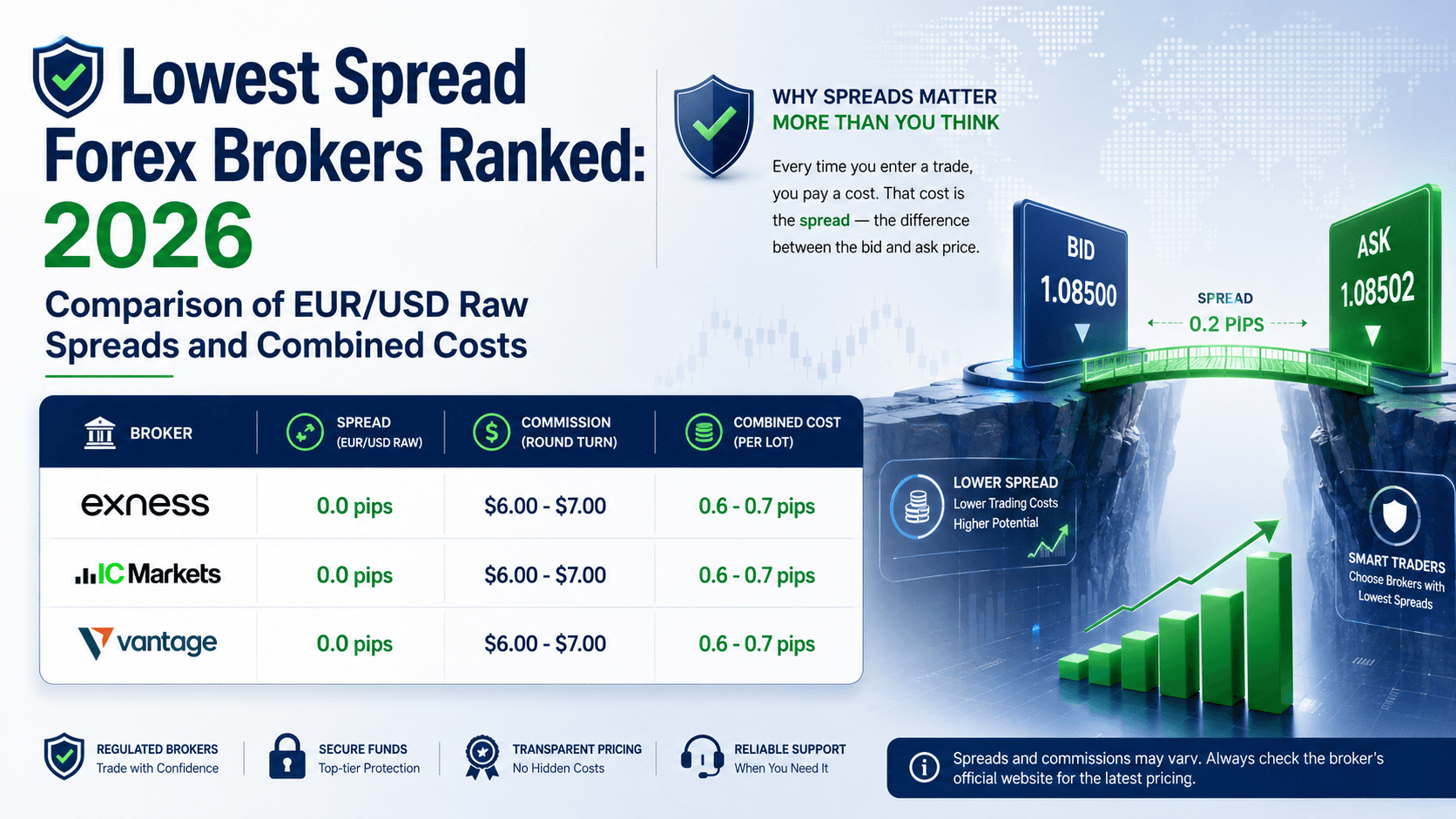
- Spreads are usually 0.5-1 pip on major brokers
- It moves smoothly — no crazy gaps or sudden spikes
- News is easy to follow: US and Eurozone economic data
- Technical analysis actually works on it
Let me give you a real example. Say EUR/USD is at 1.0850 and you decide to go long (buy) with 0.1 lots. Your stop loss is 20 pips at 1.0830, and your target is 40 pips at 1.0890.
On 0.1 lots, each pip is worth $1. So:
- If you win: 40 pips × $1 = $40 profit
- If you lose: 20 pips × $1 = $20 loss
- Risk:Reward: 1:2 — that's actually good
See how clean that is? You can calculate everything in your head. That's what you want as a beginner.
2. GBP/USD — The Volatile Cousin
GBP/USD, also called "Cable," is the second most popular pair. It's more volatile than EUR/USD — meaning bigger moves, but also bigger risks.
Why it's good for beginners (with caution):
- Spreads are still tight — about 1-2 pips
- It trends well — when it moves, it really moves
- Great for learning how news affects price
But here's the warning: GBP/USD can move 100 pips in an hour on a Bank of England announcement. That's $100 on 0.1 lots. If you're not careful, that's a quick 10% loss on a $1,000 account.
My advice: Start with EUR/USD first. Once you're comfortable, add GBP/USD for practice. But keep your position size small — 0.01 lots ($1 per 100 pips) until you get a feel for its personality.
3. USD/JPY — The Trend Follower's Dream
USD/JPY is the most "trendy" of the major pairs. It loves to move in long, smooth trends that last for weeks or months.
Why beginners love it:
- Spreads are tight — about 1 pip
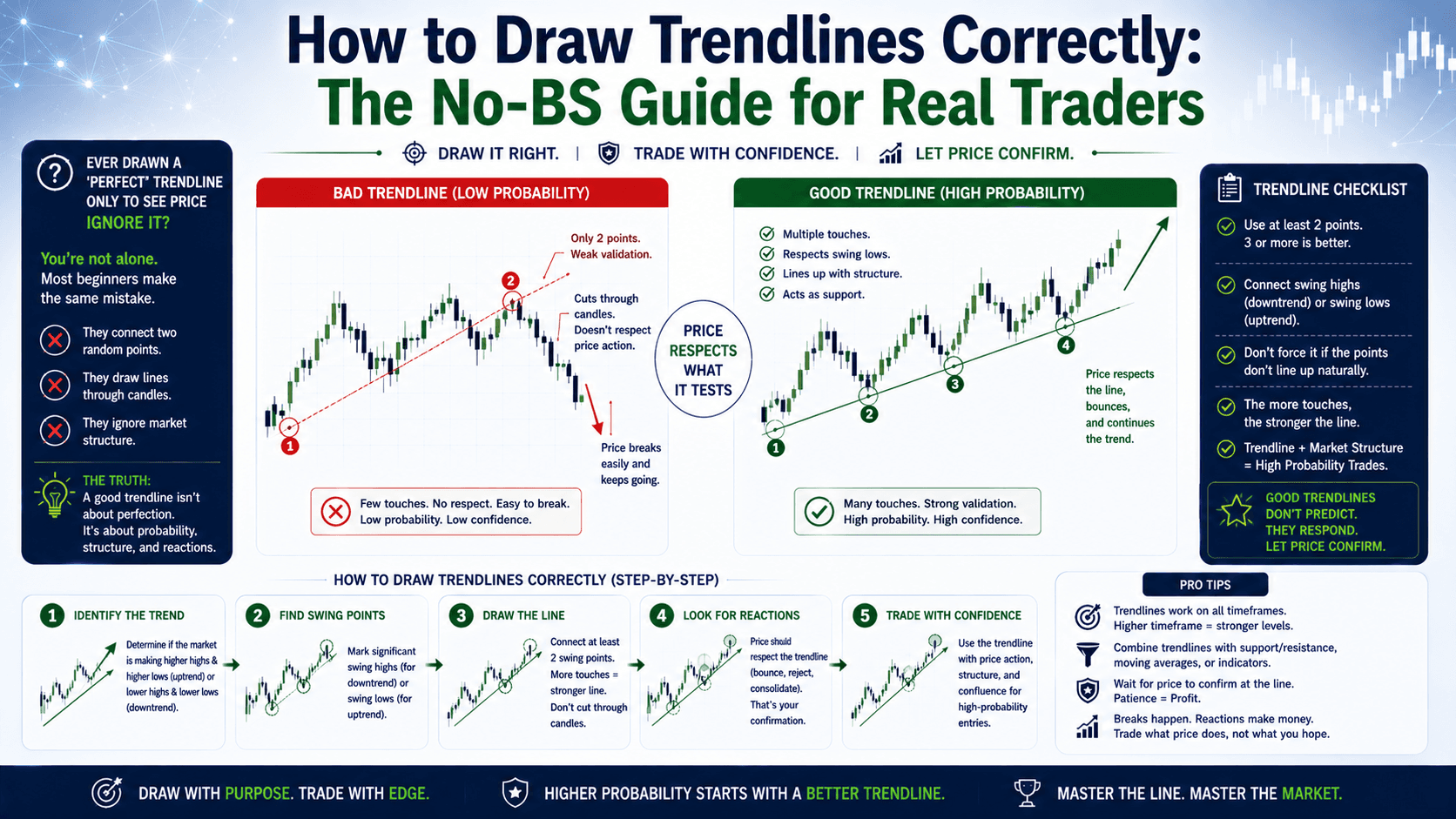
- Trends are clear — you can literally draw a straight line
- It's less sensitive to random news noise
Here's a real scenario: USD/JPY is at 150.00. You notice it's been making higher highs and higher lows for two weeks. You go long at 150.20 with a stop at 149.70 (50 pips). Target: 151.20 (100 pips).
On 0.1 lots:
- Win: 100 pips × $1 = $100 profit
- Loss: 50 pips × $1 = $50 loss
The key with USD/JPY? Don't fight the trend. If it's going up, only look for buy opportunities. Sounds simple, but 90% of beginners get this wrong.
Comparison Table: Best Currency Pairs for Beginners
| Pair | Spread (pips) | Avg Daily Move | Volatility | Best For |
|---|---|---|---|---|
| EUR/USD | 0.5-1 | 80-100 pips | Low | Learning the basics |
| GBP/USD | 1-2 | 100-150 pips | Medium-High | News trading practice |
| USD/JPY | 1 | 70-90 pips | Low-Medium | Trend following |
The Wrong Way vs. The Right Way
Let me show you what most beginners do — and what you should do instead.
The Wrong Way:
You open your account. You see USD/TRY (Turkish Lira) moving 300 pips in a day. You think, "If I catch that move, I'll double my account." You buy 1 lot with a $500 account. The spread is 20 pips. Price moves against you by 50 pips. You lose $500 — your entire account — in 10 minutes.
The Right Way:
You open your account. You trade EUR/USD with 0.01 lots ($0.10 per pip). Your stop loss is 20 pips. Your max loss per trade is $2. You make 10 trades. You win 6, lose 4. Your net profit is $4. It's not sexy, but you're learning without blowing up.
See the difference? The best currency pairs for beginners aren't the ones with the biggest moves. They're the ones that let you stay in the game long enough to learn.
FAQ
What is the easiest currency pair for beginners to trade?
EUR/USD is widely considered the easiest. It has the tightest spreads, the most liquidity, and the most predictable price action. It's the pair most professional traders start with.

How much money do I need to start trading currency pairs?
You can start with as little as $100, but $500-$1,000 is more realistic. With $500, you can trade 0.01 lots on EUR/USD and risk 1-2% per trade ($5-$10).
Should beginners trade exotic currency pairs?
No. Exotic pairs like USD/TRY or USD/ZAR have very wide spreads (20-50 pips), low liquidity, and unpredictable moves. Stick to majors until you have at least 6 months of experience.
Which currency pair has the lowest risk for beginners?
EUR/USD has the lowest risk due to its tight spreads and moderate volatility. But remember: no trade is risk-free. Always use a stop loss and risk no more than 2% of your account per trade.
Quick Recap
- Best currency pairs for beginners: EUR/USD, GBP/USD, USD/JPY
- Avoid: Exotics, pairs with wide spreads, and anything you can't easily follow the news for
- Start small: Trade 0.01 lots until you're consistently profitable
- Risk management first: Never risk more than 2% of your account per trade
- One pair at a time: Master EUR/USD before adding anything else
Your Quick Win for Today
Open your trading platform right now. Pull up EUR/USD on the 1-hour chart. Identify the last 3 times price touched a support or resistance level. Notice how price reacted — did it bounce? Did it break through? That's your first lesson in price action.
Do this for 5 minutes. Every day. For one week. You'll start seeing patterns you never noticed before.
That's how real learning happens — not by reading, but by doing.