Before You Trade a Single Dollar — You Need to Understand This
Here's a question that trips up almost every beginner: Why does every forex quote have TWO currencies?
You'll never see just "EUR" on a trading screen. You'll see EUR/USD. Never "GBP" alone — always GBP/JPY or GBP/USD.
That's because in forex, currencies always travel in pairs. When you buy one, you're simultaneously selling another. It's like a seesaw — when one side goes up, the other goes down.
If you don't understand this concept, every trade you make will feel like a coin flip. So let's break it down — simply and clearly.
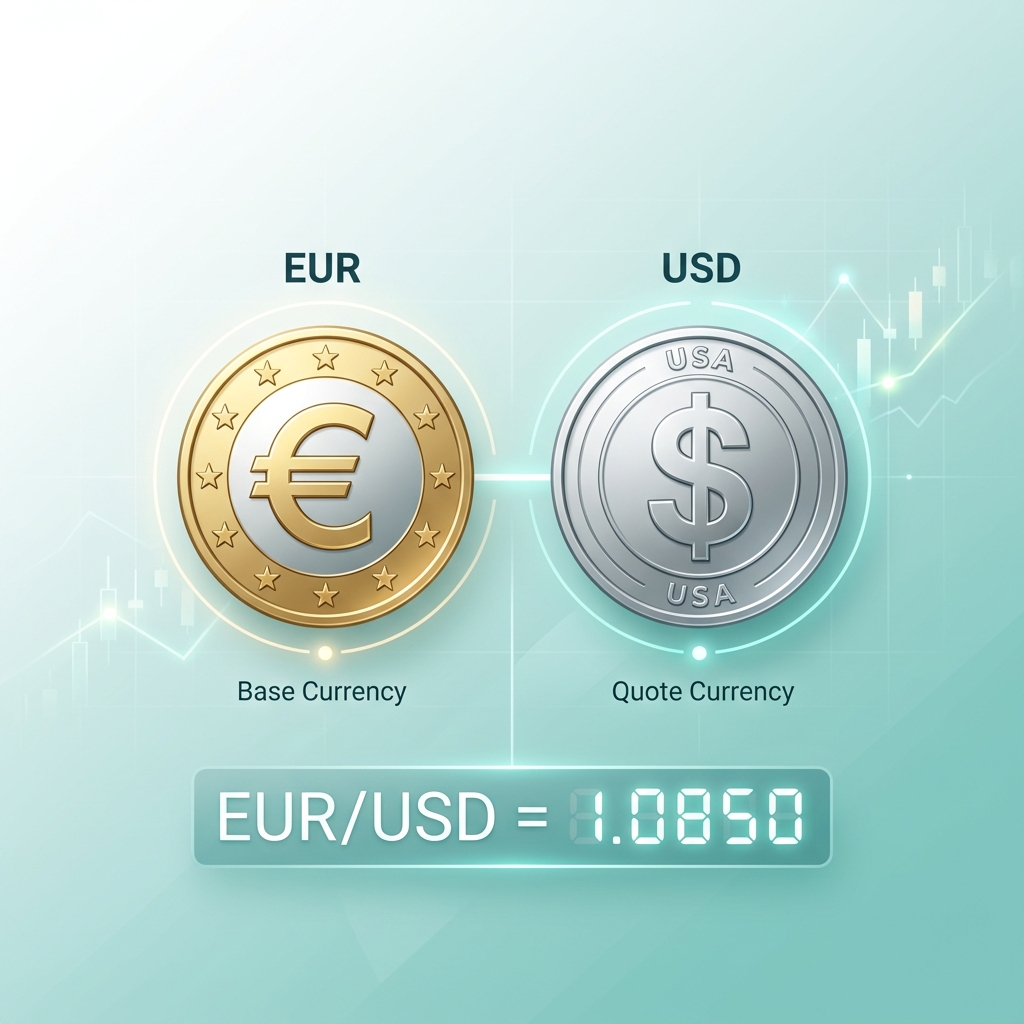
The Anatomy of a Currency Pair
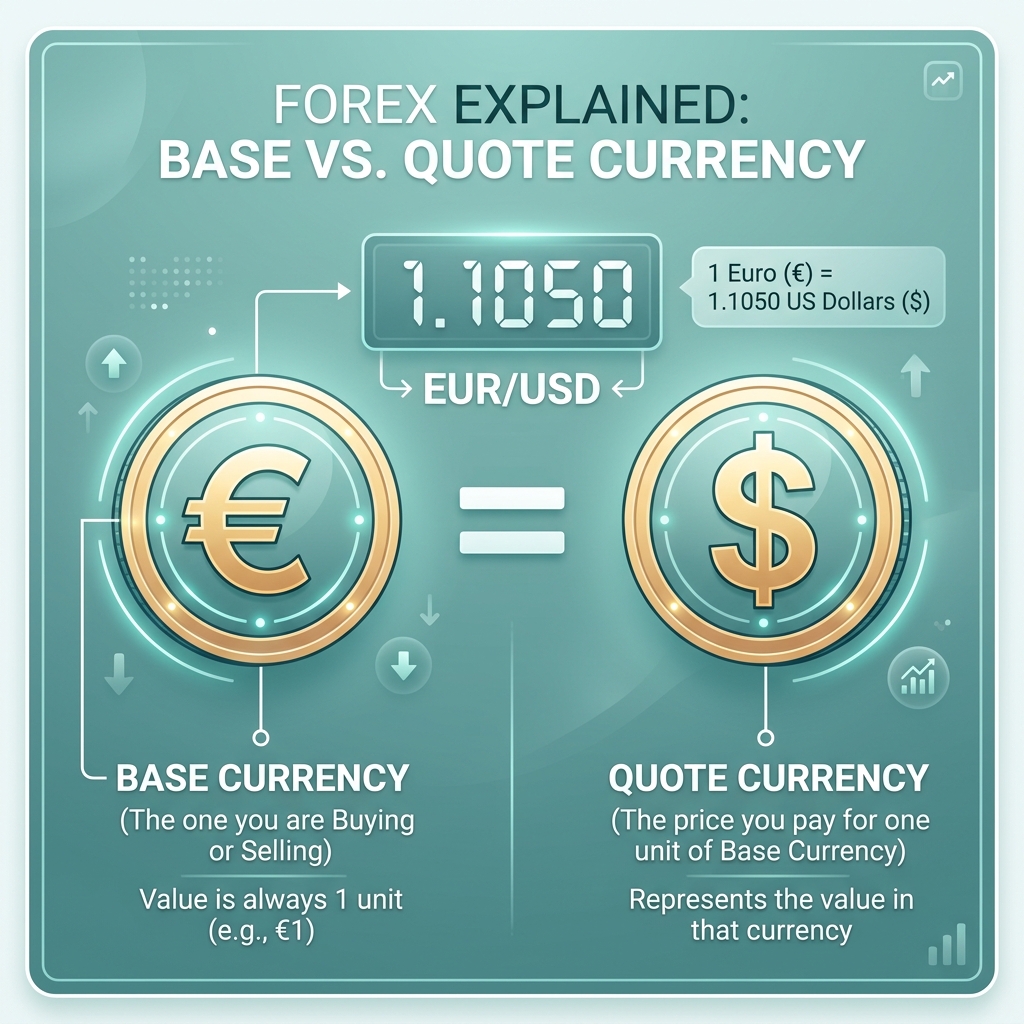
Every currency pair has exactly two parts:
- Base Currency — the first currency listed (the one you're buying or selling)
- Quote Currency — the second currency listed (the "price tag")
Take EUR/USD = 1.1000:
- EUR (Euro) = the base currency
- USD (US Dollar) = the quote currency
- The price (1.1000) tells you: 1 euro costs 1.10 US dollars
The base currency always equals ONE unit. The quote currency tells you how much of it you need to buy that one unit.
Think of it like a price tag at a store:
- The base currency is the item you're buying
- The quote currency is the money you're paying with
How Buying and Selling Actually Works
This is where most beginners get confused — so let's make it crystal clear:
When You "Buy" EUR/USD
- You're buying euros (the base)
- You're selling US dollars (the quote)
- You profit when EUR/USD goes UP
When You "Sell" EUR/USD
- You're selling euros (the base)
- You're buying US dollars (the quote)
- You profit when EUR/USD goes DOWN
Golden rule: When you click "Buy," you're betting the base will strengthen. When you click "Sell," you're betting the base will weaken.
The Three Categories of Currency Pairs
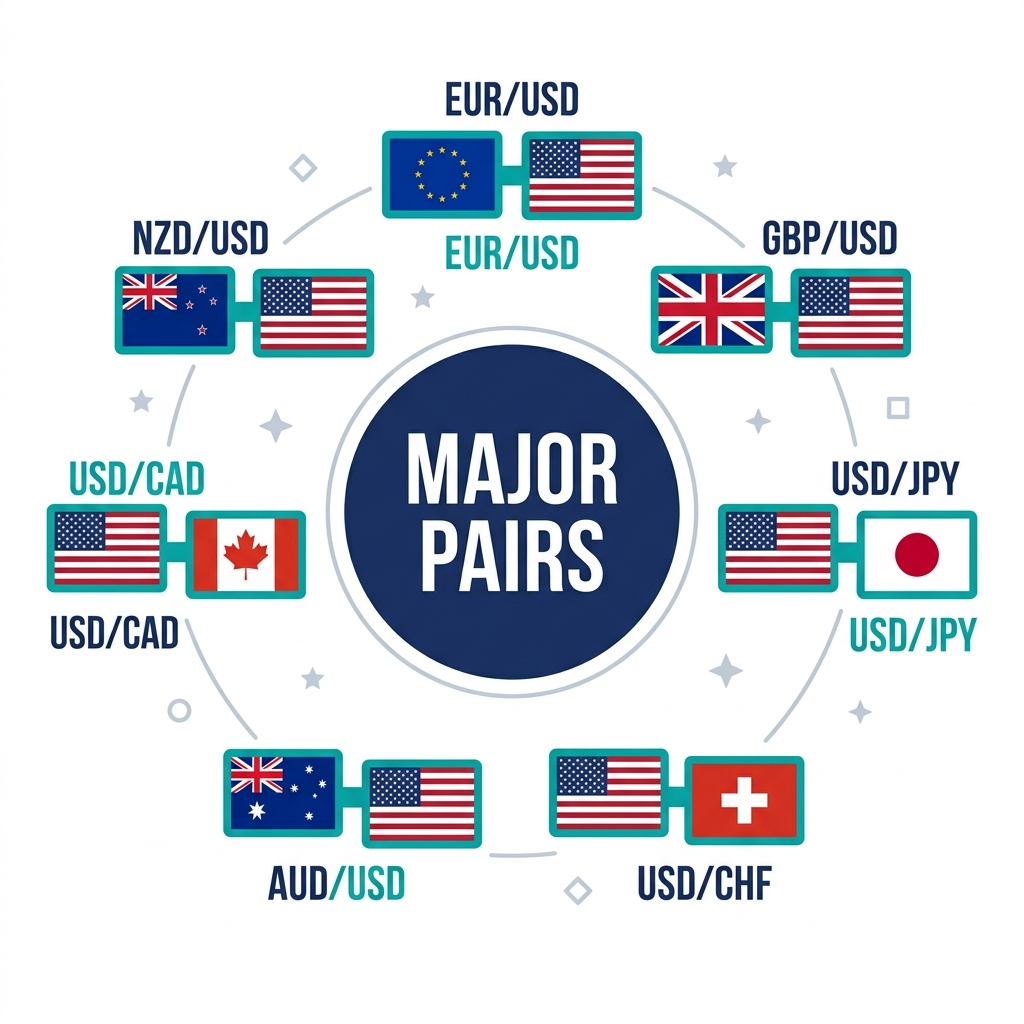
Not all pairs are created equal. They fall into three groups — and the one you choose affects your spreads, volatility, and risk.
Major Pairs (Start Here)
These always include the US dollar and are the most traded in the world. They have the tightest spreads and deepest liquidity — perfect for beginners.
| Pair | Name | Nickname |
|---|---|---|
| EUR/USD | Euro / US Dollar | "Fiber" |
| GBP/USD | British Pound / US Dollar | "Cable" |
| USD/JPY | US Dollar / Japanese Yen | "Gopher" |
| USD/CHF | US Dollar / Swiss Franc | "Swissie" |
| AUD/USD | Australian Dollar / US Dollar | "Aussie" |
| USD/CAD | US Dollar / Canadian Dollar | "Loonie" |
| NZD/USD | New Zealand Dollar / US Dollar | "Kiwi" |
The major 7 account for about 85% of all forex trading volume. When in doubt, start with EUR/USD — it's the most liquid pair on the planet.
Minor Pairs (Cross-Currency Pairs)
These pair two major currencies against each other — without the US dollar. Examples:
- EUR/GBP — Euro vs British Pound
- EUR/JPY — Euro vs Japanese Yen
- GBP/JPY — British Pound vs Japanese Yen (nicknamed "The Beast" for its volatility)
- AUD/NZD — Australian Dollar vs New Zealand Dollar
Minors have slightly wider spreads than majors but can offer great opportunities, especially during specific regional sessions.
Exotic Pairs (High Risk, High Reward)
These pair a major currency with a currency from an emerging economy:
- USD/TRY — US Dollar vs Turkish Lira
- EUR/SEK — Euro vs Swedish Krona
- USD/ZAR — US Dollar vs South African Rand
⚠️ Warning: Exotic pairs have much wider spreads, lower liquidity, and can be extremely volatile. They're best avoided until you have experience.
Reading a Forex Quote: Bid, Ask, and Spread
When you look at a currency pair, you'll always see two prices:
- Bid — the price at which you can sell (what buyers will pay you)
- Ask — the price at which you can buy (what sellers want from you)
- Spread — the difference between bid and ask (your trading cost)
Example: EUR/USD Bid: 1.0998 | Ask: 1.1000
The spread = 1.1000 − 1.0998 = 2 pips. That 2-pip spread is essentially the broker's fee for executing your trade.
Major pairs like EUR/USD often have spreads as low as 0.5–1.5 pips. Exotic pairs can have spreads of 20–50+ pips. This is why pair selection matters.
What Makes Currency Pairs Move?
Currency pair prices shift constantly. The main drivers:
| Driver | How It Affects Currencies | Example |
|---|---|---|
| Interest Rates | Higher rates → currency strengthens | Fed raises rates → USD goes up |
| Economic Data | Strong GDP/jobs → currency strengthens | Strong US jobs report → USD up |
| Geopolitics | Uncertainty → safe-haven currencies rise | War fears → JPY and CHF rise |
| Market Sentiment | Risk-on → AUD, NZD rise; Risk-off → USD, JPY rise | Global optimism → AUD/USD up |
You don't need to master all of this right now. For now, just remember: currencies move because of real economic forces, not randomly.
Frequently Asked Questions
Can the US Dollar be both base and quote?
Yes! In EUR/USD, the dollar is the quote currency. In USD/JPY, it's the base. The position in the pair determines the role — not the currency itself.
Which currency pair should I start with?
EUR/USD. It has the most liquidity, the tightest spreads, and the most educational material available. Master one pair before exploring others.
Why do pairs have nicknames like "Cable" or "Kiwi"?
"Cable" (GBP/USD) got its name from the transatlantic telegraph cable that once transmitted exchange rates between London and New York. "Kiwi" and "Aussie" are just friendly shorthand in the trading community.
Do I have to trade in US dollars?
No. You can trade any pair available on your broker. If you trade EUR/GBP, no US dollars are involved. Your profit/loss will be denominated in the quote currency (GBP in this case).
Quick Recap
- ✅ Currencies are always traded in pairs — base/quote
- ✅ The base currency = ONE unit; the quote currency = the price
- ✅ Buy = you think the base will strengthen; Sell = you think it will weaken
- ✅ Major pairs have the tightest spreads and are best for beginners
- ✅ The spread (bid-ask difference) is your primary trading cost
🎯 Your Action Step
Open your demo account (from the last lesson) and pull up EUR/USD. Now look at the current price. Can you identify:
- Which is the base currency?
- Which is the quote currency?
- What's the current bid and ask?
- What's the spread in pips?
If you can answer all four — you already know more than 90% of people who say they "tried forex."