The Leading Cause of Trader Failure
You did everything right. You identified your favorite pattern, confirmed the trend, and entered at the textbook level. But instead of printing profits, the market tanks out of nowhere. You hit your stop-loss and take a painful hit.
It stings. You feel cheated by the market. Your jaw clenches and you think: "I need to make that back right now."
Before you even realize what you're doing, you've doubled your normal position size and jumped into a new, completely unplanned trade in the opposite direction. You are now Revenge Trading.
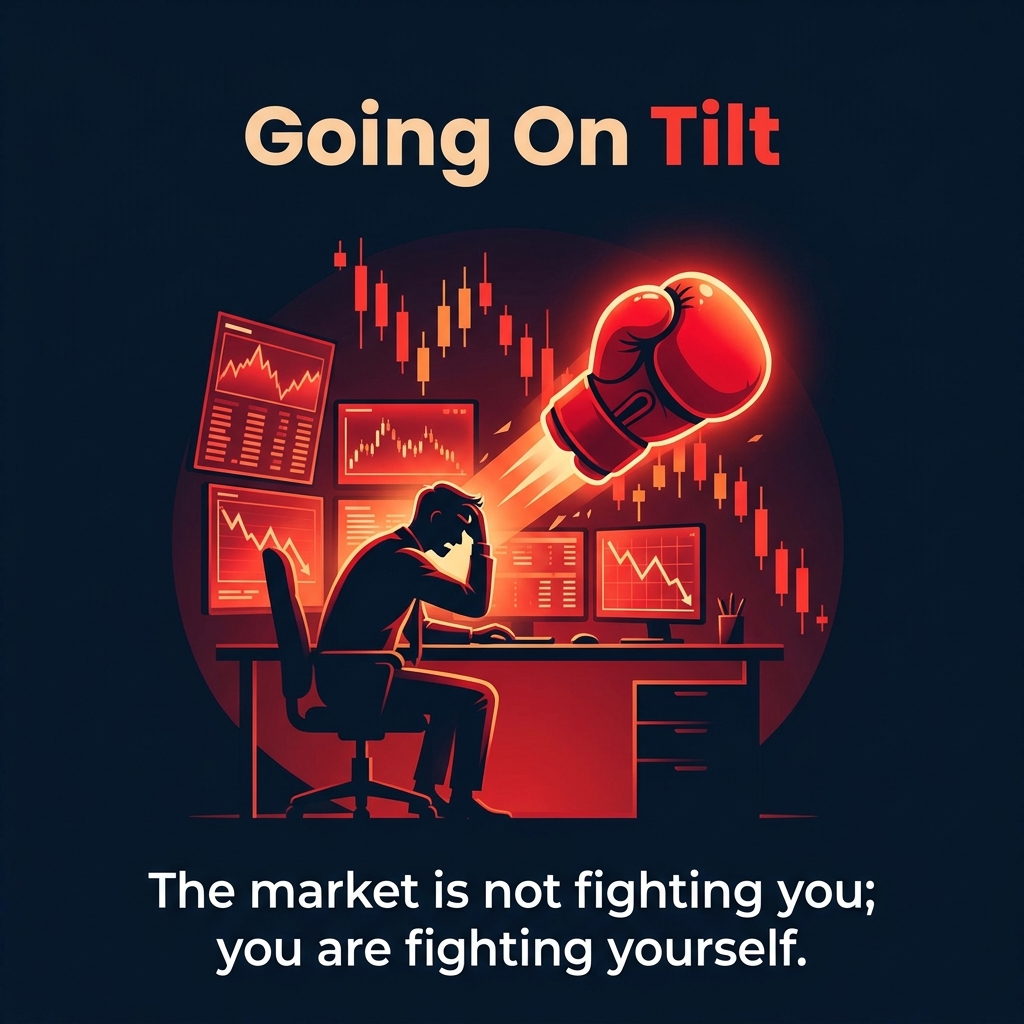
What is Revenge Trading (Going "On Tilt")?
In poker, when a player suffers a devastating "bad beat" (getting unlucky and losing a hand they statistically should have won), they often lose their temper and start betting recklessly to win it back. This is called going "on tilt."
Revenge traders are simply traders who have gone on tilt. Anger, emotion, and adrenaline are running high. Analysis and strategy are completely replaced by primal rage and the human urge to aggressively "do something" to correct a perceived injustice.
Losing feels fundamentally worse than winning feels good. That is hardwired into human DNA. We hate to lose, and our ego demands that we prove the market wrong immediately.
The Anatomy of an Account Blowup
No account is ever destroyed by a single, properly planned trade with strict risk management. Accounts are destroyed when a small, planned loss mutates into a massive, uncontrolled emotional spiral.
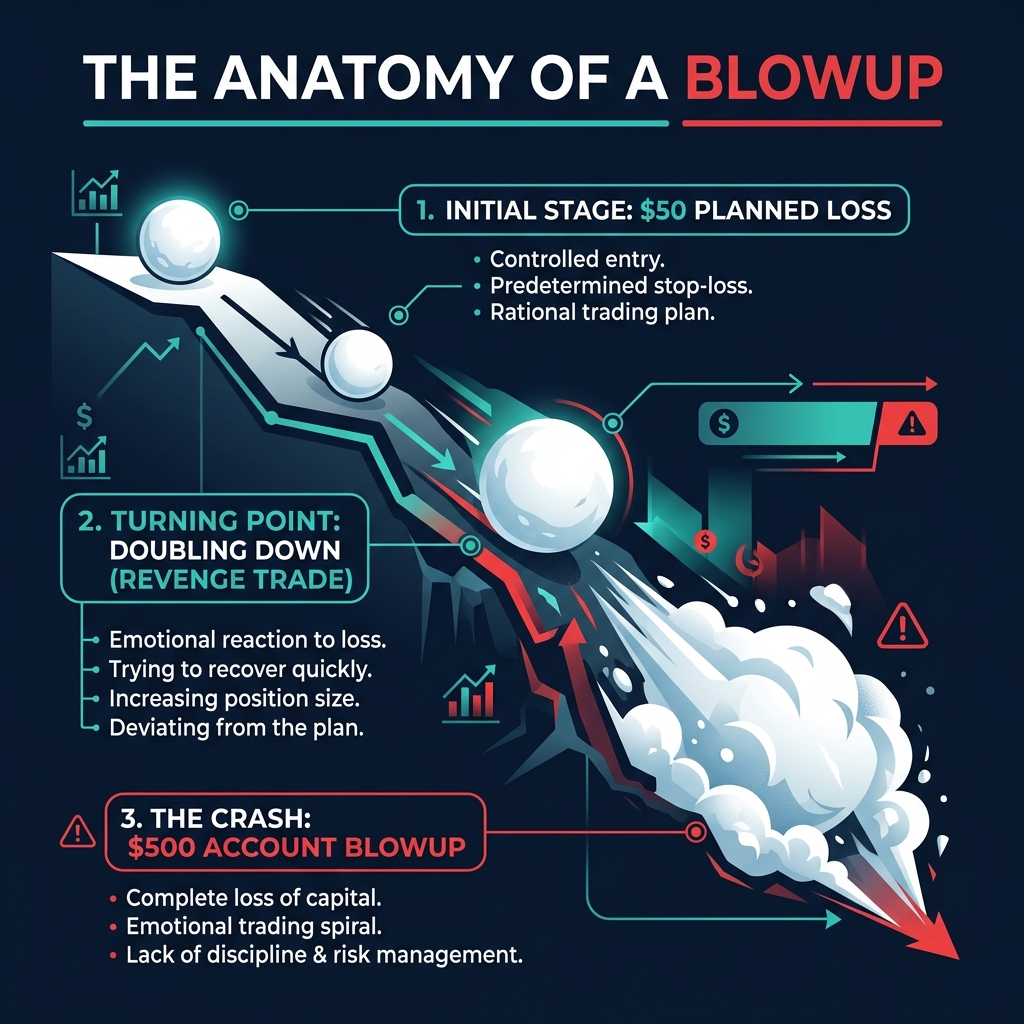
Here is what the downward spiral looks like:
- The Spark: You take a normal $50 loss. But you feel the market "stole" it from you.
- The React: You immediately re-enter, but you double your position size because you want to make the $50 back plus extra profit.
- The Sink: The trade goes against you again. Because you doubled your size, you are now down $150.
- The Panic: Instead of cutting the loss, you average down (buy more as it drops), hoping a small bounce will get you to breakeven.
- The Blowup: The market drops further. You are now down $500. Your broker triggers a margin call, or you finally close it out of sheer emotional surrender. One bad afternoon just wiped out a month of hard work.
How to Stop the Bleeding
Revenge trading is a natural emotional response. Even Sir Isaac Newton lost a fortune in the stock market because he succumbed to emotional trading, famously saying: "I can calculate the motions of heavenly bodies, but not the madness of the people."
Since the urge is natural, you cannot rely on willpower to stop it. You must rely on physical and systemic circuit breakers.
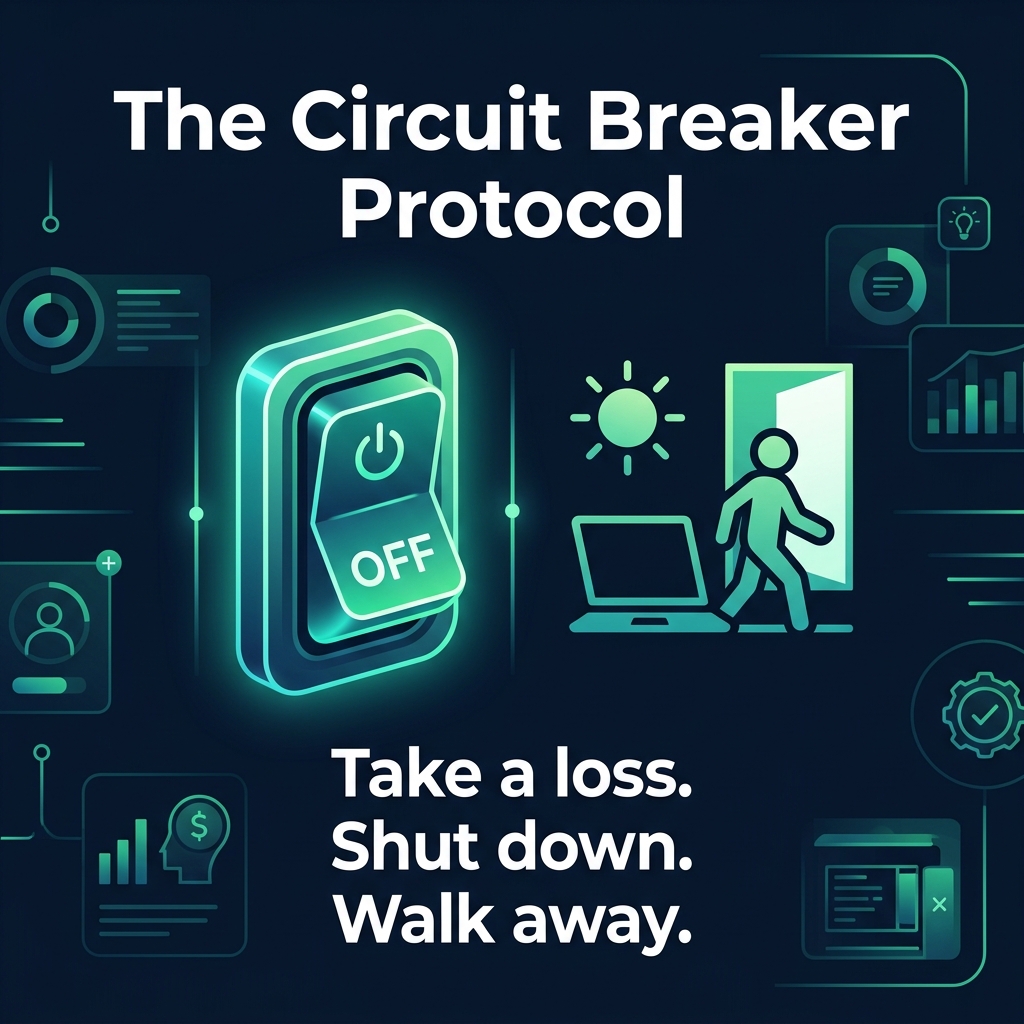
1. Implement a Mandatory Cooling-Off Period
Create a hard rule: If you suffer a loss that triggers anger or frustration, or if you lose two trades in a row, you must physically step away from your computer for a minimum of 30 minutes. Close the app. Put your phone in another room. The 30 minutes gives your brain time to flush the adrenaline and cortisol that are driving your impulses.
2. Have a Max Daily Loss Limit
Just like a casino has a daily ATM withdrawal limit to save gamblers from themselves, you must have a daily loss limit for your trading account. Decide this number in advance (e.g., "I will never lose more than 2% of my account in one day"). The moment you hit it, your trading session is over. No exceptions.
3. Remember Your Roots
You aren't a gambler throwing darts. You spent time learning strategies, risk management, and chart patterns. Don't throw away months of education just because you got angry on a Tuesday morning. The market will be here tomorrow.
🎯 Your Action Step
Set a "Circuit Breaker" alarm on your phone right now. Name it "Walk Away." The next time you find yourself furiously staring at a red trade and getting the urge to double down, trigger that alarm. Your only job is to stand up and leave the room until the alarm goes off 15 minutes later.