The Illusion of Activity
There's a strange belief floating around in the trading world—almost like an unspoken rule—that the more you trade, the more money you'll make. It sounds logical at first. More action, more opportunities, more profits... right?
Not quite. In reality, this mindset quietly drains accounts, shatters confidence, and keeps traders stuck in a losing cycle. The idea that "more trades = more profits" is one of the most misleading assumptions in the financial markets.
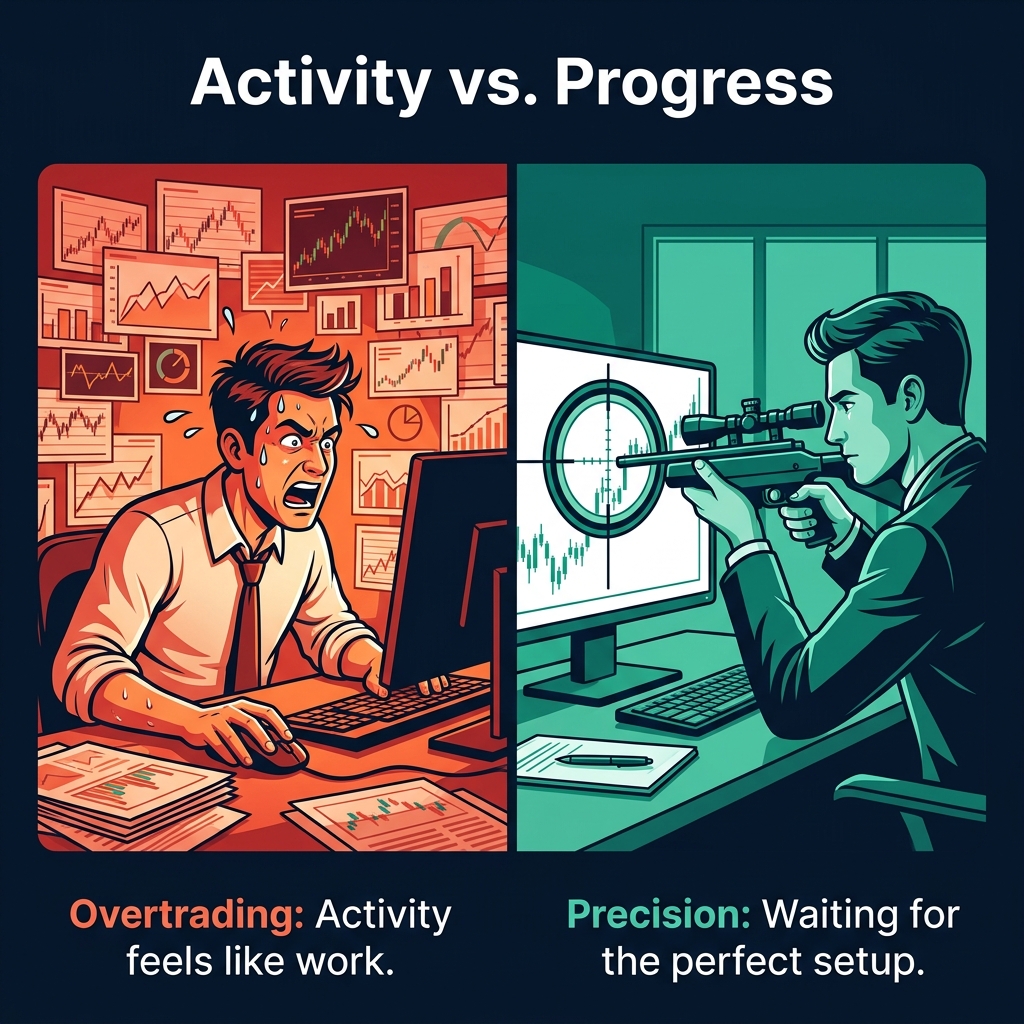
Why Busy Feels Profitable
There is something addictive about clicking buy and sell. Every trade triggers a small emotional spike. Your brain lights up with dopamine. The rush becomes the reason you keep trading—not the strategy, not the logic, but the feeling. You mistake quantity for opportunity.
When there's no clear setup but you feel like you "should" be trading, you force decisions. You enter trades out of boredom. You start overtrading (also known as "churning"). And forced trades almost always result in a slow death by a thousand cuts.
The 80/20 Rule Applied to Trading
The Pareto Principle (the 80/20 rule) states that 80% of your results come from 20% of your actions. This is incredibly true in forex trading.
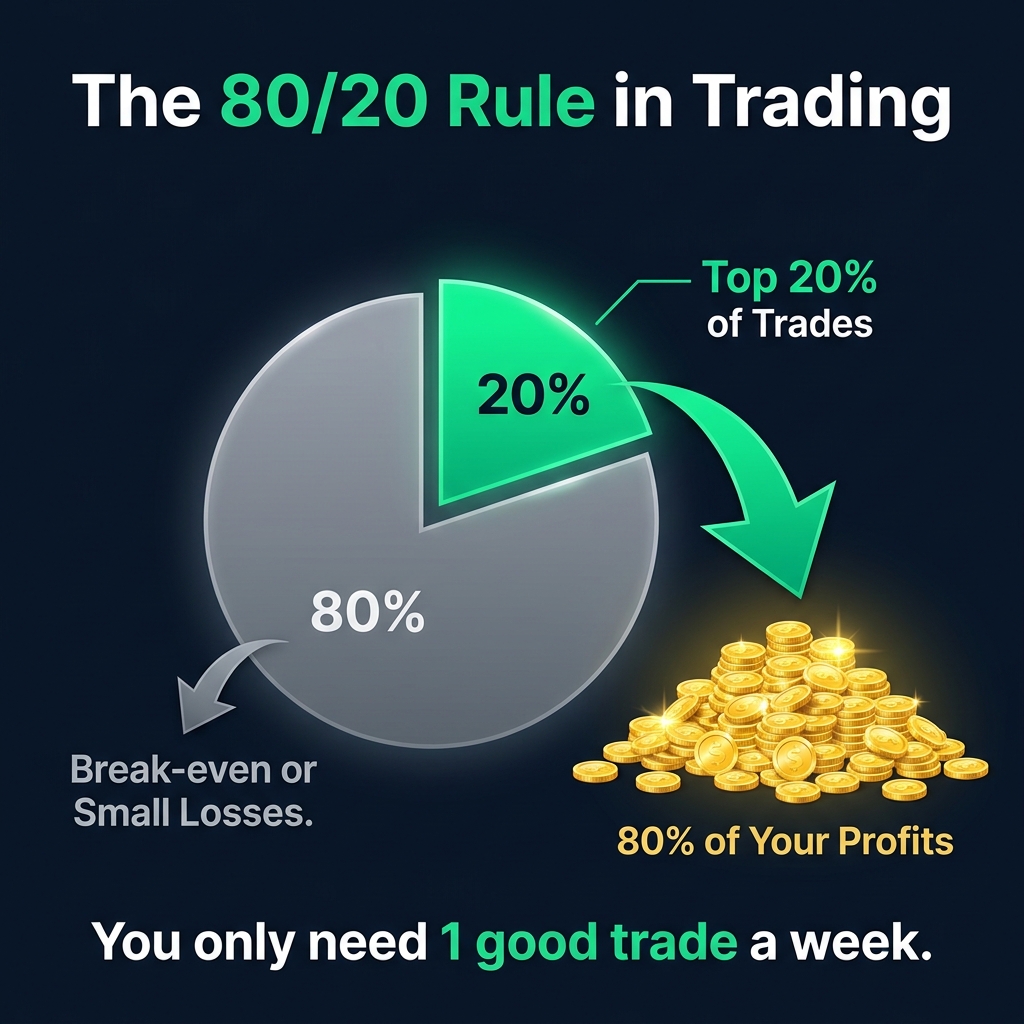
If you look over the trading journal of a consistently profitable trader, you will find that 80% of their total profit for the year came from just 20% of their trades. The other 80% of the trades they took simply resulted in a mix of small winners, break-evens, and small losers.
Because of this math, taking more average or sub-par trades does not increase your profit. It simply increases your risk, your stress, and the amount of money you pay to your broker in spreads and commissions. To improve your profitability, you must actually trade less, and hold out for the top 20% of high-probability setups.
Micromanaging vs. Set-and-Forget
Overtrading isn't just about opening too many different positions. It is also about micromanaging a single position you are already in.
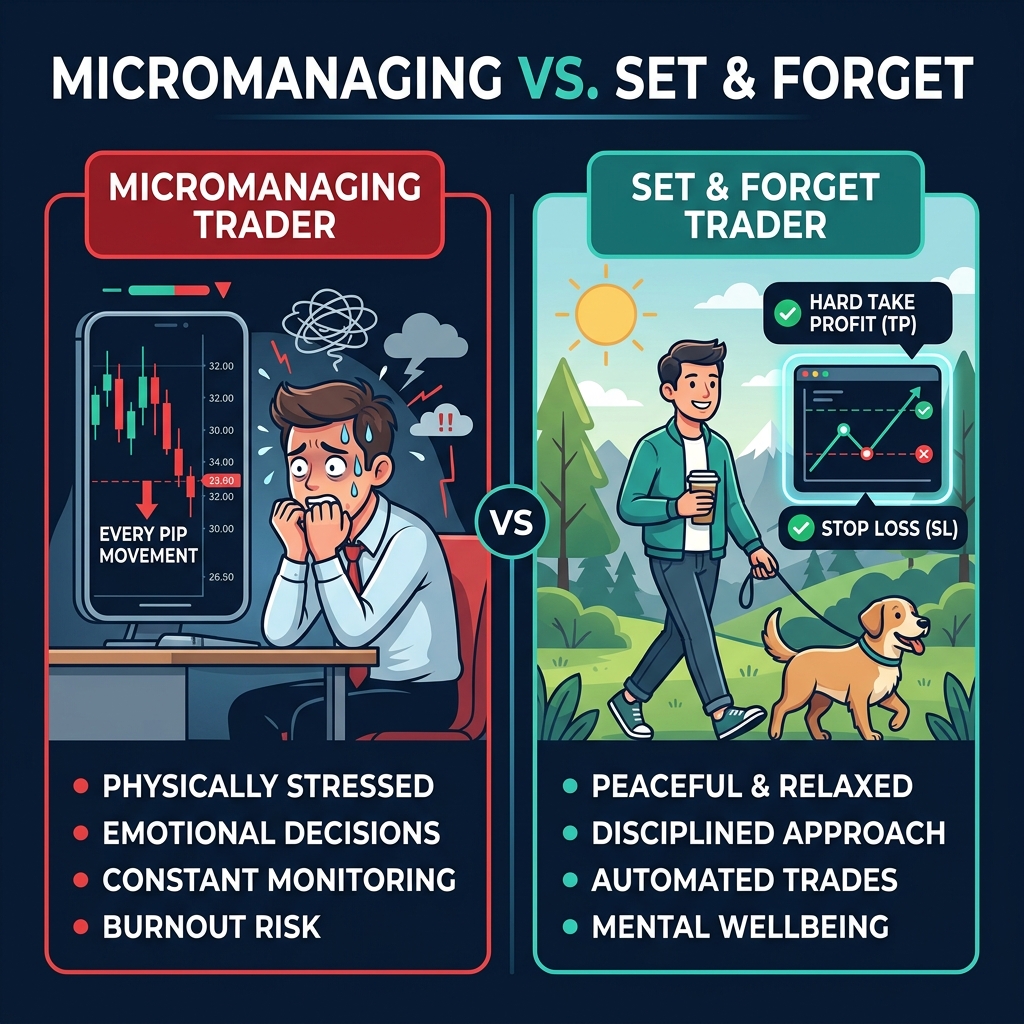
The Micromanagement Trap
You enter a trade. Suddenly, you drop down to the 1-minute chart. You start watching the trade tick by tick. Every red candle makes you sweat. You move your stop loss around. You close half your position early in a panic, then re-enter 5 minutes later at a worse price. You are physically exhausted.
The "Set-and-Forget" Solution
Professional traders utilize a set-and-forget approach. Once the analysis is done and the trade is placed, they input a hard Stop-Loss and a hard Take-Profit order. Then they close the charting software.
They understand that once the trade is executed, they have absolutely zero control over what the market does next. There is no logical reason to sit and stare at the screen. The probabilities will unfold whether they watch them or not.
Eliminate Boredom & Screen Time
Excessive screen time is the leading cause of overtrading. If you stare at a chart for 4 hours, your brain will find a pattern that isn't really there, just to give you an excuse to click a button.
To eliminate this:
- Create Trading Plans in Advance: Do your analysis on the weekend or early morning before the market session opens.
- Use Price Alerts: Identify your key support and resistance levels, set alarms on your platform, and walk away. Do not look at the charts until your phone buzzes.
- Accept "No Trade" Days: Having a trading edge means knowing under which conditions you have an advantage. If those conditions aren't present today, then your job as a professional is to do nothing. Doing nothing is a highly profitable action because it preserves your capital.
🎯 Your Action Step
Next week, enforce a Three-Trade Maximum. You are only legally allowed (by your own rules) to take a maximum of 3 setups for the entire week. Watch how drastically your behavior changes. When you realize bullets are limited, you will stop firing blindly at the dark and wait patiently for the absolute best targets.