The Numbers Behind the Price — Why Currencies Really Move
On January 31, 2024, the Federal Reserve held interest rates steady. Within minutes, the US dollar dropped 0.5% against the euro. No chart pattern predicted that move. No indicator flashed a warning. It was pure fundamental analysis territory.
While technical analysts read charts, fundamental analysts read the economy itself. They ask: "What's happening in the real world that will make this currency stronger or weaker?"
You don't need a PhD in economics. But understanding the Big Three economic forces — interest rates, growth, and inflation — will give you an edge that chart-only traders miss.
What Is Fundamental Analysis?
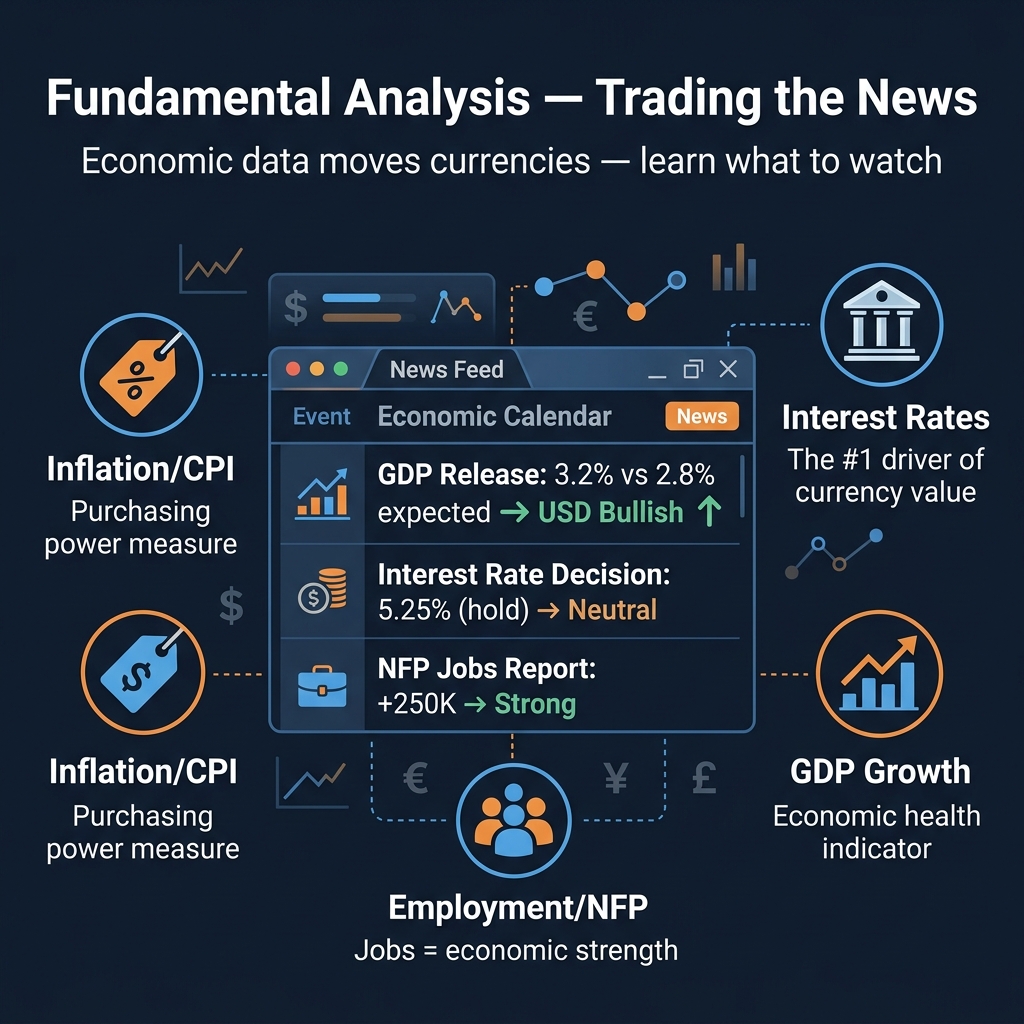
Fundamental analysis evaluates a currency's value based on economic, financial, and political factors. The core question is: "Is this economy getting stronger or weaker?"
A stronger economy → higher interest rates → more foreign investment → stronger currency.
The "Big Three" Economic Indicators
1. Interest Rates — The #1 Currency Driver
Central banks (like the Fed, ECB, Bank of England) set interest rates. When rates go up, the currency typically strengthens. When rates go down, it weakens. Why? Higher rates attract foreign investors seeking better returns.
💡 Simple rule: Money flows to where it gets the best return. Higher interest rates = more demand for that currency.
2. GDP (Gross Domestic Product)
GDP measures economic output — total goods and services produced. Rising GDP = growing economy = bullish for the currency. Falling GDP = potential recession = bearish.
Traders compare actual GDP vs. forecast. A surprise beat sends the currency up; a miss pushes it down.
3. Employment Data (NFP, Jobs Reports)
In the US, Non-Farm Payrolls (NFP) is released monthly and is one of the most market-moving events. Strong jobs data → healthy economy → potential rate hikes → USD bullish.
| Indicator | What It Measures | Impact When Higher |
|---|---|---|
| Interest Rate | Cost of borrowing | Currency strengthens ↑ |
| GDP | Economic output | Currency strengthens ↑ |
| Employment/NFP | Job market health | Currency strengthens ↑ |
| Inflation/CPI | Price increases | May trigger rate hikes ↑ |
| Trade Balance | Exports vs imports | Surplus = bullish ↑ |
The Economic Calendar — Your Weekly Cheat Sheet
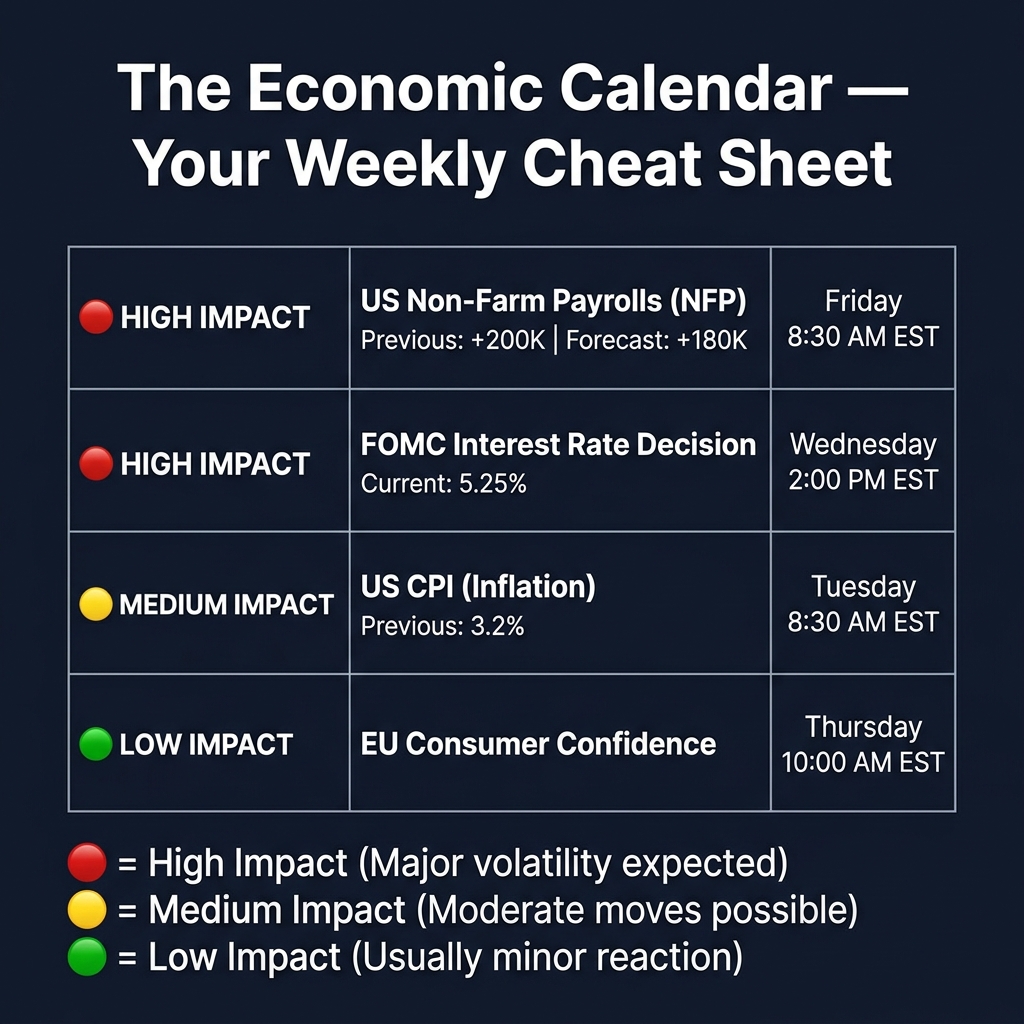
Every fundamental trader lives by the economic calendar. It shows you exactly when major data releases are scheduled, what the forecast is, and how important each event is.
Key events to watch every week:
- Central bank interest rate decisions (Fed, ECB, BOE, BOJ)
- NFP / Jobs reports (first Friday of each month)
- CPI / Inflation data (monthly)
- GDP releases (quarterly)
- PMI data (manufacturing and services health)
⚠️ Important: The market doesn't react to the data itself — it reacts to the surprise. If NFP forecast is +200K jobs and actual is +250K, USD rallies. If actual matches forecast exactly, price barely moves.
FA for Forex Beginners — Keep It Simple
You don't need to analyze every economic indicator. Start with these two habits:
- Check the economic calendar every morning. Know which high-impact events are coming today. Don't get caught surprised.
- Avoid trading during major news releases until you're experienced. Spreads widen, volatility spikes, and stops can get blown in seconds.
Quick Recap
- ✅ Fundamental analysis looks at economic forces behind price movement
- ✅ The "Big Three": interest rates, GDP, employment
- ✅ Surprises move markets — actual vs. forecast is what matters
- ✅ Use the economic calendar daily
- ✅ Beginners: avoid trading during high-impact news