The Invisible Enemies Draining Your Account
Financial markets may look like a battlefield of indicators, chart patterns, and fundamental data. But beneath the surface lies a deeper war: the battle of emotions. Among all emotional forces, fear and greed are the two dominant forces shaping trader behavior.
If left unchecked, they slowly (but surely) consume your trading account. Let's break down exactly how these twin demons operate and how to disarm them.
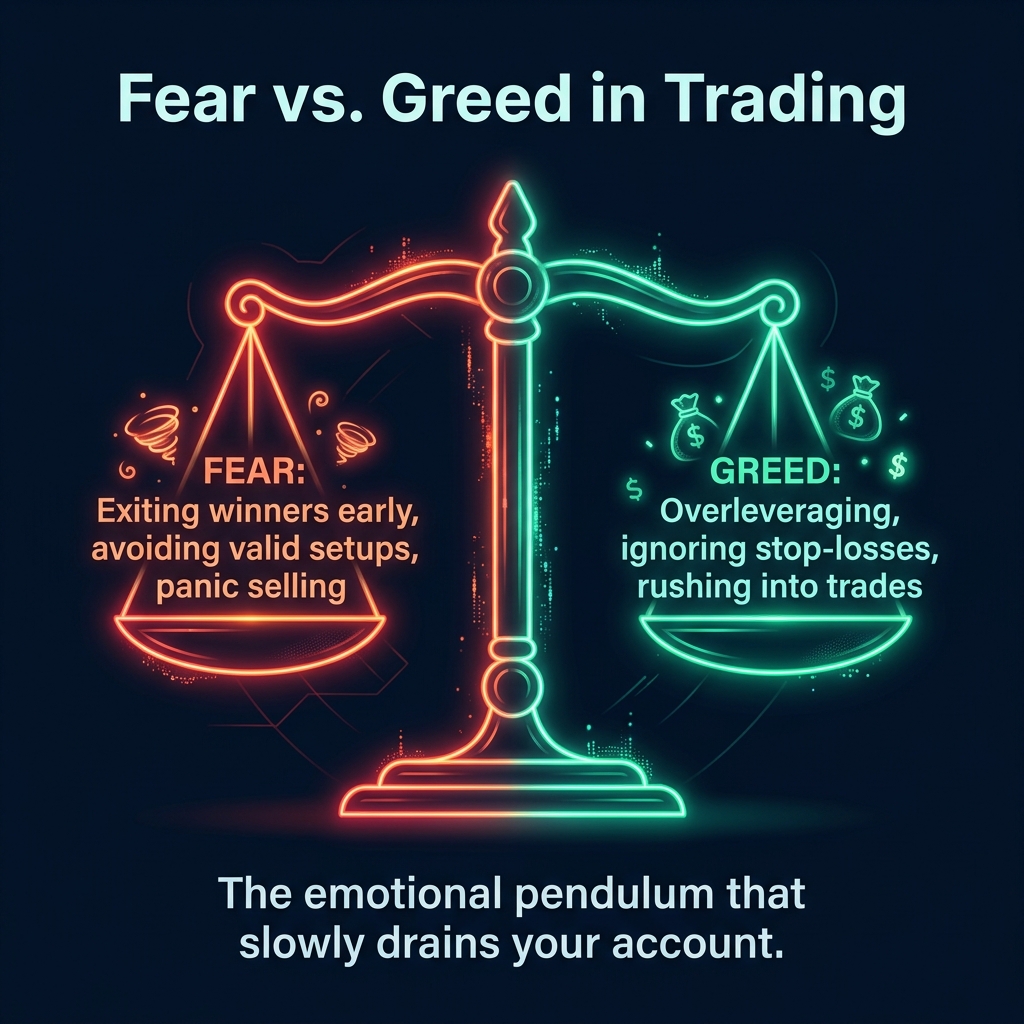
How Fear and Greed Shape Your Decisions
Many trading losses are not due to bad technical analysis, but due to bad emotional decisions made in the heat of the moment.
| Trading Phase | Effect of Fear | Effect of Greed |
|---|---|---|
| Entry | Hesitation to enter even when the setup is perfect | Rushing into subpar trades ("Profit Fever") |
| Position Sizing | Underexposing capital (risking too little on good setups) | Overleveraging (risking 5-10% to "make it big") |
| In the Trade | Panic exits at minor pullbacks | Ignoring predetermined TP/SL levels |
| Exit | Cutting winners too fast out of relief | Holding too long until profits evaporate into losses |
The Fear & Greed Index
Emotions don't just affect individual traders — they drive the entire market cycle. A powerful way to quantify this collective sentiment is the Fear & Greed Index. This index compiles data from volatility, trading volume, safe-haven demand, and momentum into a 0–100 scale.
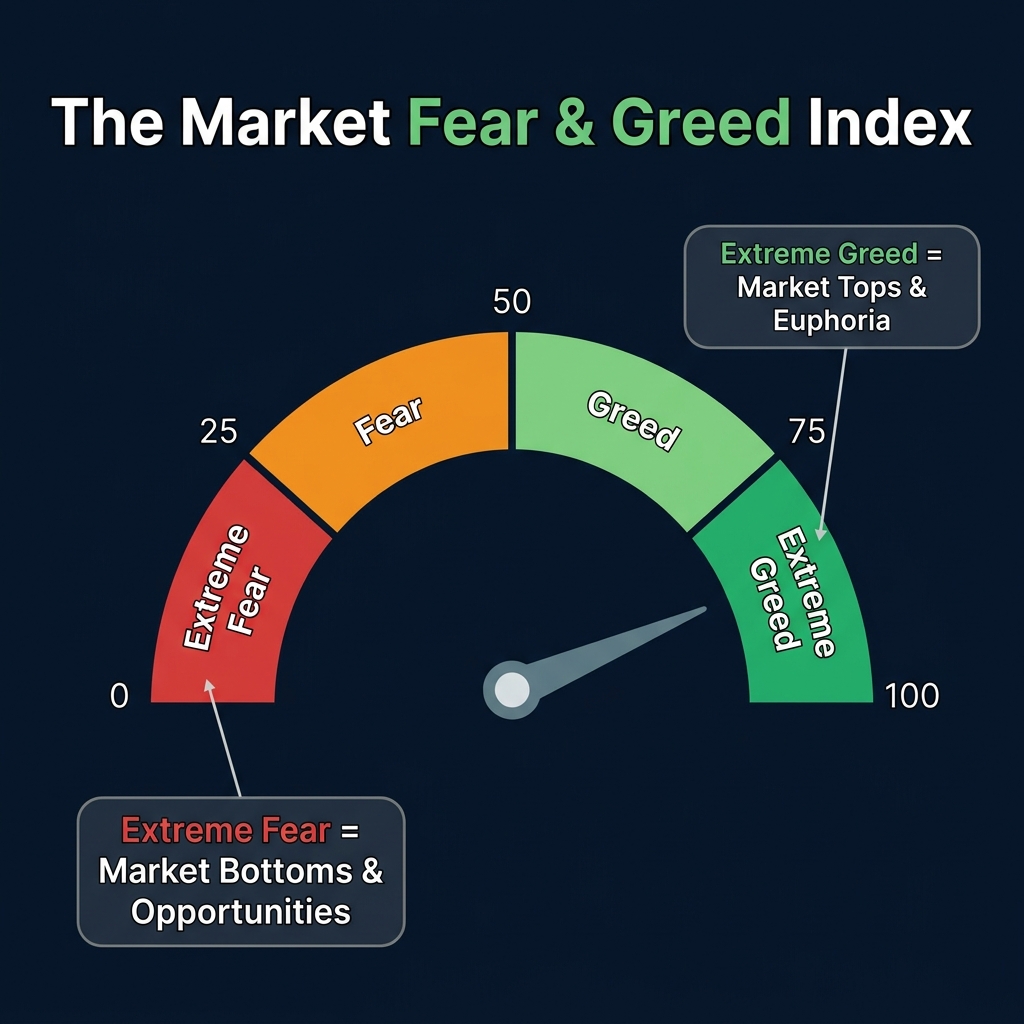
- 0–25 (Extreme Fear): Panic selling dominates. However, for emotionally disciplined traders, this is often where the best buying opportunities emerge.
- 25–50 (Fear): Market participants are anxious and defensive.
- 50–75 (Greed): Confidence is high, momentum is strong.
- 75–100 (Extreme Greed): Euphoria takes over. People buy blindly fearing they'll miss out. This is often when markets peak and a violent correction is near.
As Warren Buffett famously said: "Be fearful when others are greedy, and greedy when others are fearful."
5 Ways to Control Emotions in the Market
You cannot kill fear and greed — they are hardwired into human psychology. But you can master them. Here is how professional traders build psychological armor.
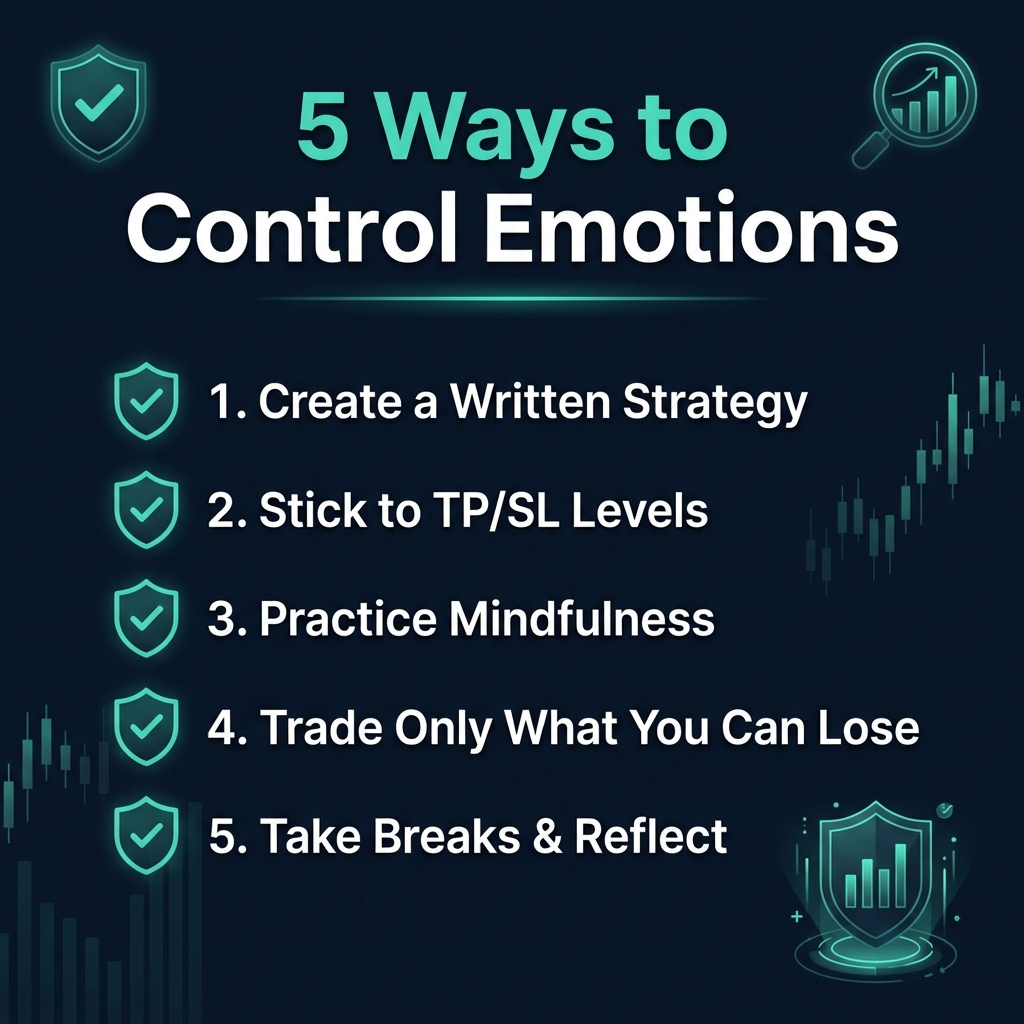
1. Create a Written Strategy
Predetermined rules reduce the need for emotional decision-making. In the heat of the market, you don't have to "think" or "feel" — you just execute what's written on your plan.
2. Stick to Your TP/SL Levels
Take-Profit (TP) and Stop-Loss (SL) aren't just technical tools — they are emotional safeguards. When you place a trade, set your SL and TP immediately and do not touch them. Let the probabilities play out.
3. Practice Mindfulness
Recognize your emotional triggers. A mindful trader observes their emotions: "I am feeling anxious because this trade is in drawdown" — but they do not trade based on that anxiety. They let the feeling pass while sticking to the plan.
4. Trade Only What You Can Sustain Losing
High risk equals high emotional pressure. If a single loss makes your heart race, your position size is too big. Keep your capital exposure healthy (1-2% per trade) to avoid fear-induced mistakes.
5. Take Breaks & Reflect
When you're overwhelmed, stepping away is the most profitable move you can make. Let your brain reset. Walk away from the charts after a big win to avoid overconfidence, and step away after a frustrating loss to avoid revenge trading.
🎯 Your Action Step
The "Pre-Mortem" Exercise: Before you take your next trade, imagine it has already hit your stop loss. Ask yourself: "Am I financially and emotionally okay with this outcome?" If the answer is no, halve your position size immediately. Trade at a size where the outcome does not dictate your mood.