The Survival Instinct of Trading
Let's face it — trading isn't a walk in the park. Many enter the market dreaming of fast profits, only to end up empty-handed and frustrated. Why does this happen? The answer is painfully simple: a lack of discipline.
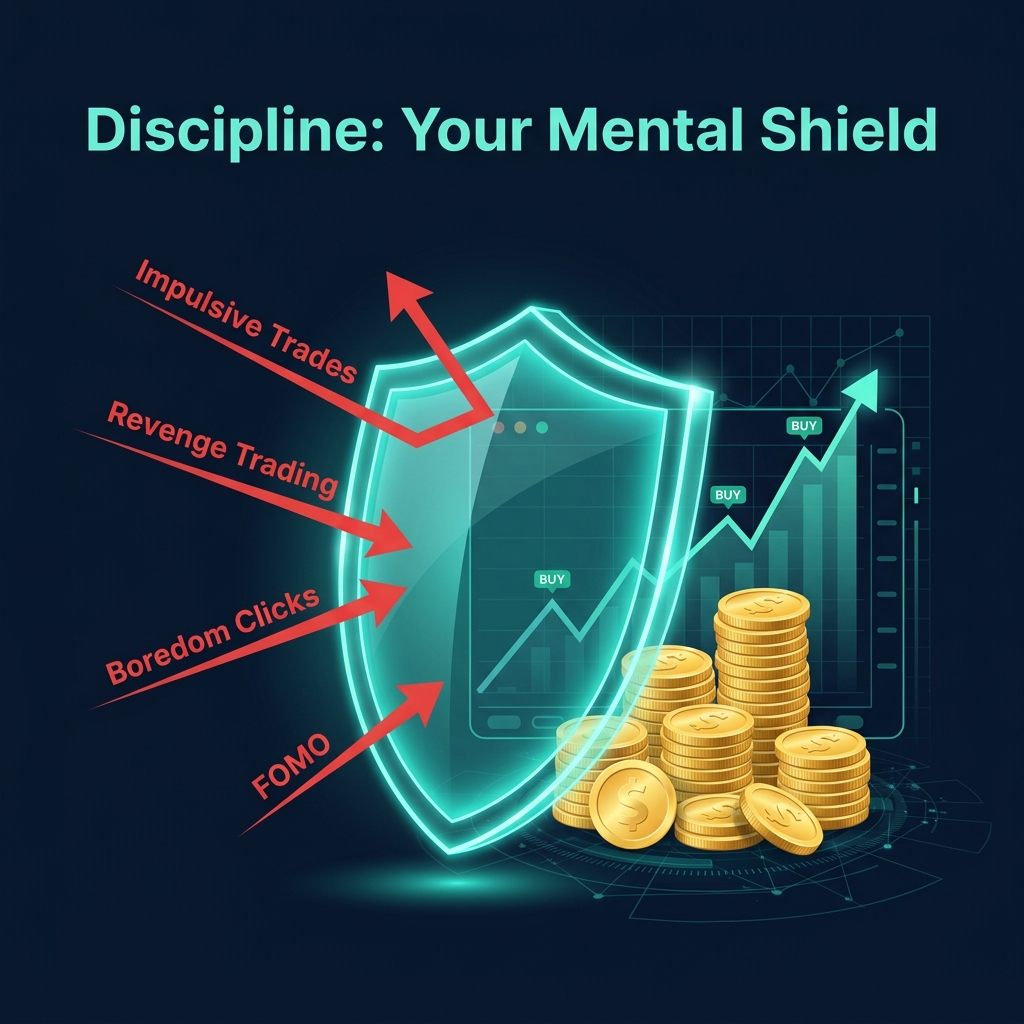
In the world of trading, discipline isn't just a skill — it's a survival instinct. The chart doesn't care about your feelings, and the market certainly doesn't reward impulsive decisions. Only those who master their emotions and stick to their plan survive.
The Instant Gratification Trap
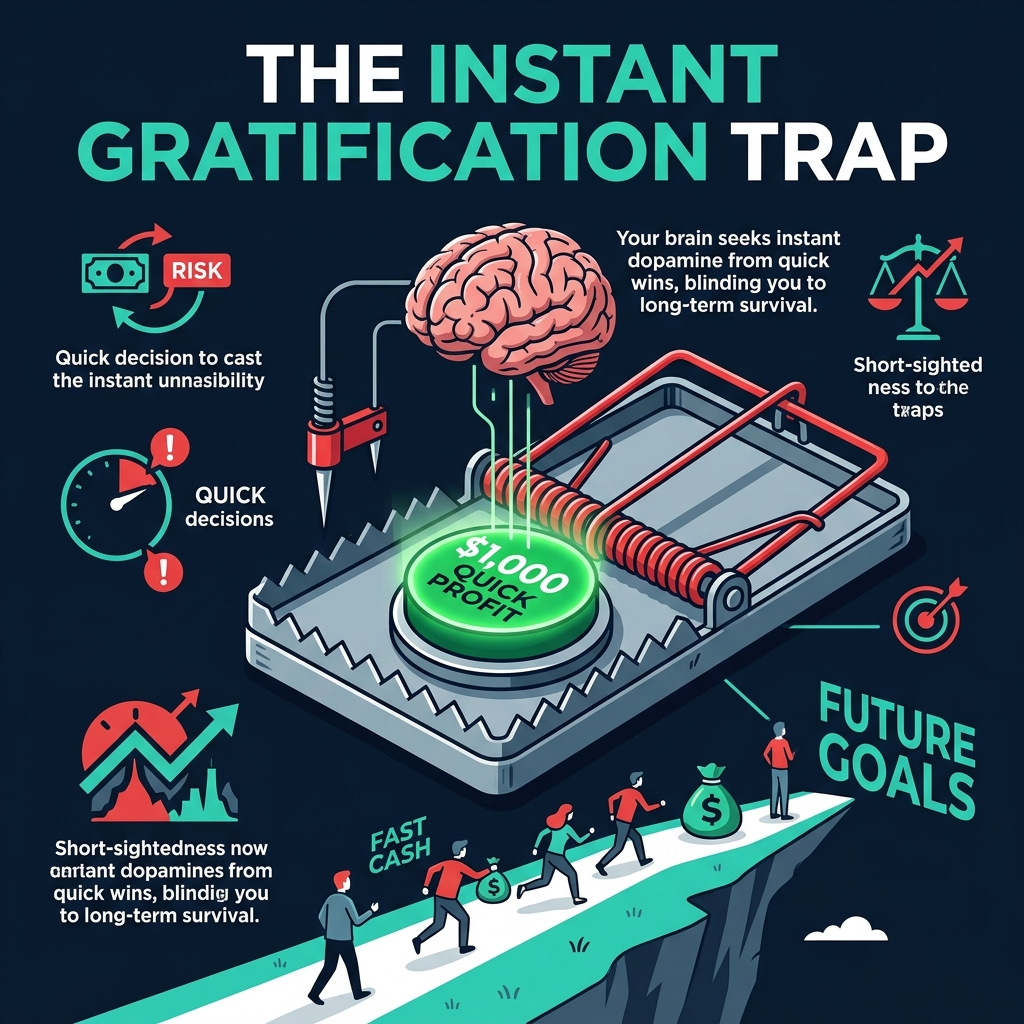
Why is discipline so difficult? Because there's a part of our brain that absolutely hates it. Think of this part of your brain as the "inner child" or the "inner monkey." This part of you seeks instant gratification, fun, and thrills. And forex trading? It's an incredibly exciting playground.
This inner voice operates on dopamine. It demands a quick fix, NOW! It wants to click the mouse, see the green numbers flash, and feel the rush of winning. It hates sitting on the sidelines ("doing nothing") while waiting for the perfect setup.
To succeed, you have to be strict with this part of yourself. You have to actively recognize when you are trading simply because you are bored or seeking excitement, rather than because your edge is present in the market.
External Motivation vs. Internal Identity
When traders realize they lack discipline, they usually try to fix it using "External Motivation." For example, they might put a sticky note on their monitor that says "Don't Overtrade." Or they promise themselves a reward if they behave well.
These surface-level tactics work... for a while. But eventually, you'll have a bad day. You'll be tired, angry at the market, or simply not care about the sticky note anymore. That's when you revert back to your destructive habits.
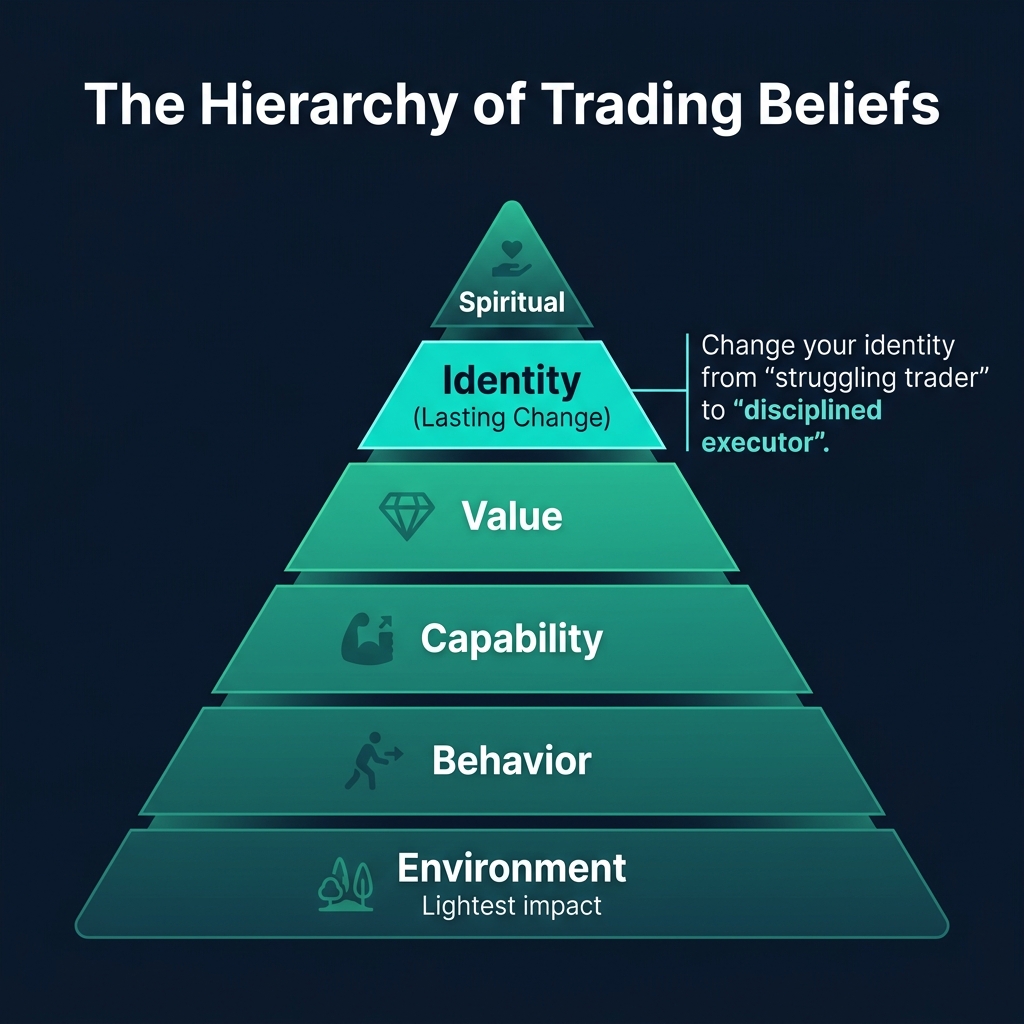
So, how do we make lasting change? We have to move up the Hierarchy of Beliefs to the ultimate level: Identity.
The Smoker Analogy
Imagine someone trying to quit smoking. If they view themselves as a "smoker trying to quit," they have to use constant, exhausting willpower to fight their cravings. But if they change their identity to a "non-smoker who hates cigarettes" — the battle is over. They simply don't smoke anymore because that's not who they are.
Trading discipline is exactly the same. Stop viewing yourself as an "undisciplined trader trying hard not to break the rules." Start viewing yourself as a Consistently Profitable Professional. Professionals do not take random, impulsive trades. It's just not who they are.
Practical Steps to Force Patience
Even with a strong identity, the physical urge to trade can be overwhelming. Here is a 3-step disruption protocol (Realization / Decision / Action) to use when you feel the urge to break your rules:
- Realization: Catch yourself in the act. The moment you feel the urge to jump into a trade early, say aloud: "I am feeling impatient right now." Acknowledging the emotion immediately strips it of its subconscious power.
- Decision: Remind yourself who is in control. Say: "Am I a professional executing my edge, or a gambler seeking a rush?"
- Action: Physically disrupt the pattern. Get up. Walk away from the screen. Get a glass of water. Take a shower. Do literally anything else for 5 to 10 minutes. When you return, the chemical urge (dopamine spike) in your brain will have faded, and logic will be back in the driver's seat.
🎯 Your Action Step
The "Walk Away" Challenge: During your next trading session, find one moment where you are tempted to take a setup that is "almost" perfect. Instead of clicking buy or sell, physically walk away from your desk for exactly 5 minutes. When you come back, observe the chart again. 9 times out of 10, you will be deeply relieved that you didn't take the trade.