Trading Alone Is a Disadvantage — Here's How to Fix It
Trading is one of the most isolating professions in the world. You sit alone, stare at charts, and make decisions that affect your financial future — with nobody to check your thinking, challenge your assumptions, or tell you when you're being stupid.
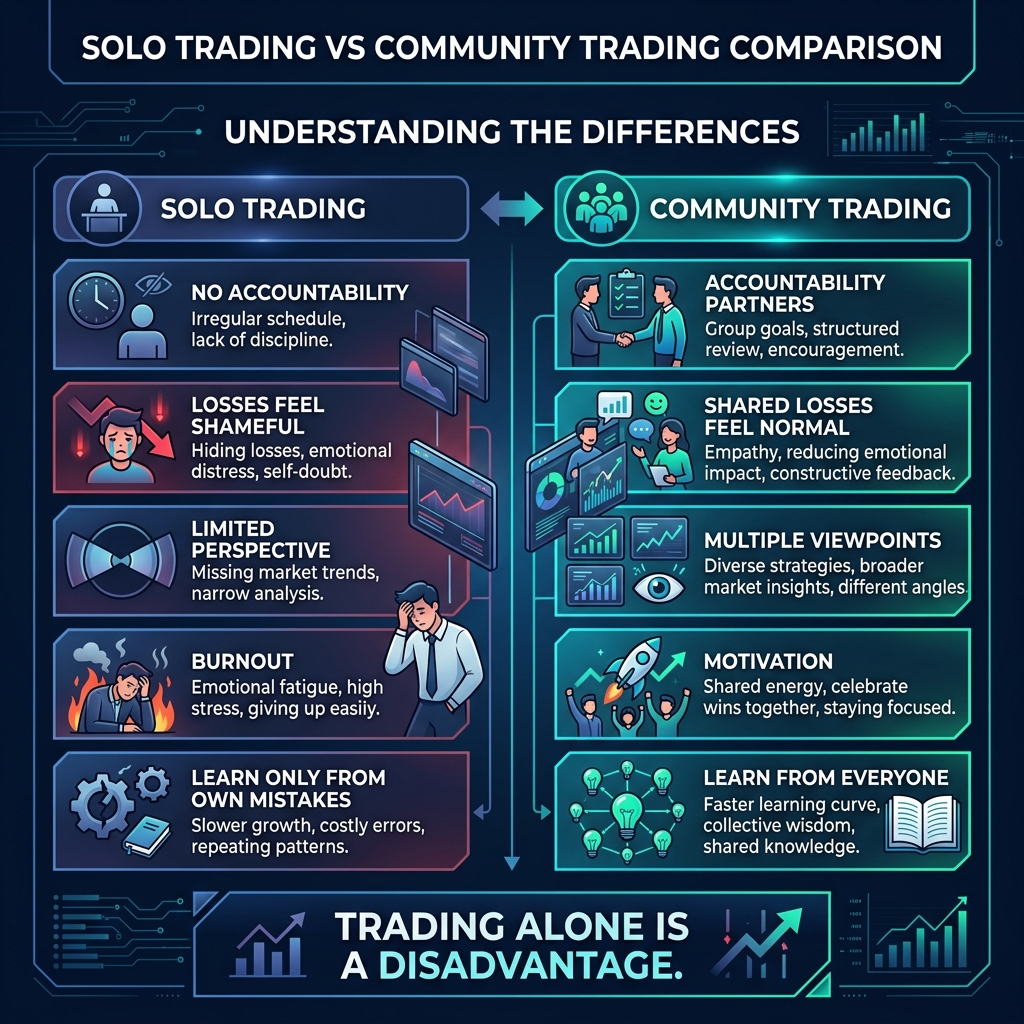
This is why the best traders — from hedge fund managers to successful retail traders — all have one thing in common: they're part of a community. Not a signal group. Not a hype chat. A real community of serious traders who hold each other accountable.
Why Community Matters
| Solo Trading | Community Trading |
|---|---|
| No one sees your rule violations | Accountability partners spot bad habits |
| Losses feel personal and shameful | Shared losses feel normal — "we all have drawdowns" |
| Limited perspective — only your analysis | Multiple viewpoints reveal blind spots |
| Burnout from isolation | Motivation from seeing others succeed |
| Learn only from your own mistakes | Learn from everyone's mistakes — faster growth |
Types of Trading Community
1. Mentorship (1-on-1)
- What: A more experienced trader guides your development directly
- Best for: Rapid skill development, personalized feedback
- Where to find: Trading communities, forums, social media. Look for verified track records, not promises.
- Cost: Free (if you connect organically) to $200-500+/month for paid mentorship
2. Accountability Groups (3-5 traders)
- What: Small group that shares trades, reviews results, and holds each other to their plans
- Best for: Discipline building, emotional support, consistent growth
- How it works: Weekly calls, shared journals, honest feedback. "Did you follow your rules this week?"
- Golden rule: Everyone in the group should be at a similar level. Beginners + pros usually doesn't work.
3. Trading Communities (Larger groups)
- What: Discord servers, forums, Telegram groups with 50-5000+ members
- Best for: Market discussion, idea sharing, multiple perspectives
- Warning: 90% of large trading groups are echo chambers or signal mills. Choose carefully.
Finding Quality — What to Look For
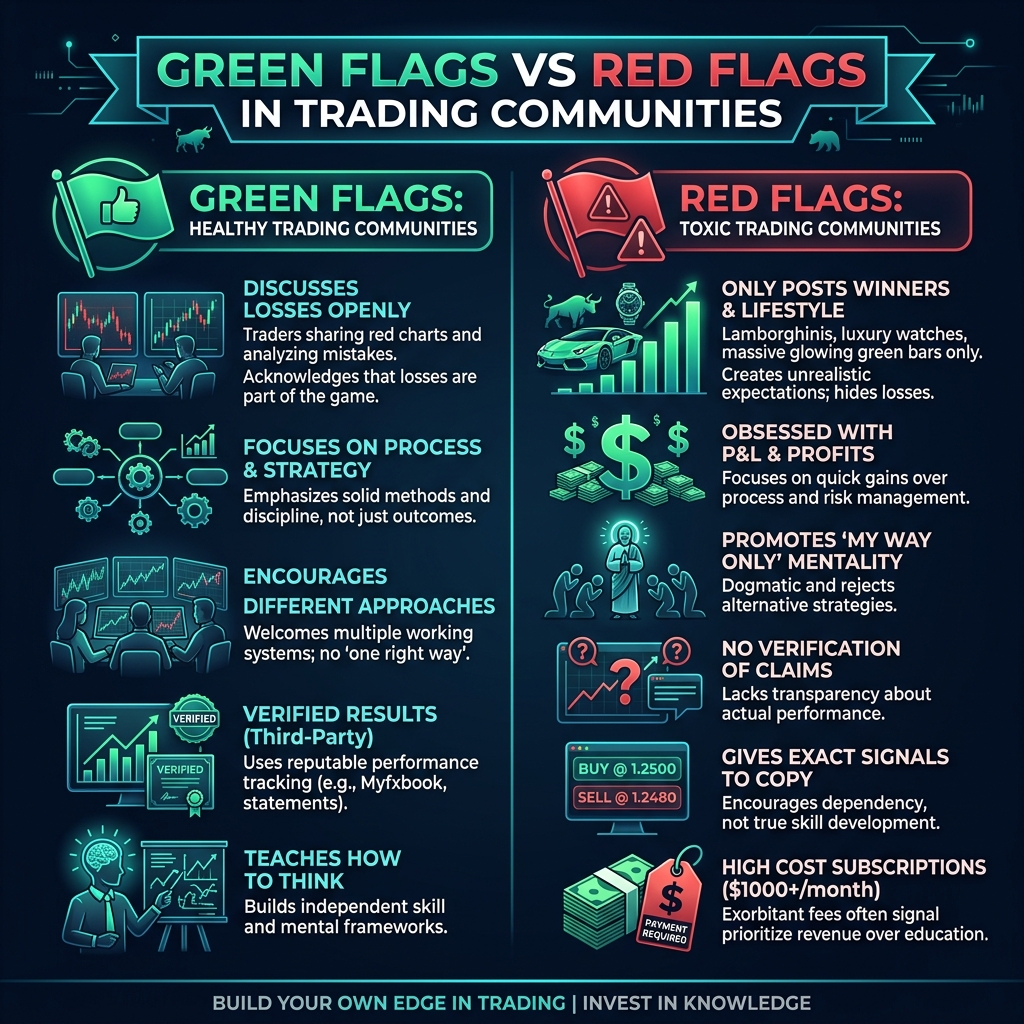
| Green Flag ✅ | Red Flag ❌ |
|---|---|
| Discusses losses openly | Only posts winners |
| Focuses on process over P&L | Obsessed with daily dollar amounts |
| Encourages different approaches | "My way is the only way" |
| Members have verified results | Screenshots with no verification |
| Teaches thinking and analysis | Gives entries/exits to copy |
| Free or reasonable pricing | $1,000+/month with "exclusive" signals |
Building Your Own Accountability System
- Find 2-3 traders at your level on forums, social media, or trading communities
- Set a weekly call (30 minutes) — review trades, share journals, discuss upcoming setups
- Be brutally honest: Share your rule violations, not just your winners. The group only works with honesty.
- Set group challenges: "This month, we all aim for 90%+ rule compliance." Shared goals build bonds.
- Support, don't compete: The goal is everyone improving, not proving who's best.
Quick Recap
- Trading alone limits growth — community accelerates everything
- Three levels: mentorship (1-on-1), accountability groups (3-5), and communities (larger)
- The best groups discuss losses openly and focus on process over P&L
- Build an accountability system: 2-3 traders, weekly calls, shared journals, honest feedback
- Avoid groups that only post winners, sell signals, or charge excessive fees
- Support each other — collaboration over competition
🎯 Your Action Step
Identify one trading community or forum to join this week. Start contributing — share your analysis (not just "buy" or "sell"), ask thoughtful questions, and connect with 2-3 traders at your level. Propose a weekly 30-minute accountability call. You'll be amazed how much faster you improve when you're not trading alone.