Why a Daily Trading Routine Matters
The real difference between traders who make it and those who don’t comes down to one thing: consistency. The market demands structure, focus, and emotional control every single day.
You cannot approach the market randomly and expect consistent results. If you wake up, open a chart, and just start looking for something to buy, you are already the prey. The most successful traders rely on rigorous routines. They do not leave their preparation, execution, or reflection to chance.
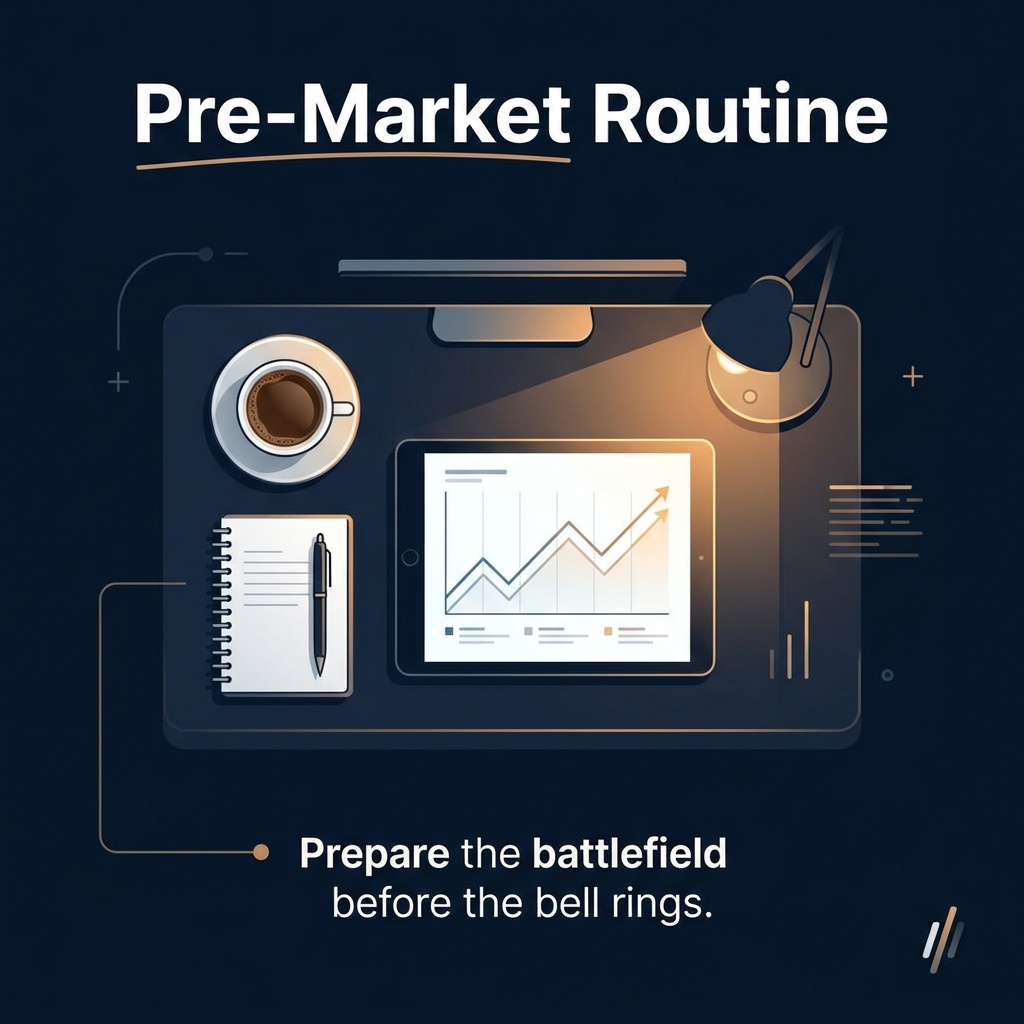
Phase 1: Pre-Market Preparation
You wouldn’t step into a boxing ring without studying your opponent. Before you place your first trade, you must scan the landscape. This is where you gain your logical advantage before the emotions of the live market kick in.
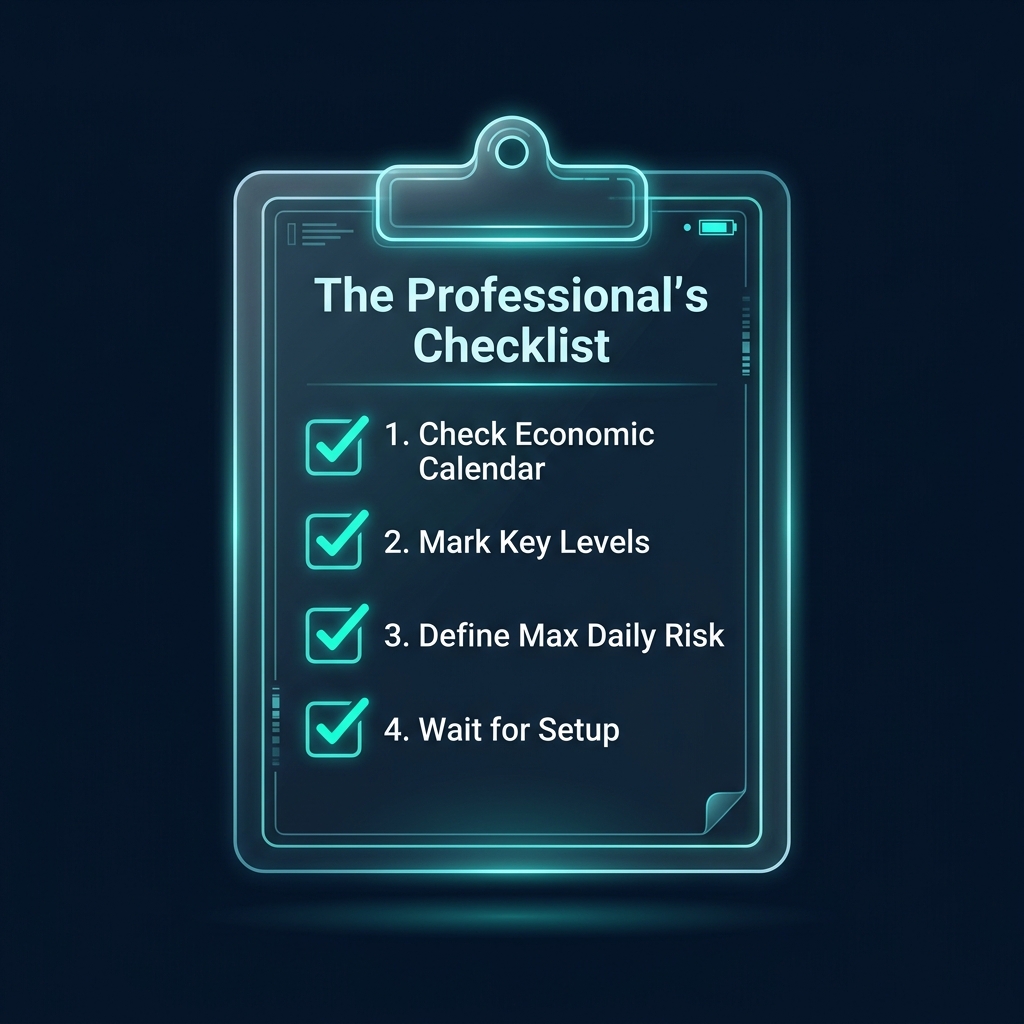
- Check the Economic Calendar: Are there any major news events (NFP, CPI, Fed Rate Decisions) that could cause extreme volatility? If so, mark the times and avoid trading during them.
- Determine the Daily Bias: Look at the daily and 4-hour charts. Are we in an uptrend, downtrend, or ranging? You want to align your trades with the higher timeframe momentum.
- Mark Key Levels: Draw horizontal lines at yesterday's high, yesterday's low, and major supply/demand zones. These are your battlegrounds.
- Set Max Risk: Formally declare your maximum allowable loss for the day. If you hit this number, the screens go off.
Phase 2: Active Trading Session
During the active session, your goal is no longer to analyze—your goal is to execute your plan. You are a sniper waiting for the target to walk directly into the crosshairs.
Use an entry checklist before opening any position:
- Does this setup match my proven trading strategy?
- Am I entering at a key level of support or resistance?
- Is my stop-loss placed in a logical area that invalidates the setup if hit?
- Does the potential reward outweigh the risk by at least 2:1?
If the answer to any of those questions is "No", you pass on the trade. Skipping a subpar trade is a victory.
Phase 3: Post-Market Reflection
Once the session ends, your real work begins. Trading is a game of pattern recognition, both of the market and of your own psychology.

- Log Every Trade: Enter your trades into a journal (spreadsheet or dedicated software). Note the entry, exit, position size, and P/L.
- Tag Your Errors: Did you FOMO into a trade? Did you move your stop loss? Did you revenge trade? Be brutally honest with yourself.
- Screenshot the Charts: Save an image of the chart at the moment you entered, and another when you exited. Over time, reviewing these images will build your intuition for what a perfectly executed trade looks like.
🎯 Your Action Step
Print out a physical checklist incorporating the Pre-Market, Active, and Post-Market phases. Tape it next to your monitor. Tomorrow morning, do not open a single chart until you have physically checked off the steps in your Pre-Market routine. Commit to building this structure for 21 days straight.